
Sweet Memories: A Guide to Syrian Childhood Candies and Treats
Discover the Candies, School Snacks, and Traditional Sweets That Shaped Generations of Syrian Childhood
If you want to understand a culture, don't start with grammar.
Start with childhood.
The games children played.
The streets they walked home from school.
The small neighborhood grocery stores they visited after class.
And, of course, the sweets they couldn't wait to buy.
In Syria, childhood memories are often wrapped in colorful candy wrappers, homemade desserts, and the excitement of spending a few coins on a favorite treat. Long before supermarkets filled their shelves with international brands, Syrian children looked forward to simple candies, traditional sweets, and seasonal desserts that became part of everyday life.
Whether you're learning Syrian Arabic, planning to visit Syria one day, or simply curious about Syrian culture, exploring these childhood sweets is a delicious way to understand daily life beyond the language itself.
Because every candy tells a story.
And every story teaches you a little more about Syria.
💜 In This Guide, You'll Learn
In this article, you'll discover:
🍬 The candies every Syrian child grew up eating.
🏫 Popular school snacks found in neighborhood grocery stores.
🎉 Traditional sweets enjoyed during Eid and family celebrations.
🍦 Street treats that made every summer more exciting.
🛍️ Which childhood sweets you can still find today.
💜 Syrian Arabic words related to sweets, snacks, and childhood memories.
🌍 What these treats reveal about Syrian culture and everyday life.
Sweet Memories: A Guide to Syrian Childhood Candies and Treats
Discover the Candies, School Snacks, and Traditional Sweets That Shaped Generations of Syrian Childhood
💜 A Sweet Way to Discover Syrian Culture
School Snacks Every Syrian Child Remembered
Qabāqīb Ghawār (قباقيب غوار / الفندان)
Bubble gum was never just bubble gum.
🥜 Sesame Bars, Peanut Brittle, and Nut Snacks
🎉 Eid Sweets Every Syrian Child Looked Forward To
🍯 Rahat Al-Hulqum (راحة الحلقوم)
Known internationally as Turkish Delight, Rahat Al-Hulqum has been enjoyed across the Middle East for centuries.
🍰 Traditional Desserts Shared at Family Gatherings
🧀 Halawet El Jibn (حلاوة الجبن)
🍦 Syrian Ice Cream (البوظة العربية)
💜 A Taste of Syrian Hospitality
🍦 Street Treats Every Syrian Child Waited For
🍭 Ghazl Al-Banat (غزل البنات), Syrian Cotton Candy
🍦 Arabic Ice Cream from the Street Cart (عربة البوظة)
Summer in Syria is closely connected with ice cream.
🍧 Ice Pops and Frozen Treats (بوظة بالعصاية)
🍿 Roasted Corn and Simple Street Snacks
🛍️ The Neighborhood Grocery Store: A Childhood Destination
💜 Why Small Shops Matter in Syrian Culture
How Syrian Childhood Sweets Have Changed Over Time
🕰️ Childhood Classics Many Syrians Still Miss
💜 Cultural Note: Why Food Memories Matter When Learning Syrian Arabic
⭐ Pro Tips: Learn Arabic Through Food Stories
⚠️ Common Mistakes When Talking About Syrian Sweets
1. Translating Names Literally
2. Saying "Candy" for Every Sweet
3. Forgetting That Food Is Connected to Culture
4. Using Formal Arabic Instead of Spoken Syrian Arabic
🗣️ Useful Syrian Arabic Phrases About Sweets and Childhood
🌍 What Syrian Childhood Sweets Teach Us About Language
💜 Learn Syrian Arabic Through Real Conversations
💜 Ready to Learn Real Syrian Arabic?
Food has always been an important part of Syrian culture, but sweets hold a special place in childhood memories.
For many Syrian children, buying candy wasn't an everyday habit, it was a small adventure.
A few coins in your pocket could buy a piece of caramel, a colorful lollipop, or a packet of your favorite snack. Children often stopped at the neighborhood grocery store on their way home from school, carefully choosing how to spend their pocket money.
Sharing sweets with friends was just as important as eating them.
One child bought chewing gum.
Another bought sour candy.
Someone else arrived with sunflower seeds.
Before long, everyone was sharing.
Sweets also became part of family traditions.
Children eagerly waited for Eid celebrations, weddings, birthday parties, or visits to grandparents, not only because they would see loved ones, but because these occasions always came with delicious treats.
For many Syrians, the taste of a single candy can instantly bring back memories of school uniforms, summer evenings, neighborhood streets, and family gatherings.
And that's exactly why these sweets are much more than snacks.
They're part of growing up.
💜 A Sweet Way to Discover Syrian Culture
If you're learning Syrian Arabic, childhood sweets offer more than new vocabulary.
They introduce you to everyday traditions, family life, and the little moments that shape people's memories.
When Syrians talk about Shatti Matti, Halawet El Jibn, or Arabic ice cream, they're often talking about more than food.
They're remembering childhood.
Understanding these memories helps you understand the people behind the language.
School Snacks Every Syrian Child Remembered
Long before large supermarkets and international candy brands became common, most Syrian children bought their favorite treats from the neighborhood grocery store (البقالة).
These small family-owned shops were part of everyday life. After school, children would stop by with a few coins in their pockets, carefully deciding which candy or snack to buy.
Sometimes they chose something sweet.
Sometimes something sour.
Sometimes something spicy.
And sometimes... they simply bought whatever came with the coolest sticker inside.
Here are some of the childhood snacks that generations of Syrians still remember today.
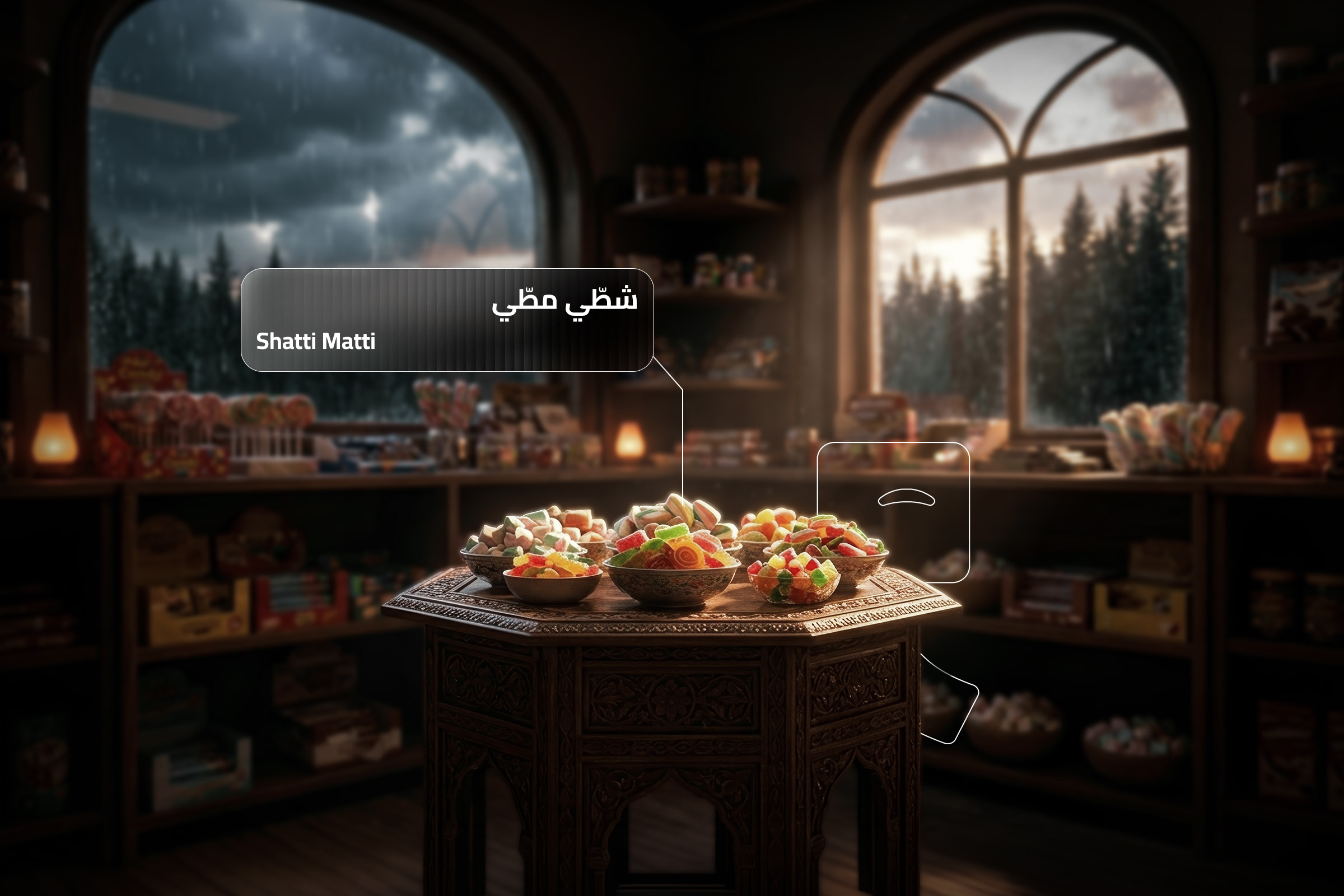
🍬 Shatti Matti (شطّي مطّي)
If there's one snack that instantly brings back childhood memories for many Syrians, it's Shatti Matti.
This sweet-and-spicy snack became incredibly popular among schoolchildren. The combination of sweetness, chili, and tangy flavors made it unlike almost anything else.
For many children, eating Shatti Matti wasn't just about the taste, it became a fun challenge to see who could handle the spicy kick without making a face.
Even today, mentioning its name often starts conversations filled with nostalgia.
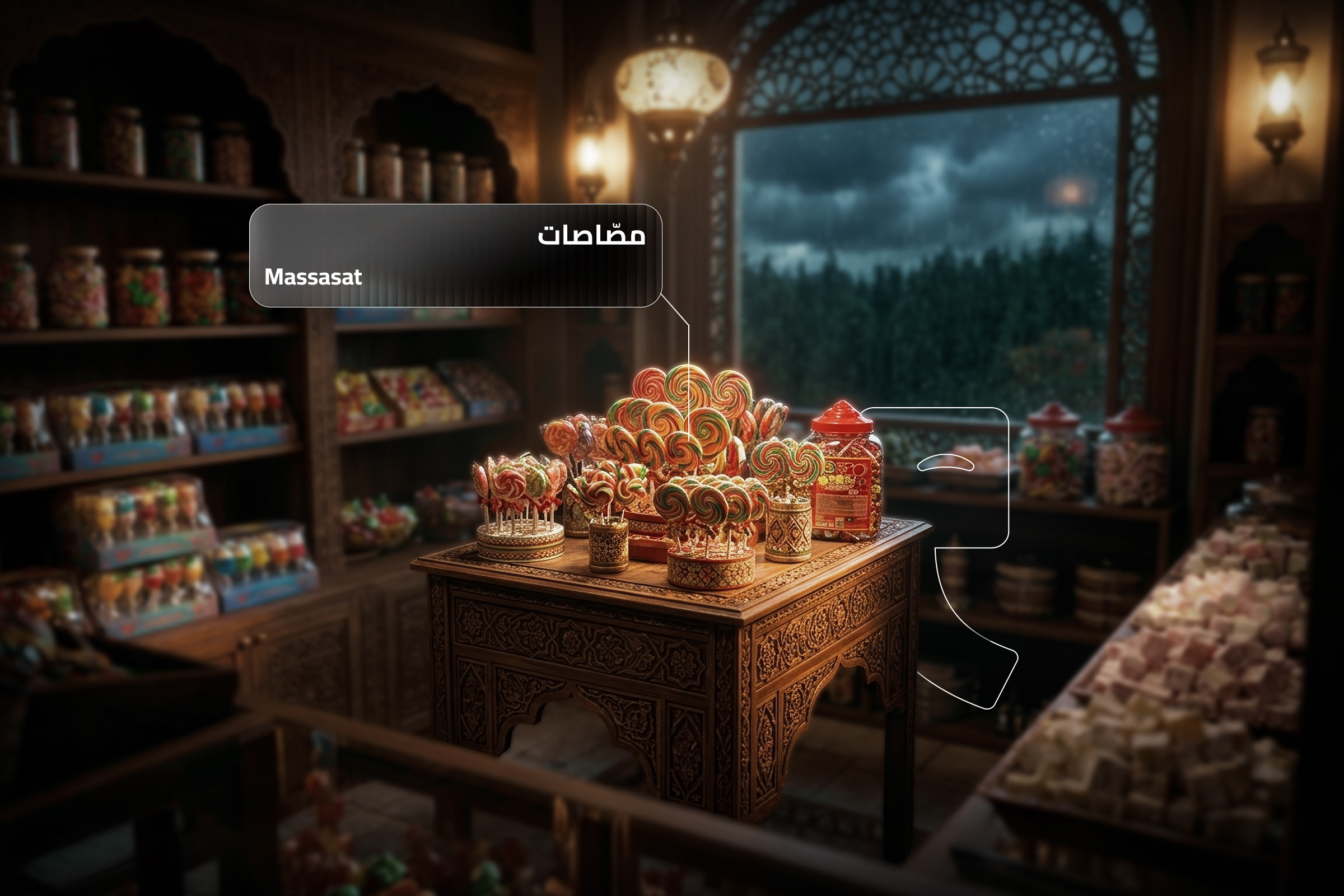
🍭 Lollipops (مصّاصات)
Few things made a school day feel more exciting than buying a colorful lollipop after class.
Small fruit-flavored lollipops were affordable, making them a favorite choice for children spending their daily pocket money.
Some lasted only a few minutes.
Others became a competition to see who could keep them the longest without biting them.
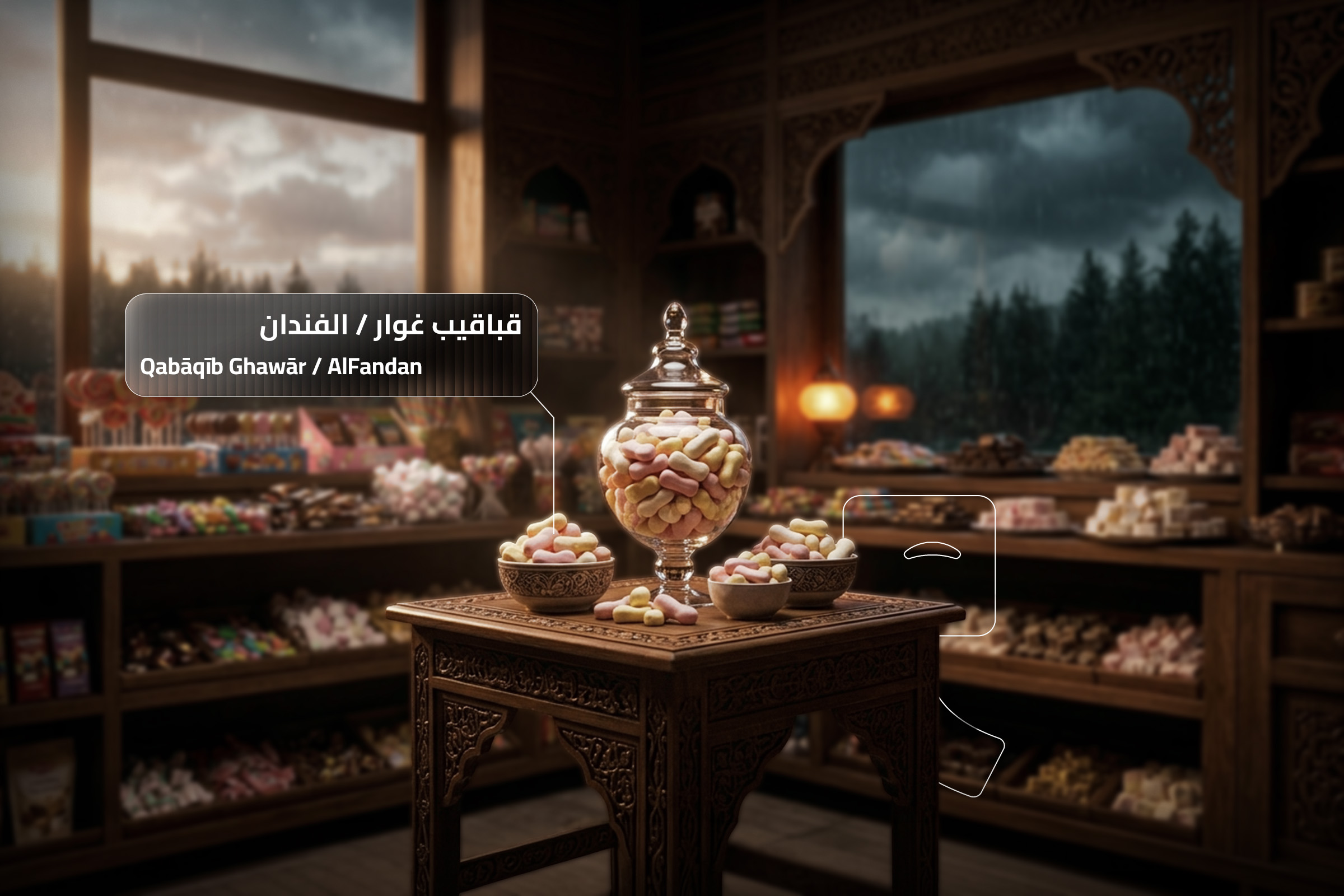
Qabāqīb Ghawār (قباقيب غوار / الفندان)
Long before today's gummy candies filled supermarket shelves, many Syrian children looked forward to Qabāqīb Ghawār, also known as Al-Fandan.
These colorful, soft sugar-and-gelatin candies were made using traditional wooden molds, giving each piece its unique shape and playful appearance.
Their bright colors and chewy texture made them an irresistible treat at neighborhood shops and school kiosks.
For many Syrians, Qabāqīb Ghawār wasn't just another candy.
It was one of those childhood sweets that instantly brings back memories of pocket money, after-school snacks, and the excitement of choosing your favorite color.
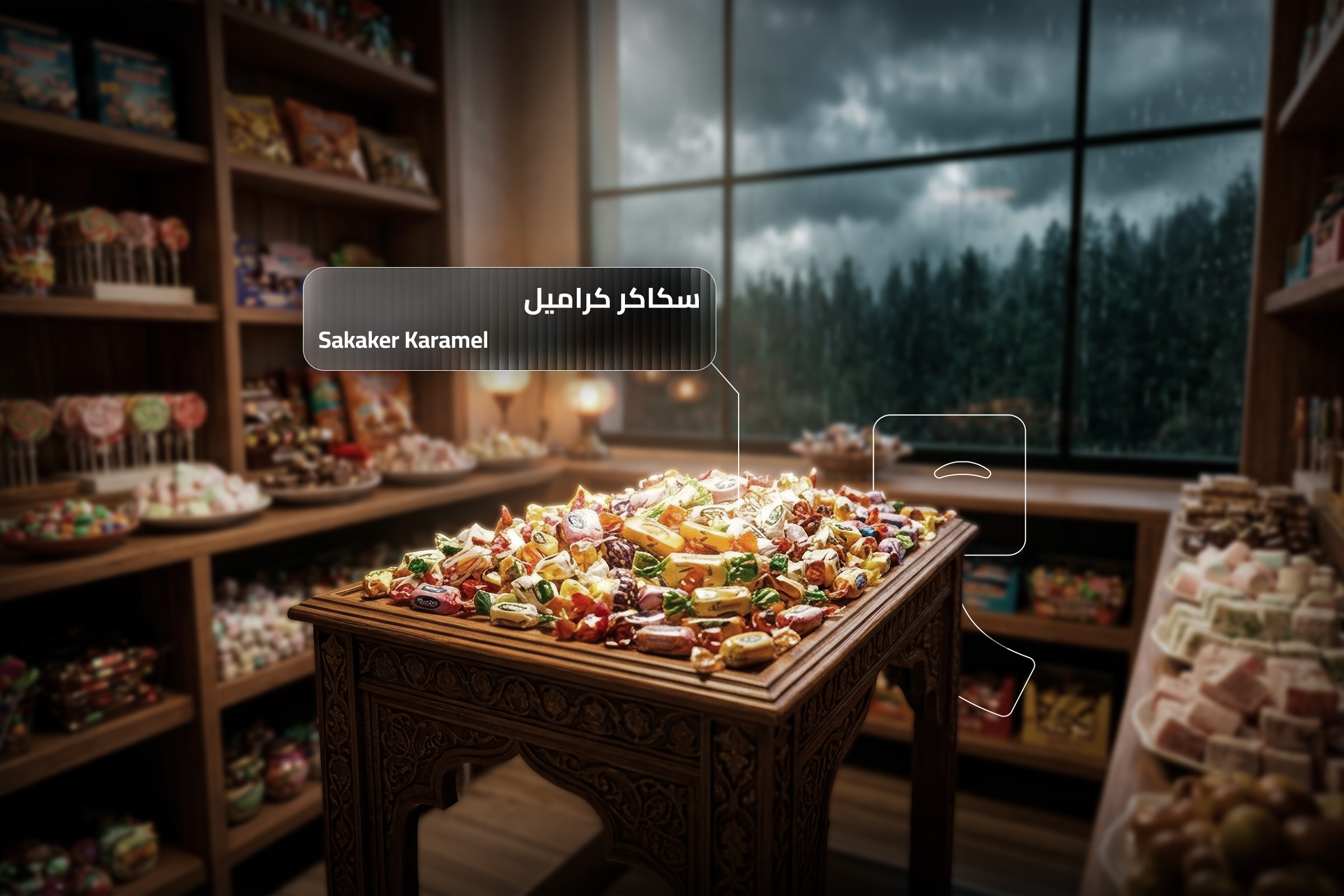
🍬 Caramel Candies (كراميل)
Simple caramel candies were another childhood classic.
Wrapped in shiny paper, they were sold individually, allowing children to buy just one, or a handful if they were lucky enough to have extra pocket money.
These soft, chewy sweets were especially popular during school breaks and family visits.
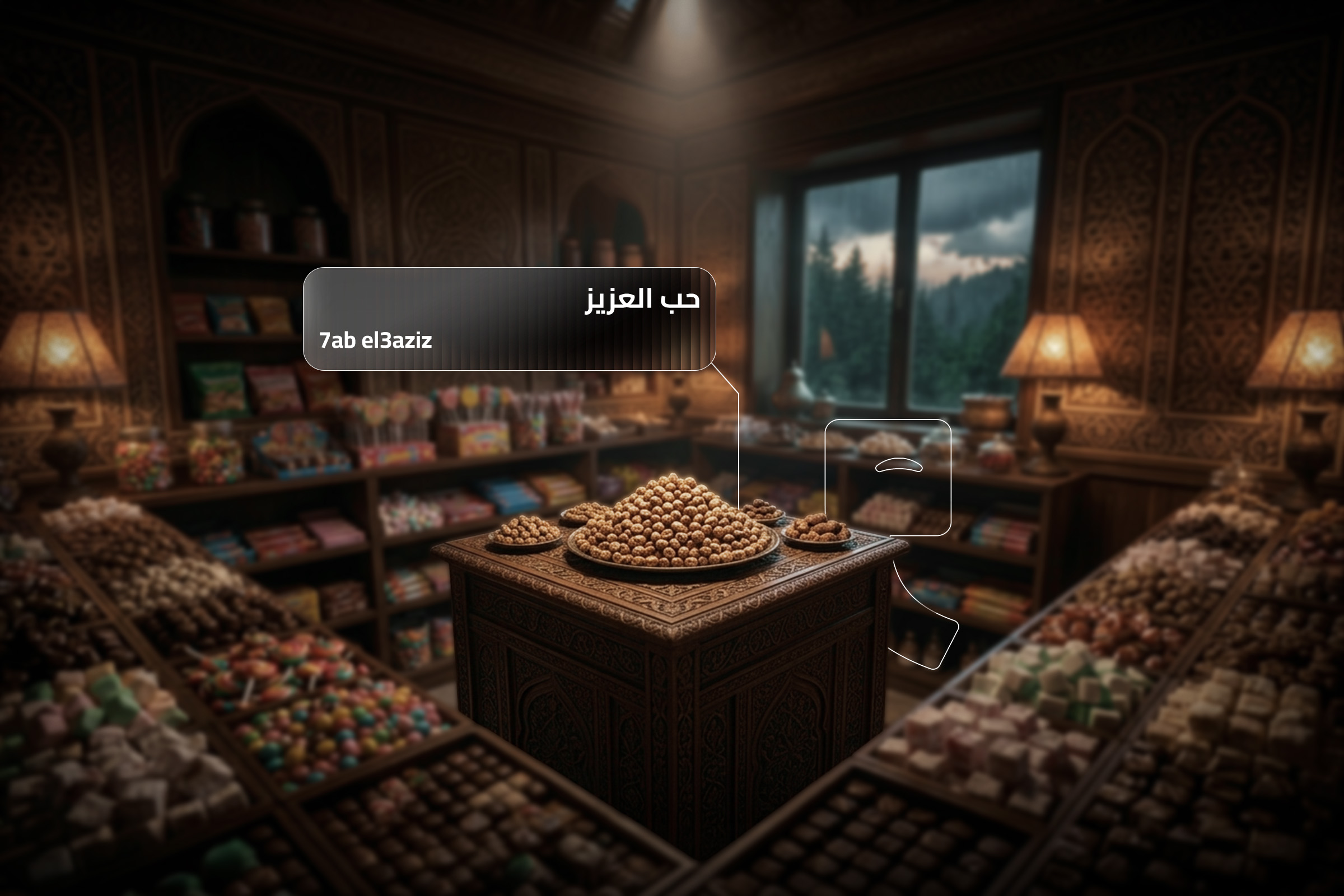
🌰 Tiger Nuts (حب العزيز)
Not every childhood treat in Syria came wrapped in colorful packaging.
Tiger nuts, known in Arabic as حب العزيز, were one of the simplest, and most memorable, snacks many children enjoyed.
Sweet, chewy, and naturally flavorful, they were often sold in small paper bags at neighborhood shops or by street vendors.
For many Syrians, eating حب العزيز wasn't just about the taste.
It was part of growing up, a simple treat that brings back memories of school days, family outings, and afternoons spent playing outside.
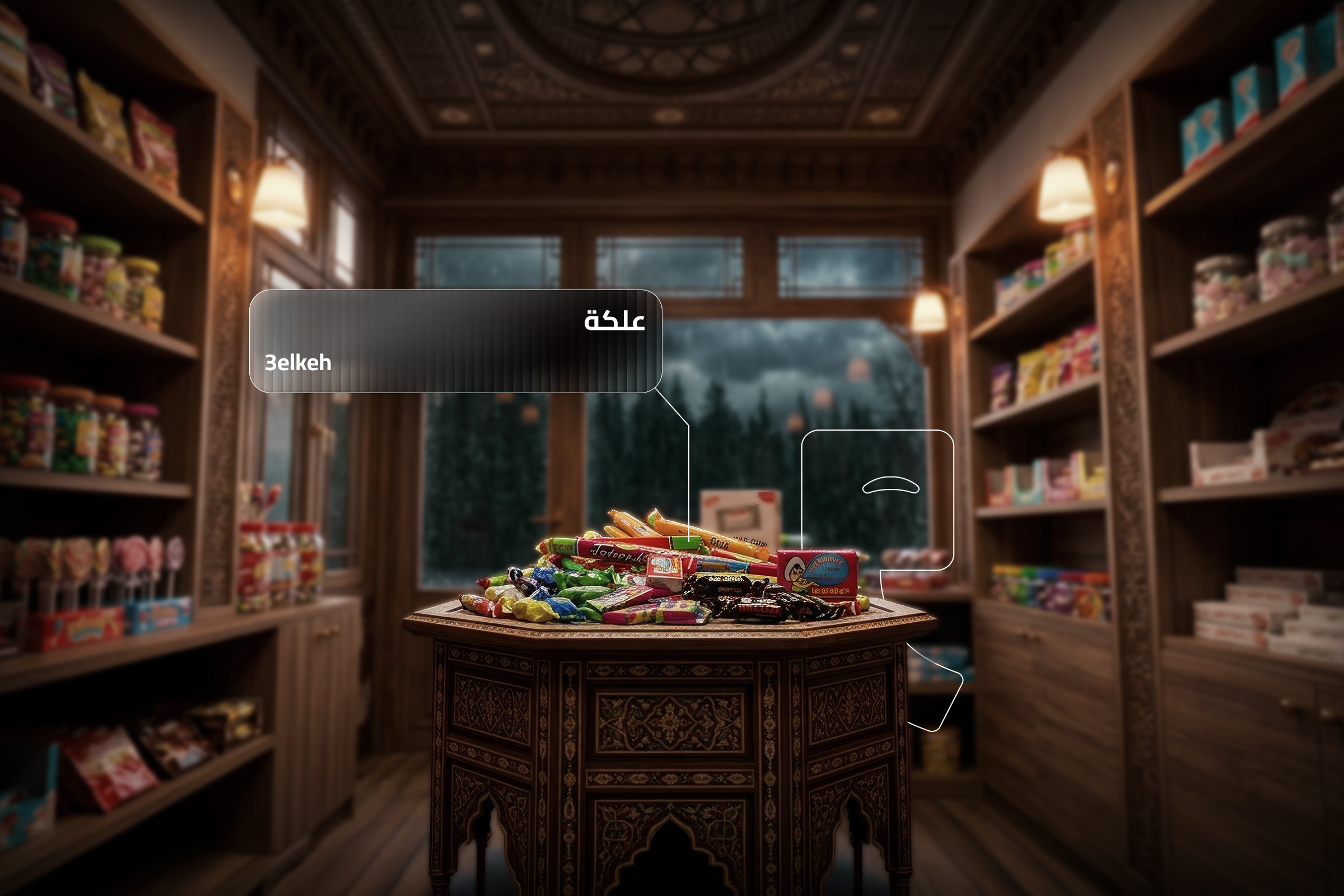
🍬 Bubble Gum (علكة)
Bubble gum was never just bubble gum.
Many brands included stickers, temporary tattoos, football cards, or small collectible pictures inside the wrapper.
Children traded these collectibles at school, compared their collections, and sometimes bought the same gum simply to complete a set.
For many Syrian children, the surprise inside was just as exciting as the gum itself.
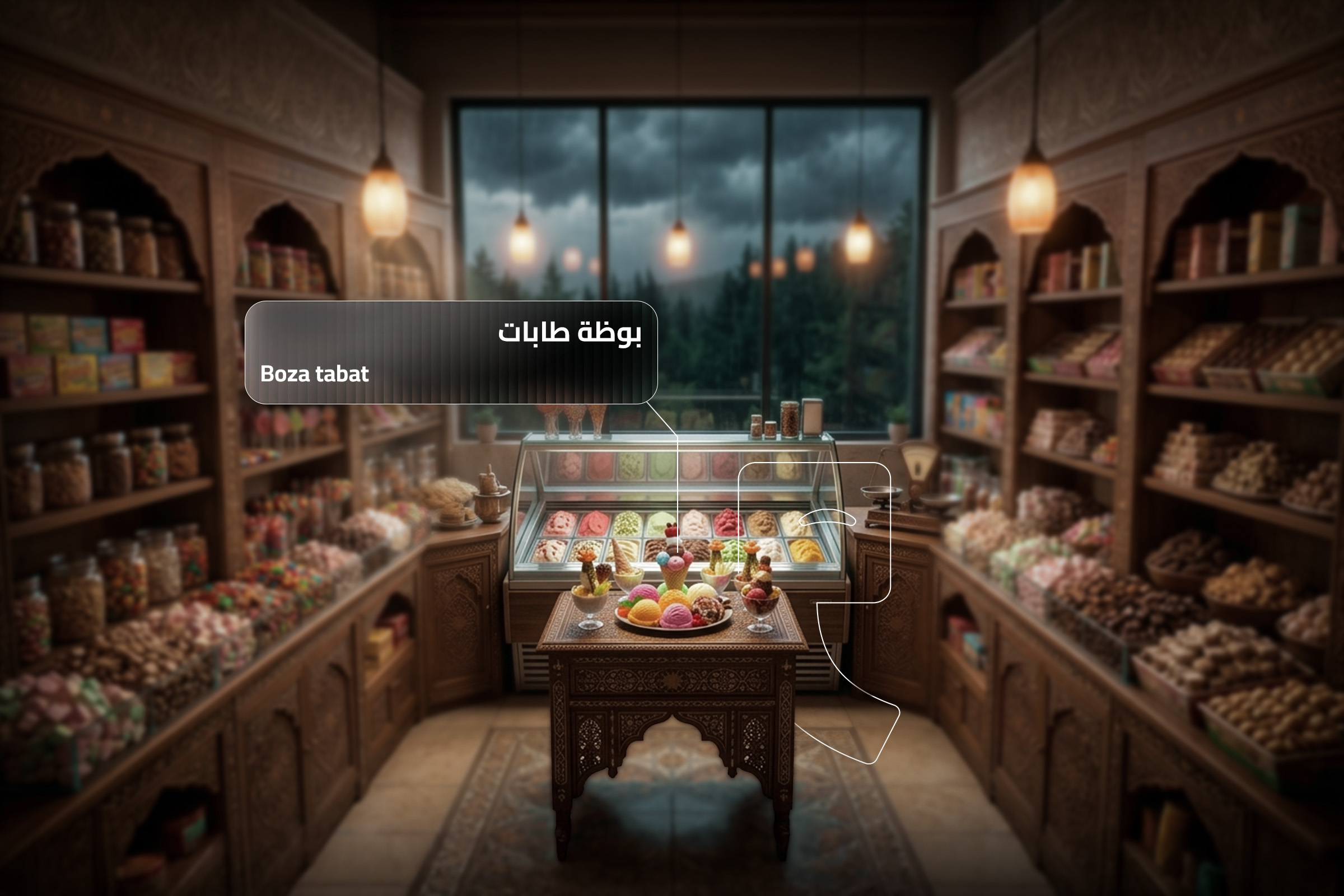
🍧 Ice Pops (بوظة طابات)
During hot Syrian summers, nothing felt more refreshing than an ice pop.
These frozen fruit-flavored treats were inexpensive and came in bright colors that instantly caught every child's attention.
Whether bought from a grocery store or a small street freezer, they became one of the most popular summer snacks.
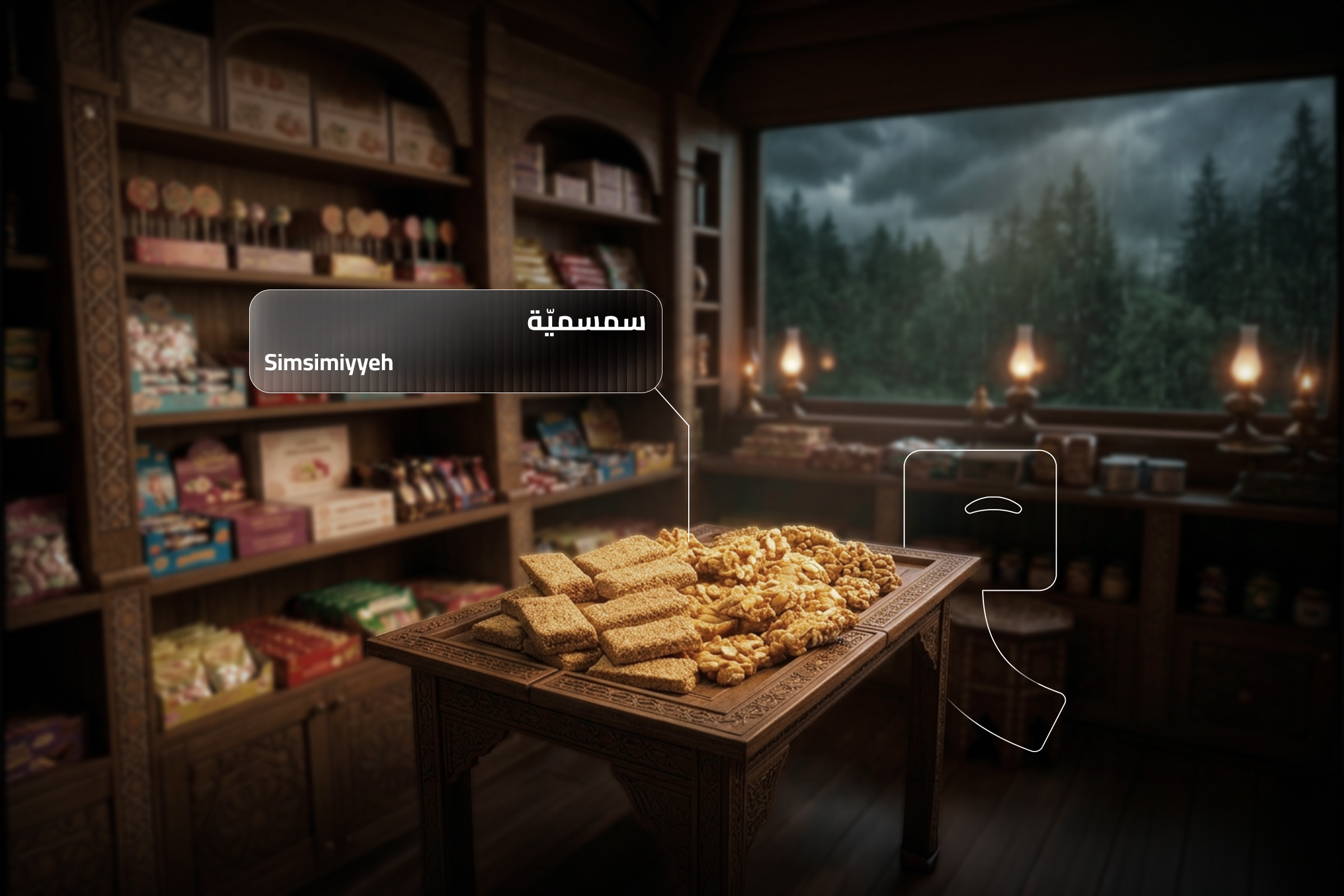
🥜 Sesame Bars, Peanut Brittle, and Nut Snacks
Traditional snacks were also incredibly popular.
Children often bought treats like:
Simsimiyyeh (سمسمية) – crunchy sesame bars.
Fūliyyeh (فولية) – peanut brittle.
Joziyeh (جوزية) – walnut-based sweets.
Made with roasted nuts and sugar syrup, these simple snacks were inexpensive, filling, and easy to find in neighborhood grocery stores.
Even today, many Syrians associate them with school days and family outings.
💜 More Than Just Candy
For many children, the best part wasn't choosing the candy.
It was deciding which one to buy with only a few coins.
Sometimes friends combined their pocket money to buy several different treats and shared everything equally.
Sometimes a shopkeeper quietly added an extra piece of candy as a small gift.
These tiny moments may seem ordinary.
But for many Syrians, they're among the sweetest childhood memories of all.
🎉 Eid Sweets Every Syrian Child Looked Forward To
For many Syrian children, Eid wasn't just about wearing new clothes or receiving pocket money.
It was also about sweets.
Lots of sweets.
On Eid morning, children would dress in their best clothes and visit grandparents, relatives, neighbors, and family friends. Every home welcomed guests with coffee, juice, and beautifully arranged plates of traditional sweets.
By the end of the day, many children had collected bags full of chocolates, candies, and homemade treats.
For young learners of Syrian Arabic, understanding these traditions offers a wonderful glimpse into family life and the importance of hospitality in Syrian culture.
Here are some of the sweets most closely associated with Eid celebrations.
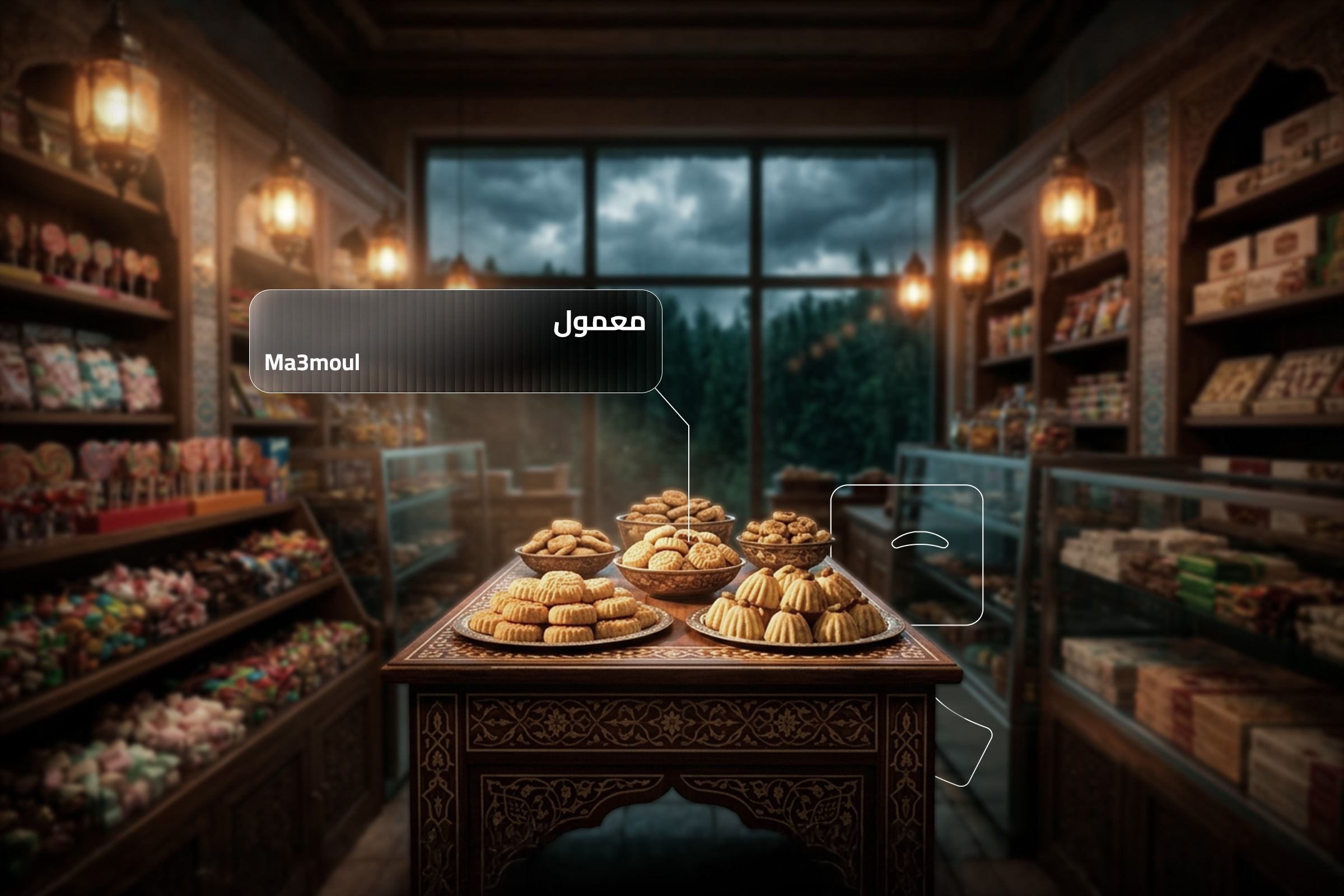
🌸 Maamoul (معمول)
If there is one sweet that symbolizes Eid across Syria, it's Maamoul.
These delicate butter cookies are traditionally filled with:
🌰 Dates
🥜 Pistachios
🌰 Walnuts
Each family often has its own recipe, passed down through generations.
In many homes, preparing Maamoul is a family activity. Parents, grandparents, and children gather together a few days before Eid to shape, fill, and bake hundreds of cookies.
For many Syrians, the smell of freshly baked Maamoul is the smell of Eid itself.
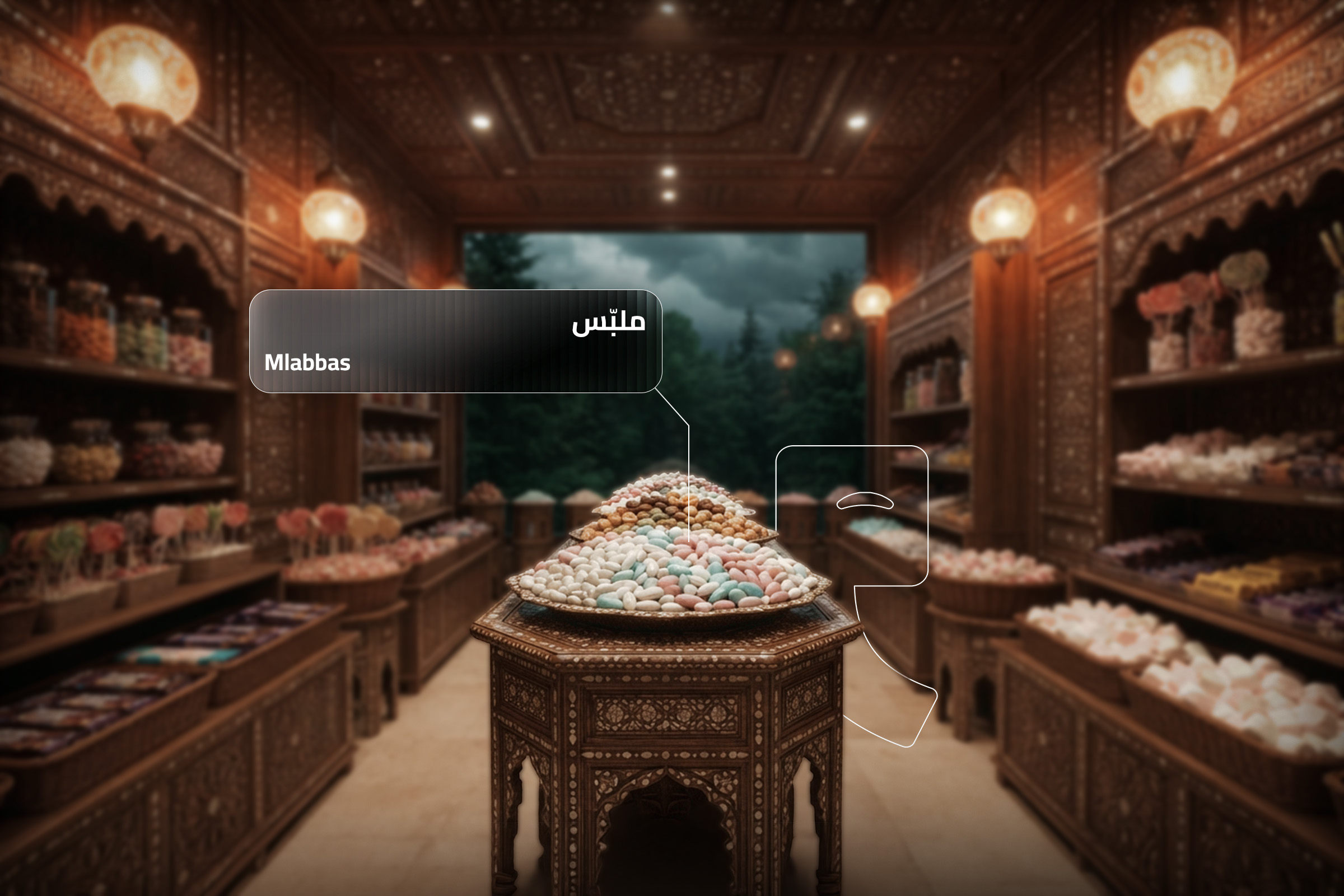
🍬 Mlabbas (ملبّس)
Mlabbas consists of almonds or other nuts coated in a crisp layer of colorful sugar.
These shiny candies are commonly served during weddings, engagements, and Eid celebrations.
Children especially love the bright colors, while adults appreciate the tradition behind them.
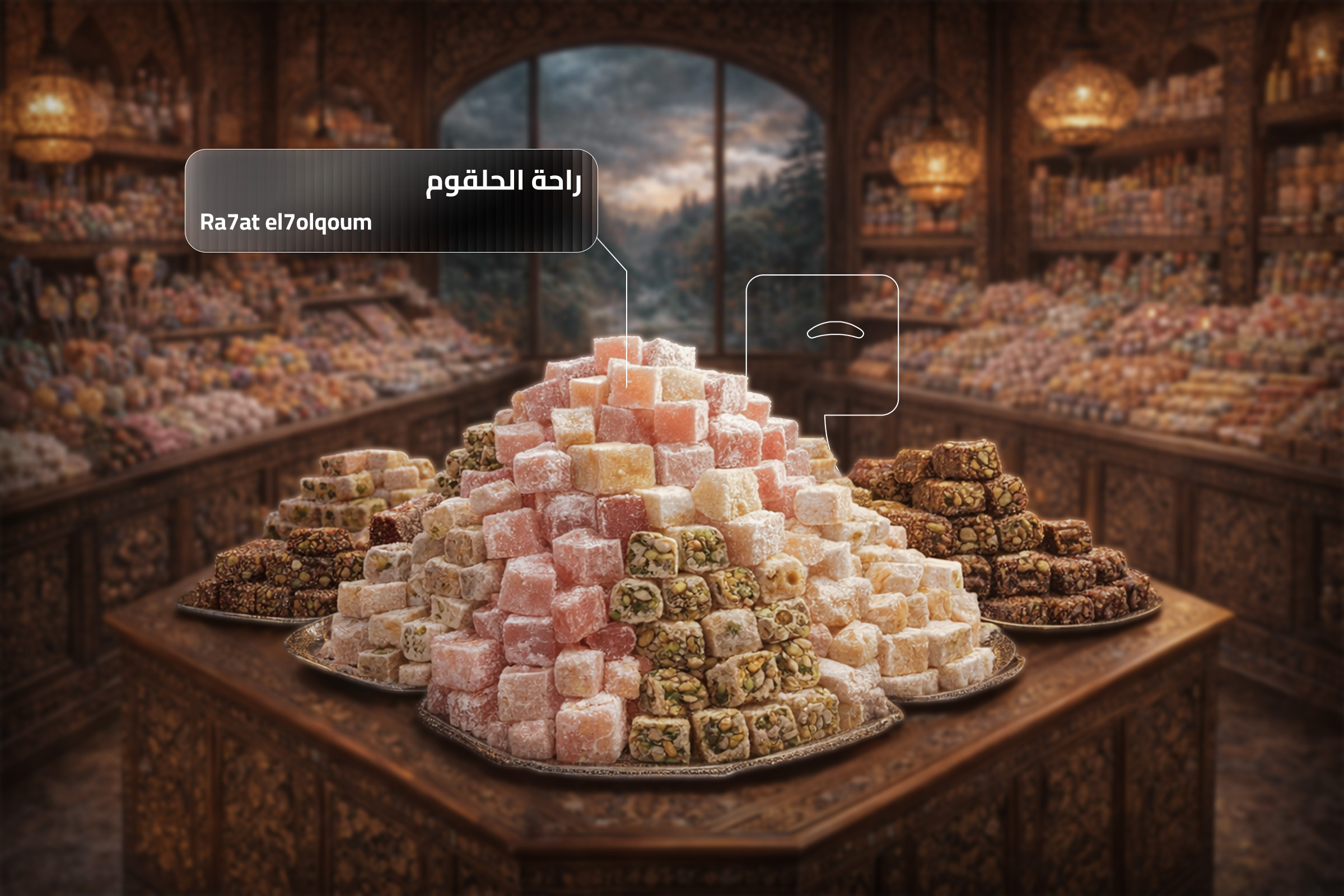
🍯 Rahat Al-Hulqum (راحة الحلقوم)
Known internationally as Turkish Delight, Rahat Al-Hulqum has been enjoyed across the Middle East for centuries.
Soft, chewy, and lightly dusted with powdered sugar, it's often flavored with:
Rose water
Pistachios
Lemon
Orange blossom water
Many Syrian families serve it alongside Arabic coffee when welcoming Eid guests.
🍫 The Chocolate Collection
One of the most exciting parts of Eid for children wasn't just eating sweets.
It was collecting them.
Every house offered different chocolates and candies.
By the end of the day, children proudly compared their collections with friends and siblings.
Questions like:
"How many chocolates did you get?"
or
"Which house had the best sweets?"
became part of every Eid conversation.
For many Syrians, these memories remain just as vivid as the sweets themselves.
💜 More Than Dessert
Eid sweets are not simply desserts.
They're a symbol of generosity.
Preparing beautiful trays of sweets is one way Syrian families show hospitality and celebrate together.
Offering guests homemade desserts reflects warmth, kindness, and the joy of sharing special moments.
This tradition continues today, both in Syria and within Syrian communities around the world.
🍰 Traditional Desserts Shared at Family Gatherings
Not every famous Syrian sweet is connected to Eid.
Some desserts appear whenever family and friends gather, whether it's a weekend visit, a celebration, or simply an excuse to enjoy something delicious together.
These desserts have become symbols of Syrian hospitality and are among the first treats visitors are encouraged to try.
🧀 Halawet El Jibn (حلاوة الجبن)
One of Syria's most famous desserts, Halawet El Jibn combines a soft cheese dough with a creamy filling, then finishes it with pistachios and fragrant sugar syrup.
Although visitors often describe it as "cheese dessert," the taste surprises almost everyone.
Sweet, delicate, and incredibly soft, it's considered a must-try for anyone exploring Syrian cuisine.
🍦 Syrian Ice Cream (البوظة العربية)
Syrian ice cream is unlike the soft ice cream found in many Western countries.
Made with mastic and sahlab, it has a uniquely stretchy, chewy texture and is usually coated with crushed pistachios.
For many children, a family outing wasn't complete without stopping for a cone of Arabic ice cream.
🧡 Knafeh (الكنافة)
Golden, crispy, and soaked in fragrant syrup, Knafeh is one of the Middle East's most beloved desserts.
In Syria, it's often enjoyed for breakfast, after family meals, or during celebrations.
Served warm with melted cheese inside, it's a favorite among both locals and visitors.
🥐 Znoud El Sit (زنود الست)
Translated literally as "The Lady's Arms," this crispy pastry is filled with rich cream and topped with sweet syrup and pistachios.
Its unusual name often surprises Arabic learners, making it one of the most memorable desserts to discover.
💎 Ballourieh (البلورية)
Ballourieh is a luxurious pistachio dessert made with fine pastry and generous amounts of premium nuts.
Its name comes from the Arabic word for crystal, inspired by its glossy appearance.
It's often served during weddings, holidays, and special family occasions.
🥮 Baklava (البقلاوة)
No list of Syrian sweets would be complete without Baklava.
Layers of delicate pastry, butter, pistachios or walnuts, and aromatic syrup make it one of the region's most iconic desserts.
While many countries have their own versions, Syrian baklava is especially known for its balance of sweetness and high-quality pistachios.
💜 A Taste of Syrian Hospitality
If you're invited to a Syrian home, don't be surprised if you're offered dessert, even if you've just finished a full meal.
In Syrian culture, serving sweets is more than a tradition.
It's a way of saying:
"We're happy you're here."
And for many visitors, sharing dessert becomes one of the warmest memories they take home.
🍦 Street Treats Every Syrian Child Waited For
Some childhood memories are connected to a specific place.
A school.
A family kitchen.
A neighborhood street.
For many Syrians, some of the sweetest memories come from hearing the sound of a street vendor, seeing a colorful cart, or stopping with friends to buy a small treat during a summer evening.
Before online shopping and large supermarkets became part of everyday life, street vendors played an important role in childhood.
They brought sweets, snacks, and small moments of happiness directly to neighborhoods and parks.
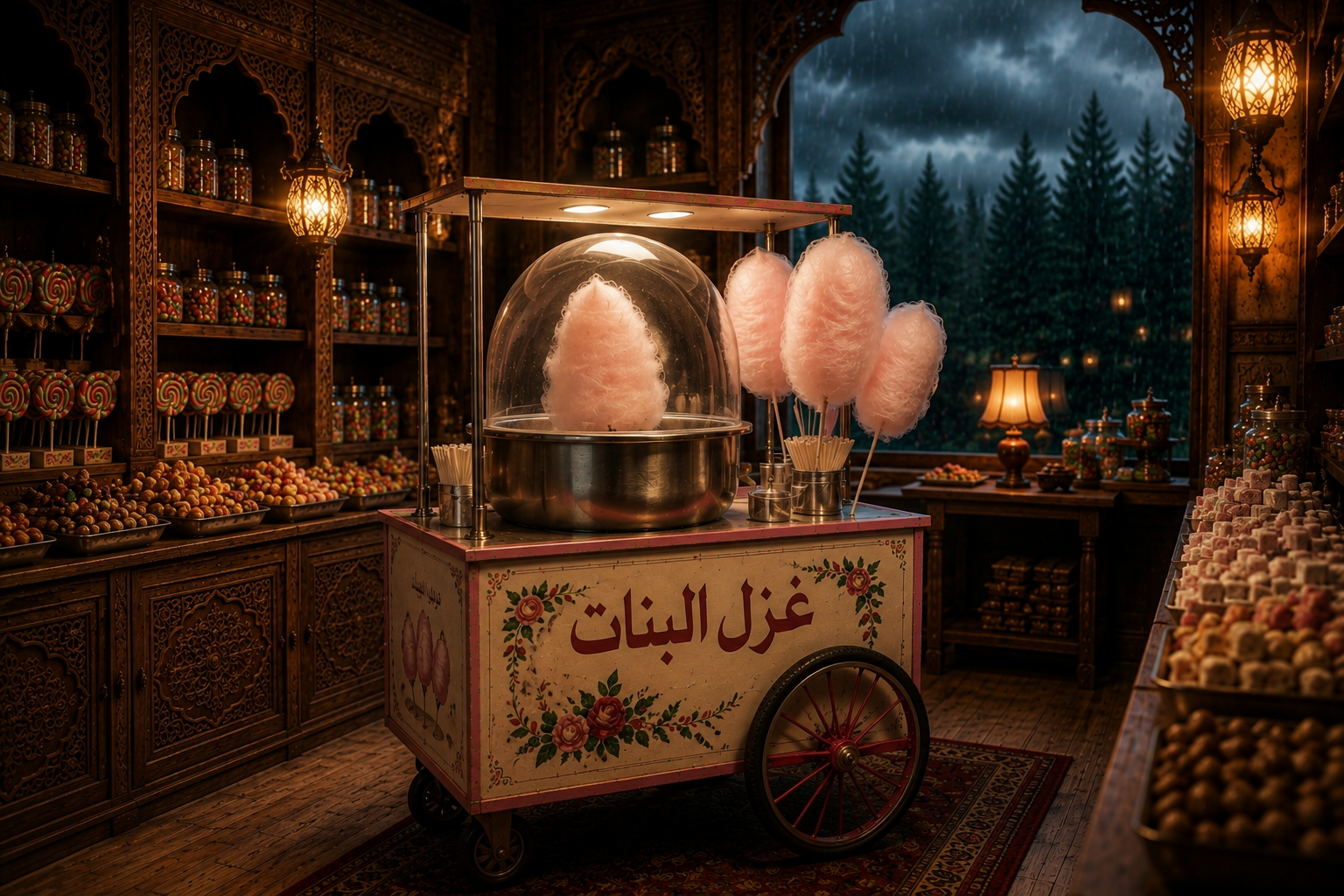
🍭 Ghazl Al-Banat (غزل البنات), Syrian Cotton Candy
Few treats create childhood excitement like Ghazl Al-Banat.
Literally meaning "girls' hair," this fluffy pink or white candy is similar to cotton candy.
For many Syrian children, seeing a street seller carrying a large colorful bag of cotton candy was impossible to ignore.
It was common to find it:
In parks
Near children's playgrounds
During family outings
At local celebrations
The experience was part of the magic:
Watching the vendor prepare it.
Holding the huge soft piece of candy.
Trying to finish it before it disappeared.
For many adults today, the smell and appearance of Ghazl Al-Banat instantly brings back childhood memories.
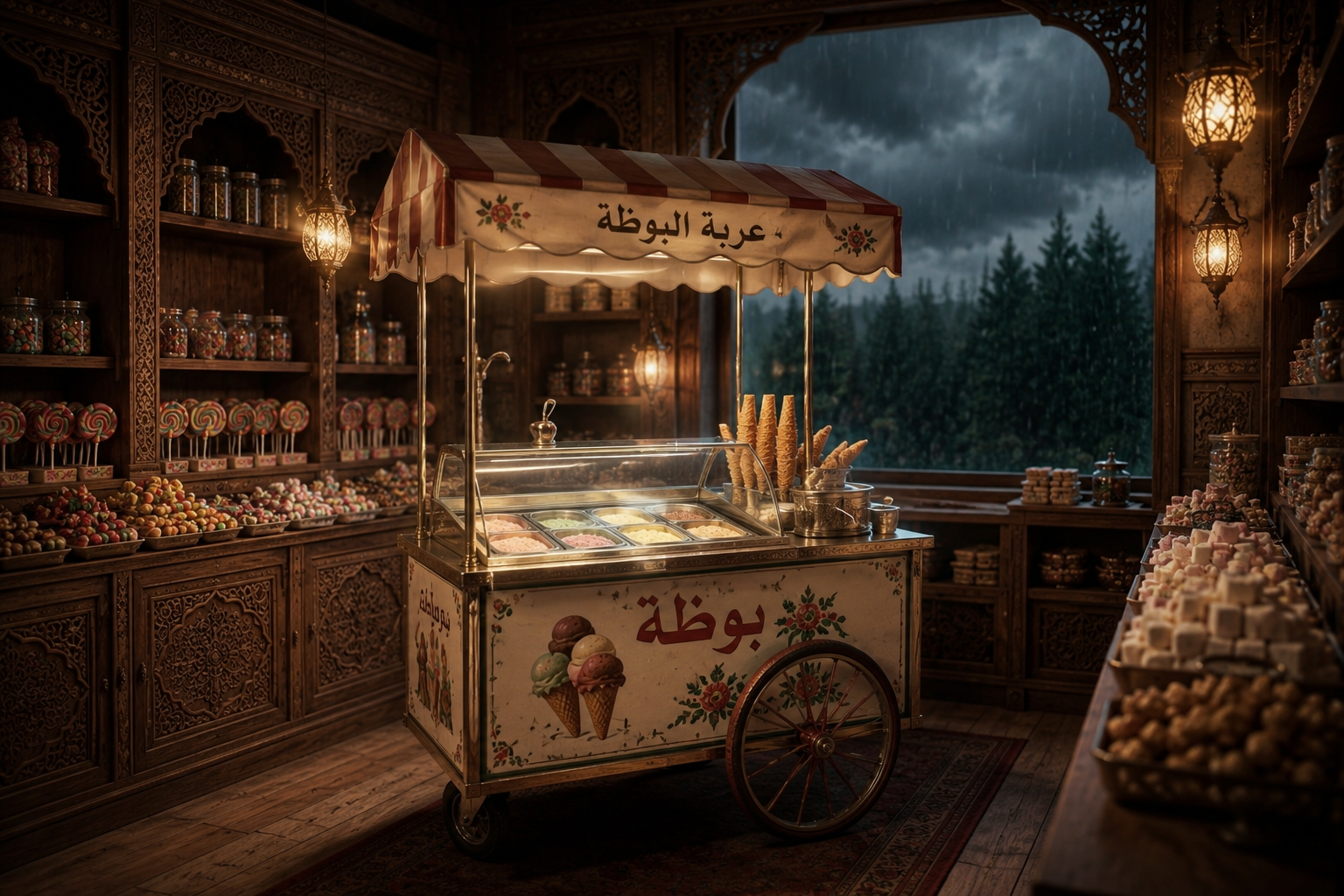
🍦 Arabic Ice Cream from the Street Cart (عربة البوظة)
Summer in Syria is closely connected with ice cream.
Children often waited for the sound of the ice cream cart or looked forward to family walks where they could stop and buy a cold treat.
Street ice cream was not only about cooling down during hot weather.
It was part of the experience.
A summer evening.
A walk with family.
Friends gathering outside.
A simple moment that became a lifelong memory.
🍧 Ice Pops and Frozen Treats (بوظة بالعصاية)
For many children, the simplest treats were sometimes the most exciting.
Colorful ice pops on wooden sticks were affordable, refreshing, and easy to enjoy while playing outside.
They were especially popular during the long Syrian summer days when children spent hours outdoors.
A small frozen treat could turn an ordinary afternoon into something special.
🍿 Roasted Corn and Simple Street Snacks
In some areas, children also enjoyed simple street snacks such as roasted corn.
The smell of freshly roasted food filling the street was part of the atmosphere of neighborhood life.
These foods were not expensive or complicated.
But they created moments of happiness and connection.
🛍️ The Neighborhood Grocery Store: A Childhood Destination
For many Syrian children, the local grocery store (البقالة) was not just a place to buy food.
It was a small part of daily life.
Children knew the shop owner.
They knew where their favorite candies were placed.
They knew exactly how much they could buy with their pocket money.
A visit to the grocery store often started with a simple question:
"بكم هي؟"
(Bikam hay?)
"How much is this?"
Then came the difficult decision:
One big candy?
Several small candies?
A snack to share with friends?
💜 Why Small Shops Matter in Syrian Culture
The neighborhood grocery store represents something deeper than shopping.
In many Syrian communities, small shops were places where people knew each other.
The shop owner might know the children's names.
Sometimes they would give a child an extra piece of candy.
Sometimes they would allow children to pay later if they forgot their money.
These small interactions created a sense of community that many Syrians still remember today.
How Syrian Childhood Sweets Have Changed Over Time
Like many cultures around the world, Syrian food habits have changed.
Older generations often remember simple candies bought from small neighborhood shops.
Younger generations grew up with a wider variety of:
Imported chocolates
International candy brands
Packaged snacks
Modern desserts
Supermarkets and online shopping also changed the way children discover sweets.
However, traditional treats never completely disappeared.
Many Syrian families still prepare classic desserts at home, especially during:
Eid
Weddings
Family gatherings
Special occasions
The old and new generations now share different memories, but sweets remain connected to celebration and togetherness.
🕰️ Childhood Classics Many Syrians Still Miss
Some sweets are still available today.
Others have become harder to find.
But even when a product disappears, the memory remains.
Many Syrians miss:
🍬 The candy they bought after school.
🍭 The snack they shared with their best friend.
🍦 The ice cream they ate during summer evenings.
🍫 The chocolates they collected during Eid.
These treats represent a time when happiness could come from something very simple.
💜 Cultural Note: Why Food Memories Matter When Learning Syrian Arabic
When you learn a language, you are not only learning words.
You are learning people's experiences.
A Syrian person saying:
"كنا نشتري سكاكر من البقالة بعد المدرسة"
(We used to buy candy from the grocery store after school)
is not only describing food.
They are sharing a childhood memory.
Understanding these cultural connections helps Arabic learners have deeper conversations with native speakers.
Because sometimes the most meaningful vocabulary comes from everyday life.
⭐ Pro Tips: Learn Arabic Through Food Stories
If you want to improve your Syrian Arabic, don't memorize food words alone.
Learn them inside real situations.
Instead of learning:
بوظة = ice cream
Learn:
بدي بوظة
"I want ice cream."
Instead of learning:
مصروف = pocket money
Learn:
كان معي مصروف صغير
"I had a little pocket money."
Expressions connected to memories are easier to remember because they have a story behind them.
⚠️ Common Mistakes When Talking About Syrian Sweets
Learning about Syrian sweets is a fun way to discover the culture, but there are a few common mistakes Arabic learners make.
Understanding these small differences will help you sound more natural when talking with Syrian speakers.
1. Translating Names Literally
Some Syrian sweets have names that sound strange when translated directly.
For example:
زنود الست (Znoud El Sit)
Literally:
"Lady's arms"
A learner might wonder why a dessert has such a name.
But food names often come from history, appearance, or cultural stories.
The best way to learn them is to understand the meaning behind the name, not only translate the words.
2. Saying "Candy" for Every Sweet
In English, the word "candy" usually refers to small sugary treats.
But in Syrian Arabic, there is a difference between:
سكاكر (Skaker)
Small candies and sweets.
and
حلويات (Halaweyat)
Traditional desserts such as baklava, knafeh, and maamoul.
For example:
🍬 A lollipop is سكاكر.
🍰 Maamoul is حلويات.
Using the right word makes your Arabic sound much more natural.
3. Forgetting That Food Is Connected to Culture
Many learners study food vocabulary as a list:
Maamoul = cookie.
Baklava = dessert.
Ice cream = بوظة.
But native speakers often connect these foods with memories:
Eid.
Family visits.
Weddings.
Childhood.
Learning the cultural meaning behind food helps you understand conversations more deeply.
4. Using Formal Arabic Instead of Spoken Syrian Arabic
Many textbooks teach Modern Standard Arabic vocabulary.
But everyday Syrian conversations use different words.
For example:
Formal Arabic:
مثلجات (Muthallajāt)
Ice cream.
Syrian Arabic:
بوظة (Booza)
Formal Arabic:
حلويات
Syrian Arabic:
حلو
Both may be understood, but knowing the spoken version helps you communicate naturally.
🗣️ Useful Syrian Arabic Phrases About Sweets and Childhood
Here are some expressions you might actually hear in Syrian conversations.
🍬 بدي شي حلو
Biddi shi helw
"I want something sweet."
A very common phrase when someone wants dessert or candy.
🍭 شو بتحب من السكاكر؟
Shu btehib min es-sakaker?
"What candy do you like?"
A natural question between friends or family members.
🛍️ كنت اشتري سكاكر من البقالة
Kent eshtre sakaker min el baqqāleh
"I used to buy candy from the grocery store."
A phrase many Syrians can relate to when talking about childhood memories.
🍦 بدك بوظة؟
Baddak booza?
"Do you want ice cream?"
A simple phrase you may hear during summer outings.
🌍 What Syrian Childhood Sweets Teach Us About Language
Food is one of the easiest ways to enter a culture.
When you learn words connected to sweets, you are also learning:
How families celebrate.
How neighbors interact.
How children spend time together.
How traditions are passed between generations.
A word like بقالة is not only "grocery store."
For many Syrians, it represents a place full of childhood memories.
A word like معمول is not only a cookie.
It represents Eid mornings, family gatherings, and traditions passed down through generations.
This is why learning Syrian Arabic through culture is so powerful.
The language becomes connected to real life.
💜 Learn Syrian Arabic Through Real Conversations
At Speak Real Arabic, we believe the best way to learn a language is to experience it the way people actually use it.
Grammar and vocabulary are important, but real fluency comes from understanding:
💜 The expressions people use.
💜 The stories behind the words.
💜 The cultural moments that shape conversations.
Through authentic Syrian Arabic lessons, conversations, stories, and cultural content, you'll learn not only what Syrians say, but why they say it.
Because language is not just a collection of words.
It's a reflection of people's lives.
Final Thoughts
Syrian childhood sweets are much more than sugar and flavor.
They are memories.
They are the sound of children leaving school.
The small neighborhood grocery store.
The excitement of Eid visits.
The first bite of summer ice cream.
For Syrians, these treats represent moments of happiness, friendship, and family connection.
For Arabic learners, they offer something even more valuable:
A window into Syrian culture.
The next time you hear someone talking about معمول, بوظة, or شطّي مطّي, you'll understand that they are not only talking about food.
They are sharing a piece of their story.
And that's one of the most beautiful parts of learning real Syrian Arabic.
💜 Ready to Learn Real Syrian Arabic?
Want to understand the expressions, stories, and cultural moments behind the Arabic language?
At Speak Real Arabic, you'll learn Syrian Arabic through:
🎧 Real conversations
📖 Authentic stories
🗣️ Everyday expressions
💜 Cultural lessons
Because the goal is not only to learn Arabic.
The goal is to understand the people who speak it.
Start your Syrian Arabic journey today.
Continue Learning Syrian Arabic
🌟 Learn Real Syrian Arabic for Beginners (Without Grammar Stress)
Discover the foundations of spoken Syrian Arabic through real-life conversations.
🌟 The Real Meaning of Yalla: More Than "Let's Go"
Learn why one of the most common Arabic words changes meaning depending on context.
🌟 Arabic Words That Can't Be Translated: Culture Beyond Vocabulary
Explore the expressions that reveal emotions and traditions.
🌟 What Is Tarab? A Beautiful Arabic Word Every Music Lover Should Know
Discover how Arabic language connects with music and emotion.


