
What Is Tarab? A Beautiful Arabic Word Every Music Lover Should Know
Discover the meaning of Tarab (طرب), the Arabic word that describes a profound emotional connection to music, and why it has captivated listeners across the Arab world for centuries.
Have you ever heard a song that made the rest of the world disappear?
Maybe it gave you goosebumps before you even understood the lyrics.
Maybe it reminded you of a place, a person, or a moment you thought you'd forgotten.
Or maybe, for just a few minutes, the music made you feel completely present, so absorbed that nothing else seemed to matter.
Most languages can describe enjoying music.
Arabic goes a step further.
It has a word for that rare moment when music doesn't simply entertain you, it moves you, overwhelms you, and stays with you long after the final note.
That word is Tarab (طرب).
For generations, Arabic speakers have used Tarab to describe one of the deepest emotional experiences music can create. It is a word closely connected to poetry, memory, longing, and the unique relationship between performers and their audiences.
Like many beautiful Arabic words, Tarab has no perfect English equivalent. You can translate parts of its meaning, but you cannot fully translate the feeling itself.
Understanding Tarab isn't just about learning new vocabulary.
It's about discovering how language, culture, and emotion come together in one unforgettable word.
At Speak Real Arabic, we believe that language is best understood through the culture that shapes it. And few words capture the emotional richness of Arabic culture better than Tarab.
💜 In This Guide, You'll Learn
By the end of this article, you'll understand:
What Tarab (طرب) really means.
Why it has no perfect English translation.
How Tarab became one of the defining ideas in Arabic music.
The legendary singers most closely associated with Tarab.
How Syrians use the word in everyday conversations.
Why understanding words like Tarab helps you connect more deeply with Arabic language and culture.
What Is Tarab? A Beautiful Arabic Word Every Music Lover Should Know
Discover the meaning of Tarab (طرب), the Arabic word that describes a profound emotional connection to music, and why it has captivated listeners across the Arab world for centuries. 1
💜 In This Guide, You'll Learn 1
Why Is Tarab Important in Arabic Culture? 2
🎼 A Shared Emotional Experience 2
The History of Tarab in Arabic Music 3
🟡 The Connection Between Poetry and Music 1
🟡 How Traditional Performances Created Tarab 2
Famous Arab Artists Associated with Tarab 4
Tarab vs Simply Enjoying Music 5
Can Non-Native Speakers Experience Tarab? 6
How Music Can Help You Learn Arabic Faster 7
🟡 Improve Your Listening Skills 1
🟡 Learn Vocabulary Naturally 2
🟡 Develop More Natural Pronunciation 4
Why Tarab Is More Than Music
Imagine sitting in a concert hall.
The singer begins quietly.
No one is checking their phone.
No one is talking.
Every note seems to draw the audience deeper into the performance.
Then, almost without thinking, someone whispers:
الله...
Another person responds:
يا سلام!
The singer repeats the same line again.
And again.
Each repetition carries a slightly different emotion.
Instead of becoming repetitive, the song grows more powerful.
The audience isn't simply listening anymore.
They're participating.
Their reactions encourage the singer, who responds with even more emotion. Performer and audience become part of the same experience, creating a musical conversation rather than a one-sided performance.
This is one of the defining characteristics of Tarab.
It isn't only about beautiful music.
It's about the emotional connection that forms between the singer, the audience, the lyrics, and the moment itself.
That's why Tarab is often described as an experience rather than a musical style.
You don't simply hear Tarab.
You feel it.
What Does Tarab Mean?
The Arabic word طرب (Tarab) refers to a profound emotional response to music or singing.
It describes the feeling of becoming completely absorbed in a performance, to the point where music creates joy, nostalgia, longing, excitement, or even tears.
Unlike words such as happiness or excitement, Tarab isn't a single emotion.
It's a state of emotional immersion.
A listener experiencing Tarab may feel:
💜 Deep joy
💜 Nostalgia for the past
💜 Longing or yearning
💜 Emotional release
💜 A powerful connection with the singer
💜 Complete absorption in the music
English words like ecstasy, rapture, musical enchantment, or emotional transport capture parts of its meaning, but none fully express what Arabic speakers mean when they say Tarab.
That's why it frequently appears on lists of beautiful Arabic words that have no perfect English translation.
The word itself comes from the Arabic root ط ر ب, a root associated with emotional movement, delight, and being deeply affected. Over centuries, its meaning became closely linked with music, poetry, and artistic performance, making it one of the most expressive words in the Arabic language.
Tarab isn't simply listening to music.
It's allowing music to move you so deeply that, for a few unforgettable moments, nothing else exists.
Why Is Tarab So Difficult to Translate?
If you search online for the meaning of Tarab, you'll often find translations like ecstasy, rapture, musical enchantment, or emotional ecstasy.
While these words capture part of the idea, none of them fully express what Tarab means to Arabic speakers.
That's because Tarab isn't just an emotion.
It's an experience.
It combines the music, the lyrics, the singer's voice, the audience's reactions, your memories, and your emotional state into one unforgettable moment.
You don't decide to experience Tarab.
It happens to you.
This is one reason why linguists often mention Tarab when discussing Arabic words that don't have a perfect English equivalent. The feeling can certainly be explained, but it can't be translated with a single word.
In many ways, Tarab reminds us that every language carries ideas shaped by its own culture. Some experiences are so deeply rooted in a society's history that another language can only describe them, not replace them.
Why Is Tarab Important in Arabic Culture?
For centuries, music has been much more than entertainment across the Arab world.
It has been a way to tell stories.
To preserve poetry.
To express love.
To remember people who are far away.
To celebrate.
To grieve.
Because music has always carried so much emotional weight, creating Tarab became one of the highest achievements a singer could accomplish.
A successful performance wasn't judged only by vocal technique.
It was judged by the audience's emotional response.
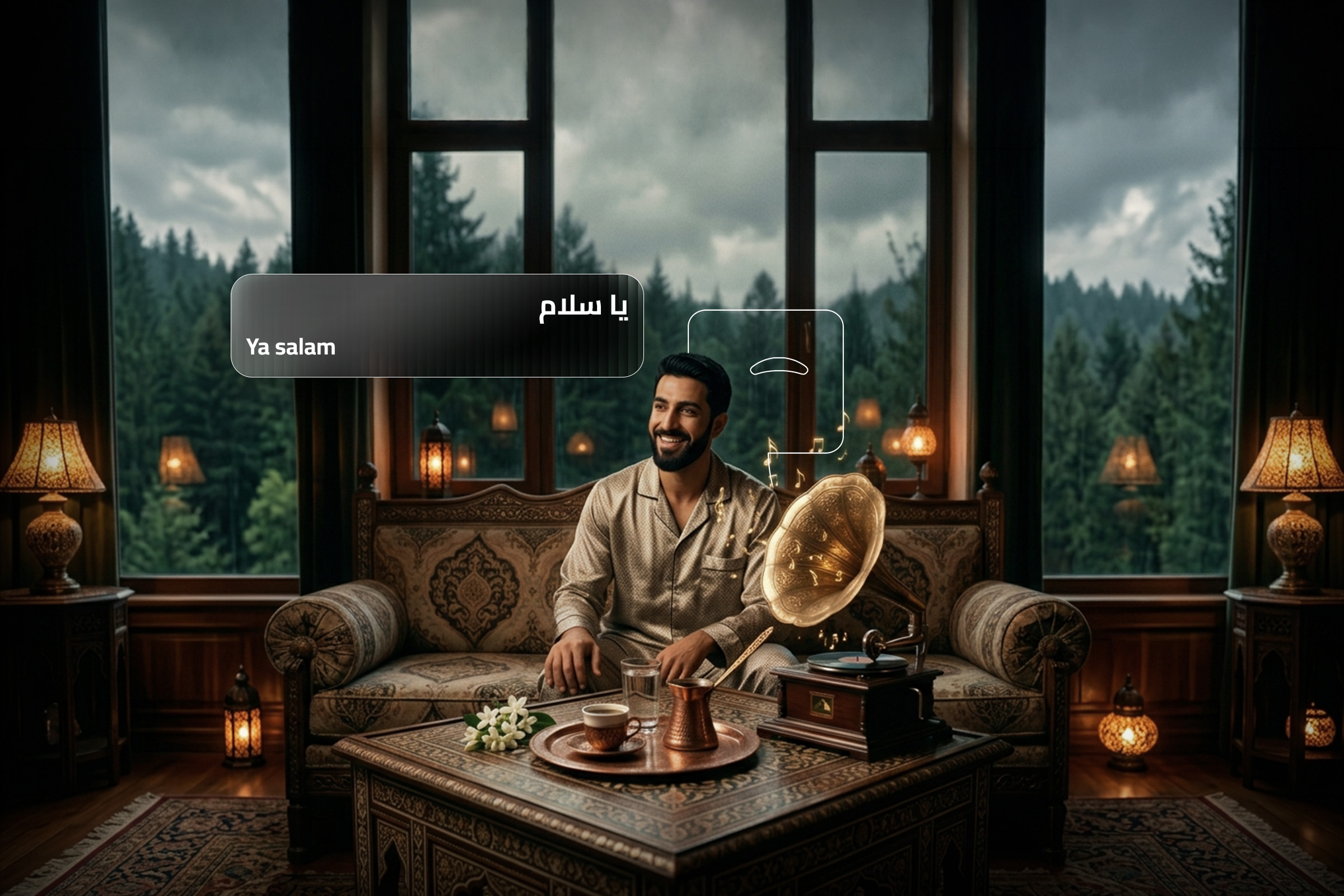
When listeners closed their eyes, repeated the lyrics, or spontaneously called out:
الله!
يا سلام!
the performer knew something special had happened.
The audience wasn't simply applauding.
They were sharing the emotion.
Unlike many modern concerts, where audiences remain mostly silent until the end of a song, traditional Arabic performances often become a conversation between singer and listeners.
A single verse might be repeated several times.
Not because the audience wanted to hear the words again,
but because they wanted to feel them again.
That shared emotional journey is at the heart of Tarab.
The History of Tarab
The idea of Tarab is much older than modern Arabic music.
Long before recording studios, streaming platforms, or concert arenas, poetry was one of the most respected forms of artistic expression in Arab society.
Poets performed their work aloud, using rhythm, repetition, and carefully chosen words to stir emotion in their listeners.
As music and poetry became more closely connected, singers began transforming those verses into performances that could move entire audiences.
Over time, musicians developed styles that emphasized emotional expression rather than speed or technical complexity.
Improvisation became an essential part of the performance.
A singer might repeat the same line several times, changing the melody slightly with each repetition.
If the audience reacted enthusiastically, the singer would continue exploring that emotional moment before moving on.
The goal wasn't simply to finish the song.
It was to build an emotional connection powerful enough for everyone in the room to experience Tarab together.
Legendary Voices of Tarab
Some singers became legendary not only because of their beautiful voices, but because they consistently created Tarab for millions of listeners.
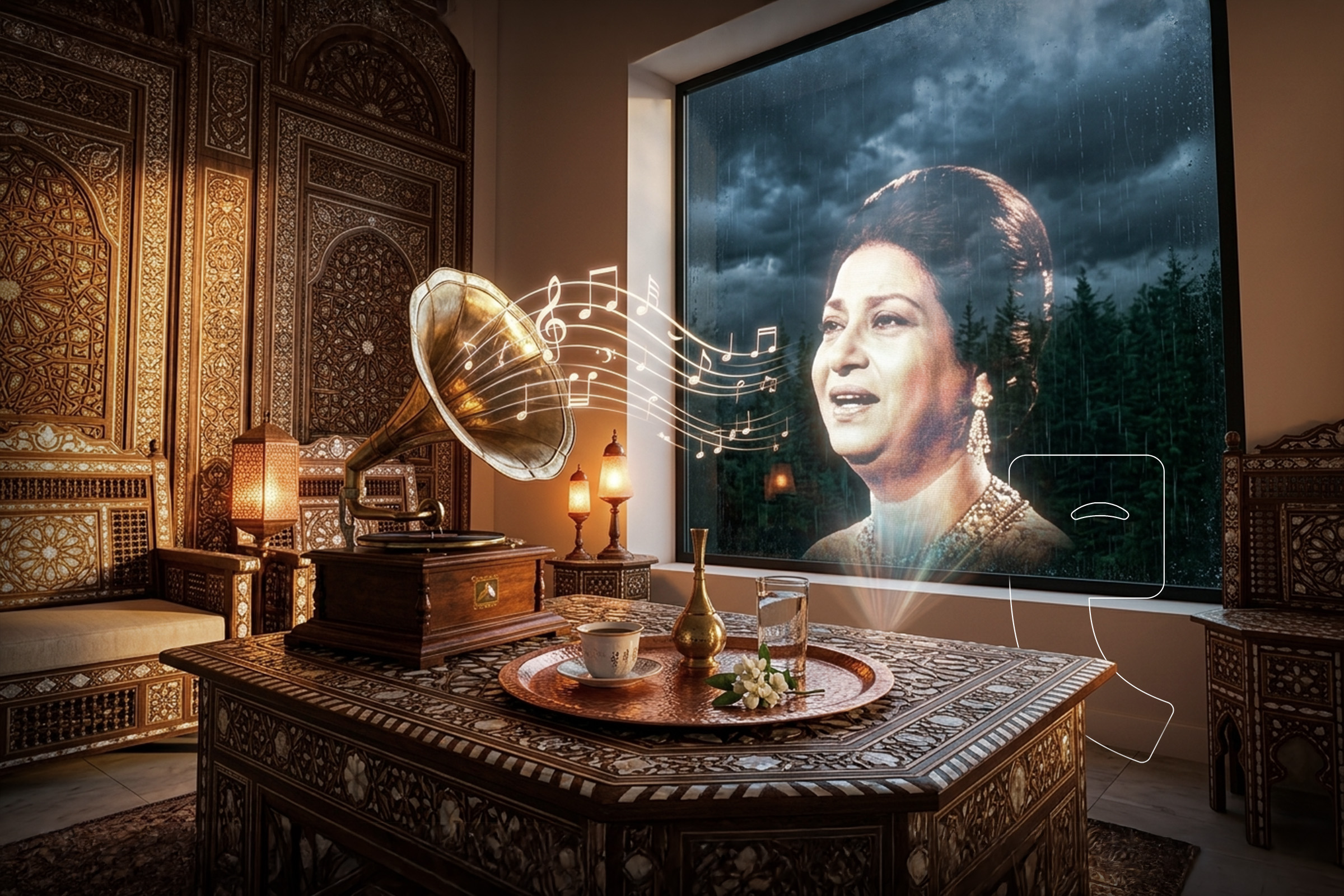
🟣 Umm Kulthum (أم كلثوم)
Few names are more closely connected to Tarab than Umm Kulthum.
Known as the "Star of the East," she transformed Arabic music with performances that often lasted several hours.
She frequently repeated verses based on the audience's reactions, allowing every performance to become a unique emotional experience.
Many listeners described feeling completely transported by her voice.
Even today, decades after her final concert, her music continues to define Tarab for countless people across the Arab world.

🟣 Fairuz (فيروز)
For many Syrians and Lebanese, mornings begin with the voice of Fairuz.
Her songs evoke calm, nostalgia, hope, and memories of home.
Even people who don't understand Arabic often describe feeling emotionally connected to her music.
That's the remarkable thing about Tarab:
sometimes the emotion arrives before the meaning of the words.
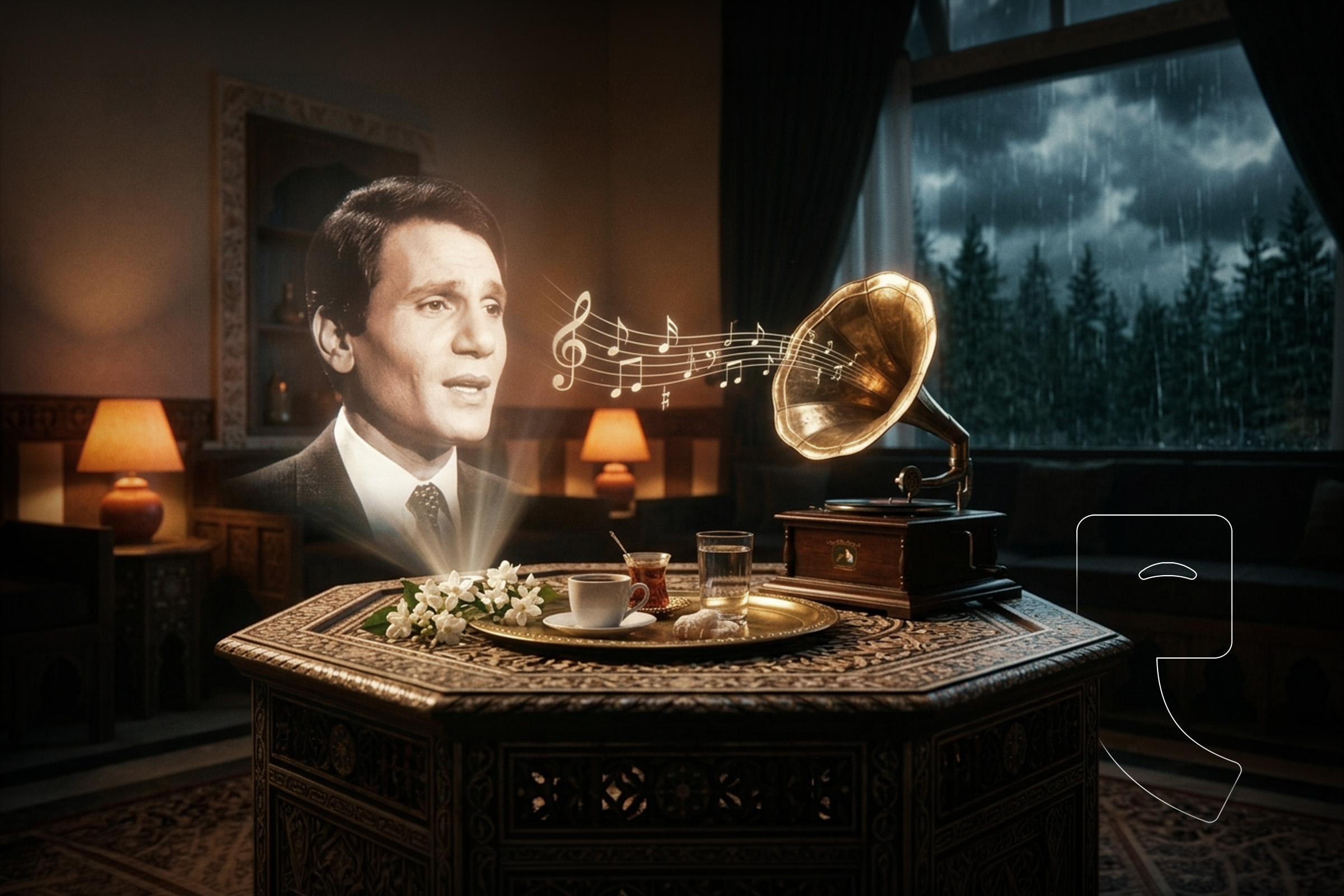
🟣 Abdel Halim Hafez (عبد الحليم حافظ)
Known for his romantic songs and emotional performances, Abdel Halim Hafez became one of the Arab world's most beloved singers.
His expressive voice and heartfelt delivery allowed audiences to experience love, heartbreak, longing, and hope through every performance.
For many fans, listening to Abdel Halim isn't simply hearing old songs.
It's reliving memories.
Can You Experience Tarab Without Speaking Arabic?
The short answer is yes.
You don't have to understand every word of an Arabic song to experience Tarab.
Music communicates in ways that language sometimes cannot. A melody, a powerful voice, or even a single musical phrase can stir emotions before you know what the lyrics mean.
That's why many people fall in love with Arabic music long before they begin learning Arabic.
Perhaps you've listened to a Fairuz song on a quiet morning.
Or discovered an Umm Kulthum performance that kept you listening for twenty minutes without realizing how much time had passed.
Even without understanding the words, you may have felt calm, nostalgic, emotional, or completely captivated.
That's the power of Tarab.
As your Arabic improves, those same songs become even more meaningful. The emotions you already felt are joined by an understanding of the poetry, metaphors, and cultural references hidden in the lyrics.
The music doesn't change.
But your connection to it becomes deeper.
💬 Syrian Arabic in Real Life
Although Tarab originally describes a profound emotional response to music, Syrians also use the word in everyday conversations to describe anything they find deeply enjoyable or emotionally satisfying.
Here are a few expressions you might hear.
هالأغنية بتطرب.
"This song is absolutely beautiful."
Literally, it means:
"This song creates Tarab."
والله طرب!
"That was amazing!"
This expression can describe a song, a beautiful voice, or even an unforgettable performance.
صوته بيطرب.
"His voice is captivating."
Syrians often use this phrase to compliment someone with an exceptionally beautiful singing voice.
💜 Cultural Notes
Music Is Often Shared, Not Just Listened To
Across Syria, music is closely connected to daily life.
You'll hear it during family gatherings, weddings, long car journeys, cafés, celebrations, and quiet mornings at home.
Listening to music is often a shared experience.
People sing together.
They recommend songs to friends.
They tell stories connected to certain singers or lyrics.
A song is rarely "just a song."
It's often tied to memories, people, places, and emotions.
Why Syrians Love Fairuz in the Morning
If you've spent time with Syrians, or many people across the Levant, you've probably noticed something.
Morning and Fairuz seem to belong together.
For many families, starting the day with one of her songs has become a cherished tradition.
The combination of a quiet morning, a cup of coffee, and Fairuz's voice creates an atmosphere that many people describe as peaceful, nostalgic, and comforting.
It's one of the simplest ways to understand how music becomes part of everyday culture, not just entertainment.
⭐ Pro Tips
🟡 Listen before translating.
Resist the temptation to read the English translation immediately.
Listen to the song first.
Notice how it makes you feel before you analyze the words.
That's much closer to the way native speakers experience Tarab.
🟡 Choose one singer and explore their music.
Rather than listening to dozens of different artists, spend time with one legendary voice.
You'll begin to recognize recurring vocabulary, pronunciation, and themes.
🟡 Read the lyrics after listening.
Once you've heard the song a few times, read the Arabic lyrics alongside an English translation.
You'll be surprised by how much meaning you already sensed through the music alone.
🟡 Don't rush through long songs.
Some classic Arabic songs last twenty, thirty, or even sixty minutes.
That's intentional.
The emotional journey develops gradually.
Allow yourself to experience it without worrying about understanding every single word.
⚠️ Common Mistakes
Mistake 1
❌ Thinking Tarab simply means "music."
✅ Tarab describes an emotional state, not a musical genre.
Mistake 2
❌ Believing Tarab only exists in old Arabic songs.
✅ While classical singers are closely associated with Tarab, people can experience it with modern music as well.
Mistake 3
❌ Assuming you need perfect Arabic to appreciate Tarab.
✅ Emotion often comes before understanding. Many learners experience Tarab long before they become fluent.
Mistake 4
❌ Translating Tarab as "ecstasy" and stopping there.
✅ That translation explains only part of the idea. Tarab includes emotion, connection, memory, performance, and shared cultural experience.
How Music Can Help You Learn Syrian Arabic
If you're learning Syrian Arabic, music can become one of your most valuable learning tools.
Instead of treating songs as background entertainment, use them as authentic listening practice.
Here are a few simple ways to learn naturally through music:
💜 Listen to the same song several times instead of constantly searching for new ones.
💜 Write down words and expressions you recognize.
💜 Sing along to improve your pronunciation and rhythm.
💜 Learn complete phrases rather than individual vocabulary.
💜 Read the lyrics after listening and notice how pronunciation changes in natural speech.
Over time, you'll begin recognizing familiar expressions, sentence patterns, and pronunciation without feeling like you're memorizing vocabulary.
That's one of the reasons music is such a powerful language-learning tool.
Final Thoughts
Tarab is more than a beautiful Arabic word.
It's a reminder that language isn't only something we study.
It's something we experience.
For centuries, Tarab has described those unforgettable moments when music reaches beyond sound and speaks directly to the heart.
Whether you're discovering Umm Kulthum for the first time, starting your morning with Fairuz, or simply exploring Arabic culture through music, understanding Tarab allows you to appreciate a tradition that has inspired generations across the Arab world.
And perhaps that's what makes this word so special.
It doesn't ask you to translate it.
It invites you to feel it.
Experience Real Syrian Arabic
Inside the Speak Real Arabic Membership, you'll discover authentic Syrian Arabic through stories, conversations, and cultural experiences that help you understand not just the language, but the people behind it.
Learn naturally through native audio, real-life expressions, vocabulary breakdowns, transcripts, and immersive cultural content designed for everyday communication.
The lesson below is a sample from the Speak Real Arabic Membership.
For this lesson, you'll explore a cozy winter scene inspired by everyday Syrian life and the atmosphere many Arabic speakers associate with winter mornings, warm drinks, and familiar songs.
What's Included in This Lesson?
Listen to authentic Syrian Arabic and immerse yourself in the sounds, rhythm, and emotions of the language.
Follow along with the complete written text to improve comprehension, learn vocabulary in context, and build confidence in your reading skills.
Together, the audio and transcript create a richer learning experience, helping you connect language, culture, and meaning in a natural way.
Because sometimes the best way to learn Arabic isn't just to study it.
It's to experience it.
Unlock the full transcript, translation, vocabulary explanations, and cultural notes inside the Membership. Discover the Membership


