
7 Arabic Expressions That Can't Be Translated into English
Discover seven authentic Syrian Arabic expressions whose meanings go far beyond literal translation, and learn what they reveal about Arabic culture, relationships, and everyday life.
Some Words Can't Be Translated. They Have to Be Experienced.
Imagine you're visiting a Syrian friend's home for the first time.
As you walk through the door, everyone greets you warmly:
"أهلًا وسهلًا!"
You smile because you know it means "Welcome."
But something feels different.
The room instantly feels warm.
People offer you coffee before you've even sat down.
Someone insists you eat.
Another family member asks if you're comfortable.
Suddenly, you realize that "Welcome" doesn't fully capture what أهلًا وسهلًا really means.
The words carry something much bigger.
They express belonging.
Hospitality.
Warmth.
And the feeling that you've become part of the family, even if only for an evening.
This happens often when learning Arabic.
Many words can be translated.
But some expressions lose their soul when you try to replace them with a single English word.
At Speak Real Arabic, we believe these are the expressions that make a language truly come alive. They reveal not only what people say, but also how they think, care for one another, and build relationships.
Learning them doesn't just improve your vocabulary.
It helps you understand the culture behind the language.
💜 In This Guide, You'll Learn
By the end of this article, you'll understand:
Why some Arabic expressions can't be translated literally.
Seven authentic Syrian Arabic phrases you'll hear in everyday conversations.
The cultural meaning hidden behind each expression.
Why direct translation often fails.
How these phrases help you sound more natural.
The best way to learn Arabic beyond vocabulary lists.
7 Arabic Expressions That Can't Be Translated into English
Some Words Can't Be Translated. They Have to Be Experienced.
Why Some Arabic Words Don't Exist in English
7 Beautiful Arabic Expressions That Lose Their Meaning in Translation
2. الله يخليك (Allah Ykhallik)
5. يعطيك العافية (Yaʿṭīk el-ʿĀfiye)
Why Syrians Speak With So Much Emotion
⭐ Pro Tips for Learning Untranslatable Arabic Expressions
✔ Learn complete expressions, not isolated words.
✔ Notice how often these phrases are repeated.
⚠️ Common Mistakes Arabic Learners Make
❌ Translating every word literally.
❌ Thinking "Habibi" is always romantic.
❌ Using expressions without understanding the situation.
❌ Learning vocabulary without culture.
How Native Syrians Use These Expressions Every Day
✔ Someone cooks you a delicious meal.
✔ Your friend tells you they've had a difficult day.
✔ Someone helps you carry heavy bags.
✔ You ask a friend for a small favor.
✔ You haven't seen your cousin for months.
Why Some Arabic Words Don't Exist in English
Every language reflects the culture of the people who speak it.
English has words that don't exist in Arabic.
Japanese has expressions that don't exist in French.
Arabic is no different.
For centuries, Arabic has developed alongside cultures that place great importance on family, hospitality, respect, generosity, and emotional connection.
As a result, many everyday expressions carry layers of meaning that simply don't have direct English equivalents.
Take the English word home.
It usually refers to a place where someone lives.
In Arabic, however, words connected to home often carry ideas of family, belonging, hospitality, and identity all at once.
The same is true for many expressions Syrians use every day.
A phrase might sound like a simple greeting.
In reality, it may also express gratitude, affection, encouragement, or respect.
That's why translating Arabic word for word rarely sounds natural.
Native speakers aren't translating in their heads.
They're communicating feelings.
And that's exactly what makes spoken Syrian Arabic so rich and expressive.
7 Beautiful Arabic Expressions That Lose Their Meaning in Translation
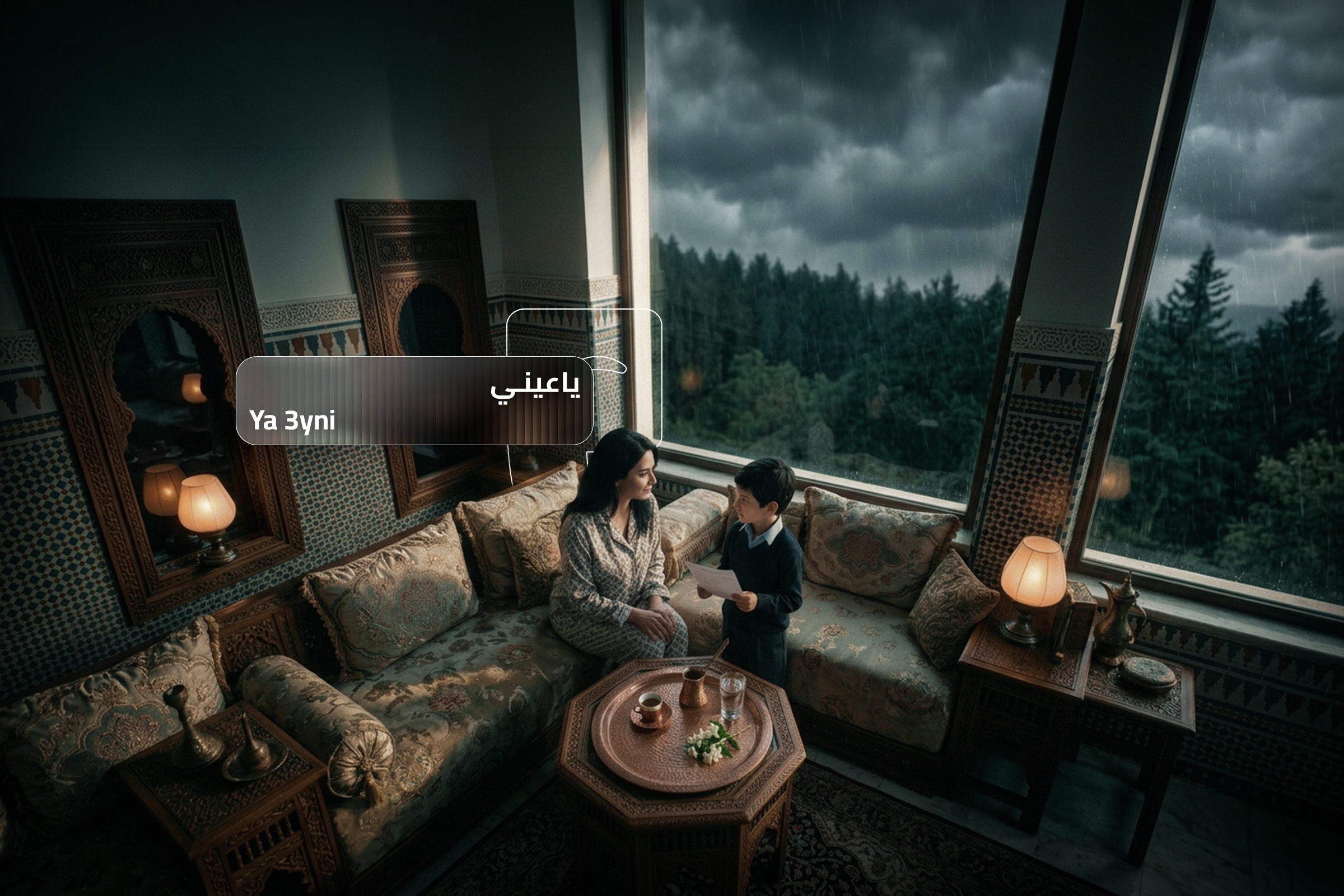
1. يا عيني (Ya 'Ayni)
At first glance, this expression seems easy to translate.
Literally, it means:
"Oh, my eye."
But if you say that in English, it sounds confusing.
To a Syrian speaker, however, يا عيني has very little to do with eyes.
Instead, it's a deeply emotional expression that changes meaning depending on the situation.
Imagine your friend tells you they've been working all day without a break.
You might respond:
يا عيني...
You're not commenting on their eyes.
You're showing sympathy.
Now imagine a child proudly shows you a drawing.
You smile and say:
يا عيني!
This time, the expression communicates admiration and affection.
Someone tells you wonderful news?
You might still say:
يا عيني!
Now it expresses happiness and warmth.
The words stay exactly the same.
The emotion changes.
Common Meanings
💜 Sympathy
💜 Affection
💜 Admiration
💜 Tenderness
💜 Emotional support
This flexibility is one reason learners quickly realize that dictionaries can only explain part of the meaning.
To truly understand يا عيني, you need to hear it in real conversations.
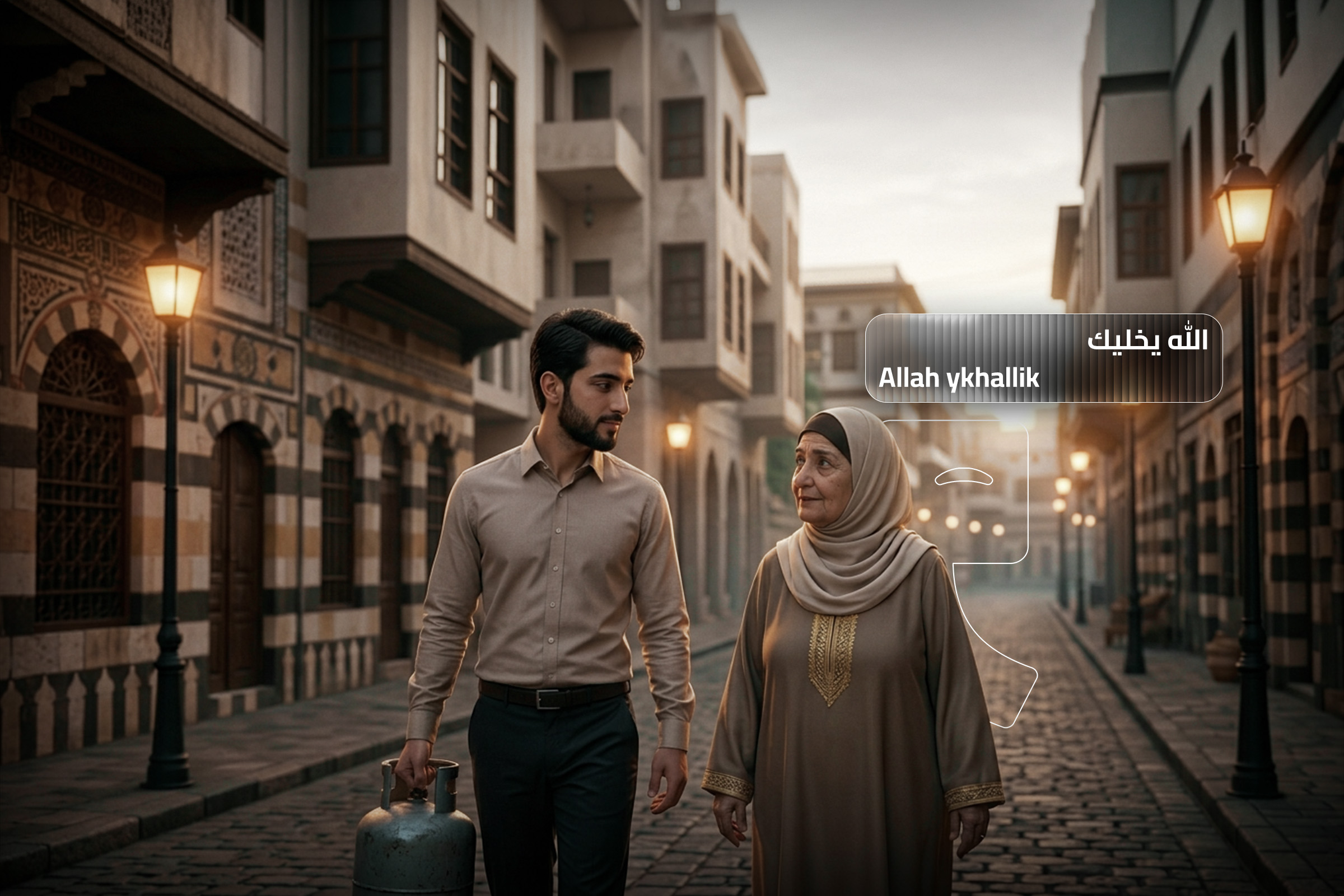
2. الله يخليك (Allah Ykhallik)
Few expressions reflect Arabic kindness better than الله يخليك.
A literal translation would be:
"May God keep you."
While grammatically accurate, that translation doesn't explain how Syrians actually use the phrase.
In everyday life, الله يخليك is often a heartfelt response to kindness.
Someone holds the door for you.
A friend helps you carry heavy bags.
A neighbor brings you homemade food.
Instead of simply saying "Thank you," many Syrians naturally reply:
الله يخليك
The phrase expresses much more than gratitude.
It carries a genuine wish for the other person's well-being.
That's one reason Arabic conversations often feel so warm to learners.
Many expressions are also small blessings.
Example
شكراً.
الله يخليك.
"Thank you."
"May God bless and protect you."
Even when speakers aren't thinking consciously about the literal words, the expression reflects a culture where appreciation is often expressed through goodwill and prayers.

3. تكرم عينك (Tikram 'Aynak)
If you've spent time with Syrians, you've probably heard this expression dozens of times.
Someone asks for a favor.
Without hesitation, the other person smiles and replies:
تكرم عينك.
If you translate it literally, you'll get:
"May your eye be honored."
That sounds unusual in English.
But to a Syrian, the meaning is instantly clear.
It's a warm and generous way of saying:
💜 Of course.
💜 I'd be happy to.
💜 Absolutely.
💜 Consider it done.
Unlike a simple "yes," تكرم عينك carries emotion.
It tells the other person:
"Your request matters to me."
"I'm happy to help."
That's why you'll hear it everywhere:
At small neighborhood shops.
Between friends.
In family gatherings.
Even in customer service.
Example
ممكن فنجان قهوة؟
Could I have a cup of coffee?
تكرم عينك.
With pleasure.
The phrase reflects one of the strongest values in Syrian culture:
Hospitality.
Helping others isn't seen as an inconvenience.
It's something to be proud of.
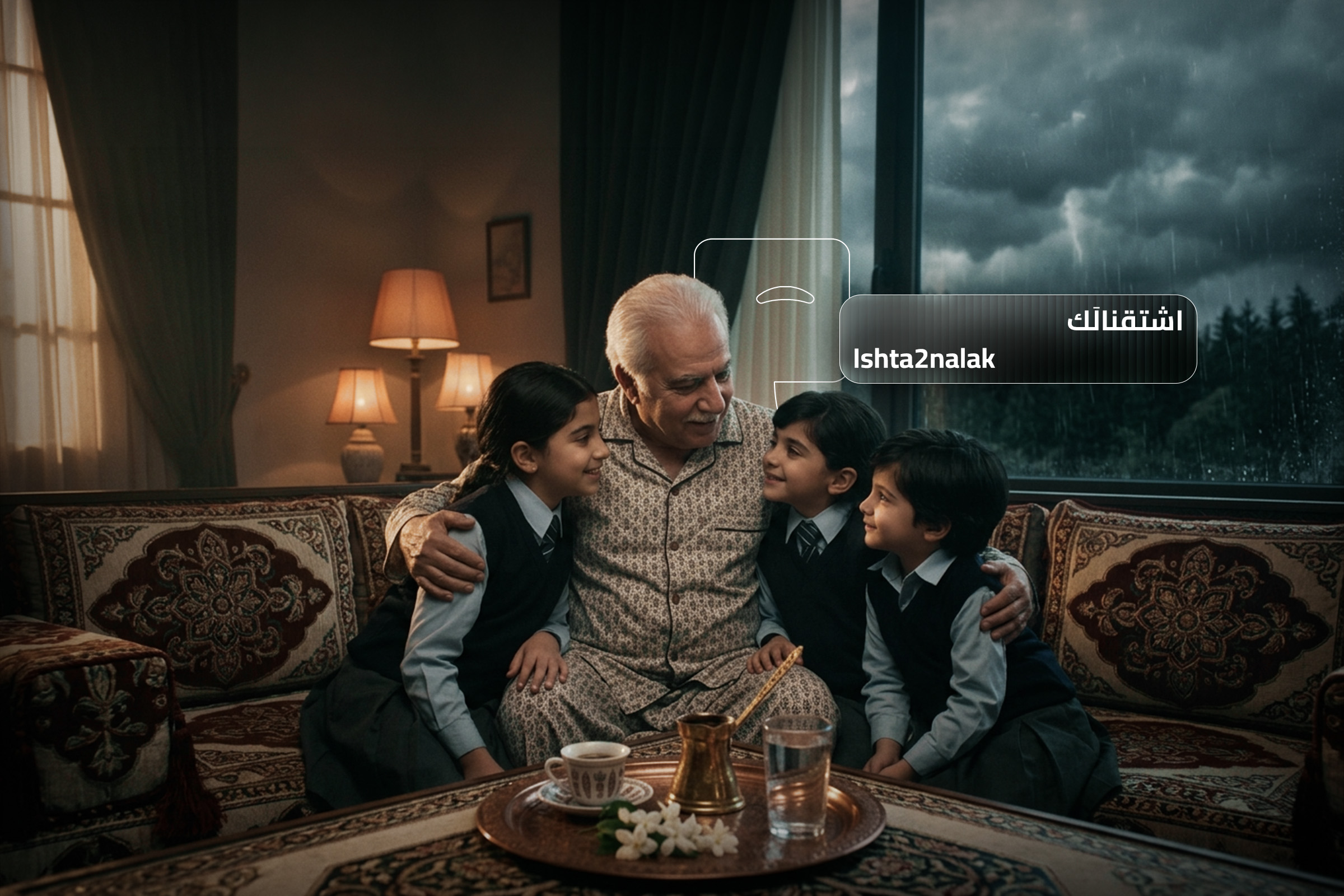
4. اشتقنالك (Ishta'nalak)
English speakers often say:
"I miss you."
In Syrian Arabic, you'll hear:
اشتقنالك
Although both expressions communicate the same basic idea, they don't always feel the same emotionally.
For many Syrians, اشتقنالك feels warmer, softer, and more personal.
You'll hear it after a friend returns from traveling.
A family member calls after several weeks.
Grandparents greet their grandchildren.
Close friends meet after a long time apart.
Example
وينك؟ اشتقنالك!
"Where have you been? We missed you!"
The phrase immediately creates closeness.
It's one of those expressions that many Arabic learners remember because it sounds genuinely heartfelt.
Unlike English, where "I miss you" is sometimes reserved for close relationships, Syrians often use اشتقنالك naturally with relatives, friends, neighbors, and people they simply enjoy seeing.
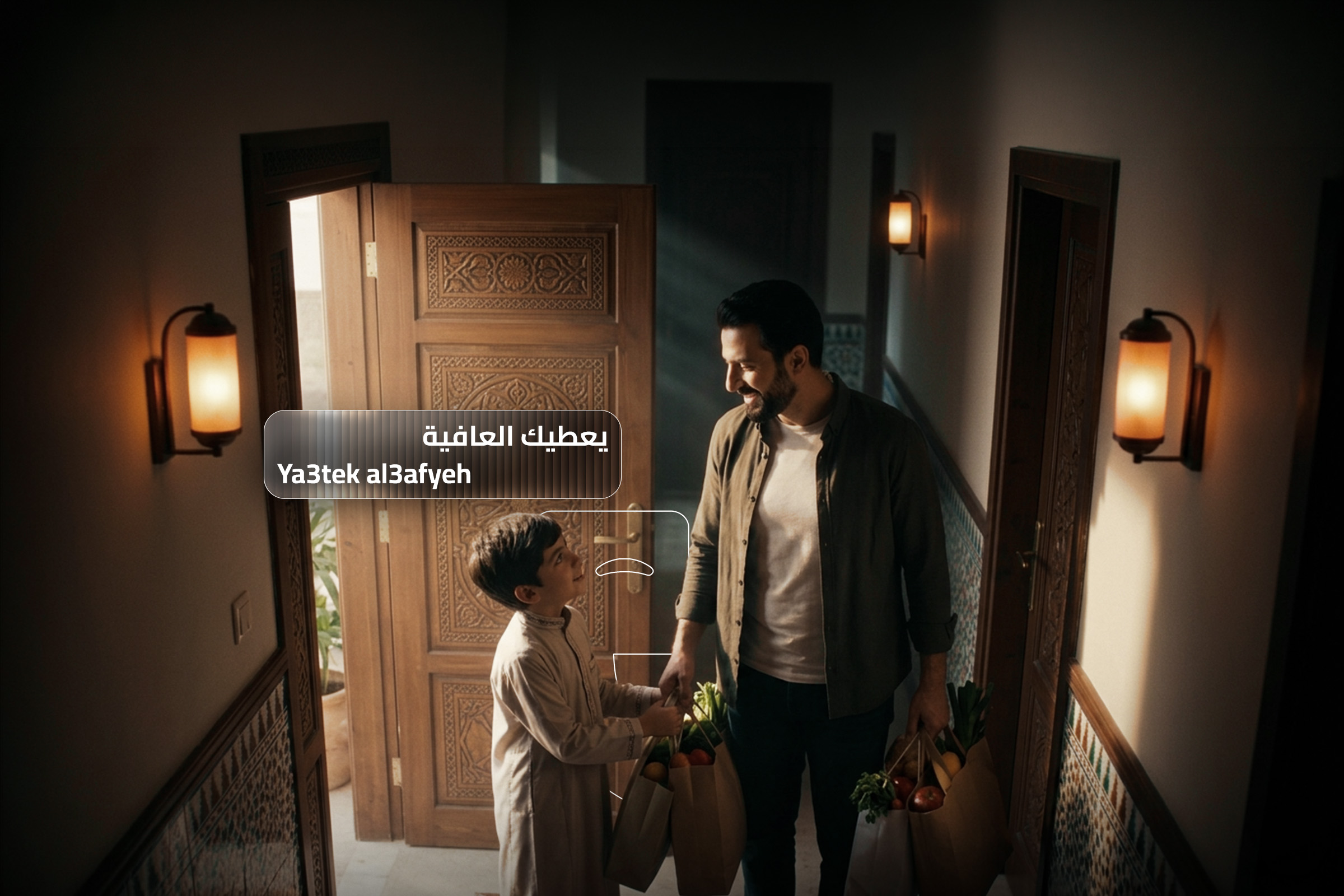
5. يعطيك العافية (Yaʿṭīk el-ʿĀfiye)
This may be one of the most useful expressions you'll ever learn.
Literally, it means:
"May God give you health."
But that's rarely how native speakers understand it.
Instead, يعطيك العافية is used to recognize someone's effort.
Imagine someone has just:
✔ Cooked dinner.
✔ Finished cleaning.
✔ Helped you move furniture.
✔ Worked all day.
✔ Repaired something.
Instead of simply saying:
"Good job."
or
"Thanks."
Many Syrians naturally say:
يعطيك العافية.
The phrase acknowledges the work someone has done and wishes them continued strength and health.
Example
A mechanic finishes repairing your car.
You smile and say:
يعطيك العافية.
A teacher finishes explaining a difficult lesson.
Students often reply:
يعطيك العافية أستاذ.
It's one of the expressions you'll hear almost every day in Syria because appreciation is woven into everyday conversation.6. حبيب قلبي (Habib Albi)
Many Arabic learners know the word:
حبيبي (Habibi)
which means:
"My dear" or "my beloved."
But Syrians often go a step further.
حبيب قلبي
Literally means:
"The beloved of my heart."
Native speakers use it with friends, family members, children, and loved ones.
The expression communicates affection in a way that sounds natural and sincere rather than dramatic.
7. أهل (Ahl)
At first, this word seems simple.
Most dictionaries translate:
أهل
as
"family."
But Syrians understand it as something much bigger.
أهل can refer to:
👨👩👧👦 Your family.
🏡 Your relatives.
🤝 Your people.
❤️ Those you belong with.
🌍 Your roots.
This broader meaning appears in many everyday expressions.
For example:
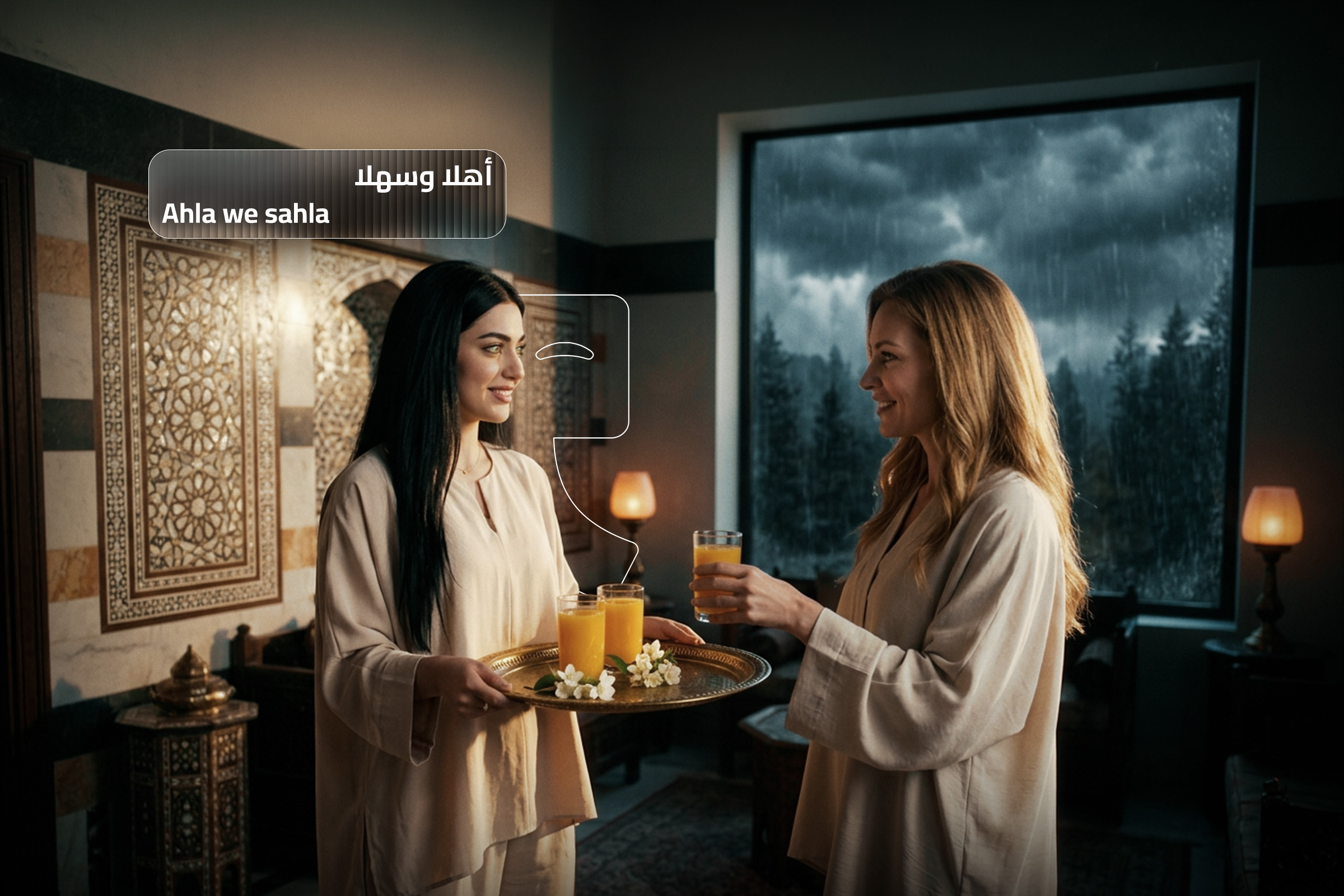
أهلًا وسهلًا
Although usually translated as:
"Welcome."
The phrase comes from the same root.
It carries the feeling that the guest is no longer a stranger.
They're among their own people.
You'll also hear:
أهلك
Your family.
أهل الشام
The people of Damascus.
أهل البيت
The members of the household.
This richness is difficult to capture with a single English word.
It's another reminder that language reflects culture, not just vocabulary.
💜 Cultural Notes
Why Syrians Speak With So Much Emotion
One thing that surprises many Arabic learners is how emotionally expressive everyday Syrian Arabic can be.
In many conversations, people don't simply exchange information.
They exchange warmth.
You'll hear expressions like:
الله يخليك
يعطيك العافية
يسلمو إيديك
الله معك
يا عيني
حبيب قلبي
These phrases aren't reserved for special occasions.
They're part of everyday life.
They make conversations feel personal, welcoming, and full of kindness.
Learning them helps you understand not just what Syrians say, but why they say it.
⭐ Pro Tips for Learning Untranslatable Arabic Expressions
Many learners try to memorize vocabulary one word at a time.
While that can help in the beginning, it won't teach you how native speakers actually communicate.
If you want to sound more natural in Syrian Arabic, try these tips instead:
✔ Learn complete expressions, not isolated words.
Instead of memorizing عافية, learn:
يعطيك العافية
This way, you'll know exactly when and how native speakers use it.
✔ Pay attention to context.
Expressions like يا عيني can mean different things depending on the situation.
Ask yourself:
Who is speaking?
What happened?
What emotion are they expressing?
Context often matters more than the literal words.
✔ Listen before translating.
When watching Syrian videos or listening to conversations, resist the urge to translate every word into English.
Instead, focus on the feeling behind the expression.
Over time, you'll start understanding Arabic naturally rather than translating it in your head.
✔ Notice how often these phrases are repeated.
You'll hear expressions like الله يخليك and يعطيك العافية again and again.
The more you hear them, the more natural they'll become.
Repetition is one of the fastest ways to build fluency.
⚠️ Common Mistakes Arabic Learners Make
Understanding these expressions is important, but using them naturally is just as important.
Here are a few common mistakes to avoid.
❌ Translating every word literally.
When learners see تكرم عينك, they often focus on the individual words.
Native speakers don't.
They understand the meaning as a complete expression.
❌ Thinking "Habibi" is always romantic.
Many beginners assume حبيبي is only used between couples.
In reality, Syrians use it with friends, children, siblings, relatives, and sometimes even customers.
The meaning depends on the relationship and the context.
❌ Using expressions without understanding the situation.
For example, يعطيك العافية is usually said after someone has made an effort.
Using it at random moments may sound unusual.
Listening to authentic conversations helps you learn when each expression feels natural.
❌ Learning vocabulary without culture.
Language isn't just grammar.
It's also emotion, relationships, traditions, and shared experiences.
The more you understand Syrian culture, the easier these expressions become.
How Native Syrians Use These Expressions Every Day
One of the easiest ways to remember these phrases is to connect them to real-life situations.
✔ Someone cooks you a delicious meal.
You say:
يسلمو إيديك!
"Thank you for your effort!"
✔ Your friend tells you they've had a difficult day.
You reply:
يا عيني...
to show sympathy and care.
✔ Someone helps you carry heavy bags.
You smile and say:
الله يخليك.
✔ You ask a friend for a small favor.
They answer:
تكرم عينك.
instead of simply saying "yes."
✔ You haven't seen your cousin for months.
When you finally meet, you say:
اشتقنالك!
✔ You arrive at a Syrian family's home.
The first words you hear are often:
أهلًا وسهلًا!
A phrase that means much more than "welcome."
As you can see, these expressions aren't rare or poetic.
They're part of everyday Syrian life.
Learning them will make your conversations sound warmer, more natural, and much more authentic.
Final Thoughts
Some of the most beautiful parts of a language are the ones that refuse to be translated.
Expressions like يا عيني, الله يخليك, تكرم عينك, and يعطيك العافية don't simply communicate information.
They communicate kindness.
Belonging.
Respect.
Affection.
Human connection.
That's what makes Arabic such a rich and expressive language.
At Speak Real Arabic, we believe fluency isn't measured by how many words you know.
It's measured by how well you understand the people who speak them.
The more authentic conversations you hear, the more these expressions become part of your own Arabic.
And that's when language learning becomes something much deeper than memorizing vocabulary.
It becomes a way of connecting with people, culture, and everyday life.
💜 Learn Syrian Arabic Through Real Conversations
At Speak Real Arabic, we teach the expressions native speakers actually use, not just textbook vocabulary.
Through authentic conversations, audio lessons, stories, cultural insights, and practical examples, you'll learn how Syrians communicate in everyday life.
You'll discover not only what people say, but why they say it, and how to use these expressions naturally and confidently.
Because the goal isn't just to translate Arabic.
It's to understand it the way native speakers do.
Also Read:
🌟 Go beyond translations and start speaking real Arabic. Explore the VIP Membership. 💜
🌟 Start Zero to 15 Minutes, of real Arabic, without grammar stress,Explore the Course
🌟 Learn Real Syrian Arabic for Beginners (Without Grammar Stress). Read Now


