
Syrian Desserts: Traditional Sweets and the Culture Behind Them
What if dessert wasn’t just something you eat, but something you experience?
In Syria, desserts are not simply served at the end of a meal. They are part of life itself. They appear in moments of joy, celebration, hospitality, and even everyday visits.
From the sound of coffee cups being placed on the table to the smell of freshly prepared sweets, Syrian desserts create an atmosphere of warmth and connection.
If you are learning Arabic or exploring Middle Eastern sweets, understanding these traditions helps you connect with the culture in a real and meaningful way.
At Speak Real Arabic, we believe language lives in real moments, and traditional Syrian sweets are one of the most delicious ways to experience it.
What Makes Syrian Desserts Unique?
Traditional Syrian desserts are known for their balance, elegance, and sensory richness.
They combine:
🟡 crispy and soft textures
🟡 rich ingredients like pistachios and cream
🟡 delicate flavors such as rose water and orange blossom
Unlike many Western desserts, Arabic desserts are not only about sweetness, they are about sharing, presentation, and cultural experience.
When Do Syrians Eat Desserts?
In Syrian culture, desserts are deeply connected to everyday life and special occasions.
Desserts are essential during holidays like Eid. Families prepare maamoul cookies, trays of baklava, and rich sweets like mabroumeh.
Serving sweets during celebrations reflects joy, generosity, and tradition.
When Visiting Someone’s Home
In Syria, you rarely visit someone empty-handed.
People often bring a box of Middle Eastern sweets. Offering desserts with coffee is a way of expressing hospitality and respect.
With Arabic Coffee
A key part of Syrian food culture is pairing desserts with coffee.
The contrast between bitter coffee and sweet desserts creates a balanced and memorable experience.
Not Just After Meals
Unlike Western habits, desserts are not limited to after meals.
They are often enjoyed during conversations, gatherings, or even as the main reason people come together.
The Role of Hospitality in Syrian Food Culture
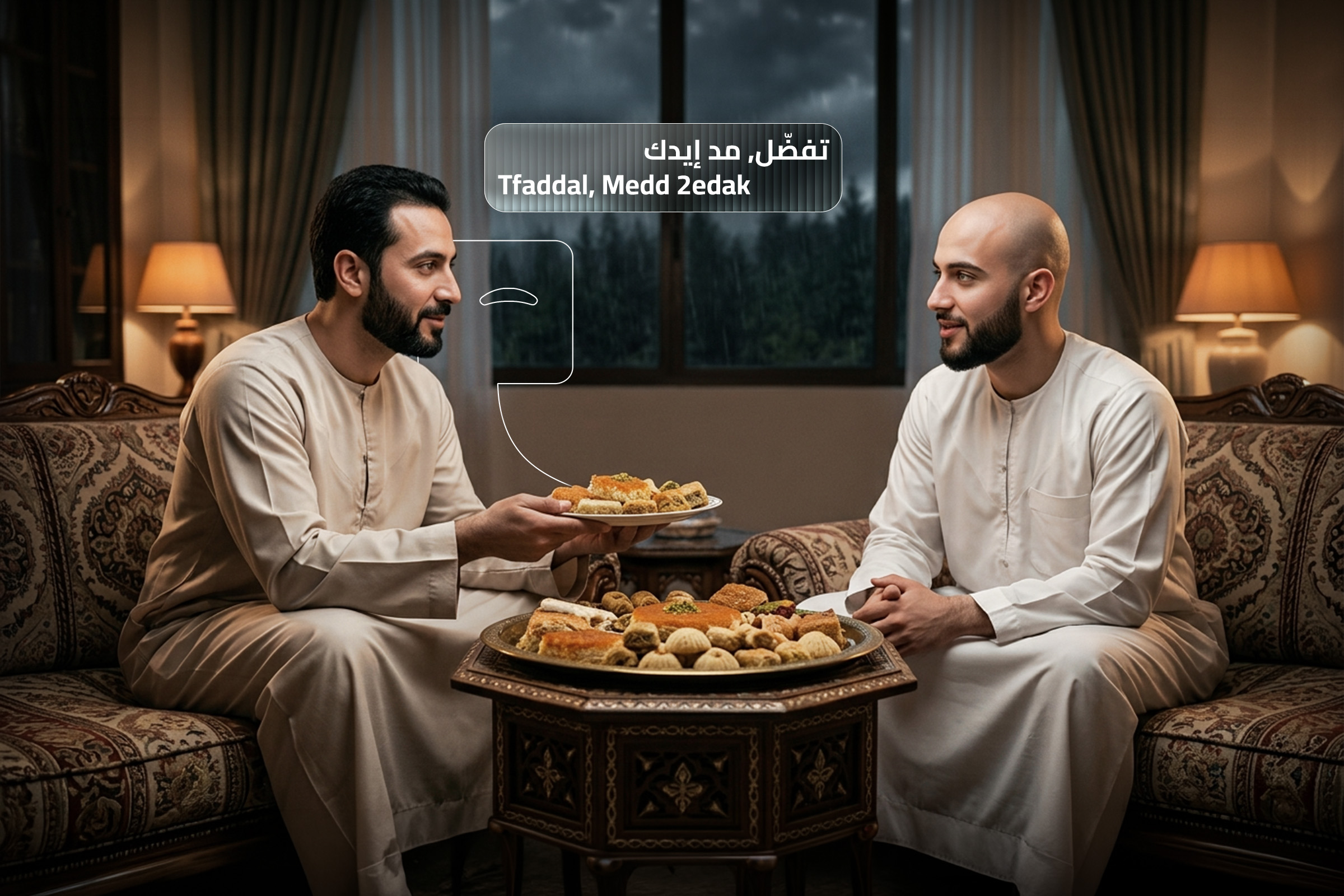
Hospitality is at the heart of Syrian culture, and Syrian desserts play a central role in it.
Offering sweets is not just about food, it is a way of showing care and generosity. Guests are warmly encouraged to eat, and hosts often repeat invitations using phrases like:
🟡 “Tfaddal” (تفضل) — please, go ahead
🟡 “Medd īdak” (مد إيدك) — go ahead, take some
This welcoming behavior reflects the deep cultural value of sharing.
At Speak Real Arabic, we focus on these real-life interactions because they represent how Arabic is truly spoken.
A Typical Syrian Dessert Table
A traditional Syrian dessert table is rich, colorful, and inviting.
You will often find:
🟣 a variety of Arabic sweets
🟣 different textures and shapes
🟣 generous portions arranged beautifully
It is common to see baklava, mabroumeh, maamoul, and halawet el jibn served together.
This variety reflects abundance, hospitality, and the joy of sharing.
Why Pistachios Are So Important in Syrian Desserts
Pistachios are one of the most important ingredients in Syrian desserts.
Cities like Aleppo are famous for producing high-quality pistachios, known for their rich flavor and vibrant color.
They are essential in desserts like:
baklava Syria style
mabroumeh
other Levantine desserts
Pistachios are not just an ingredient—they are part of Syrian culinary identity.
Most Popular Syrian Desserts
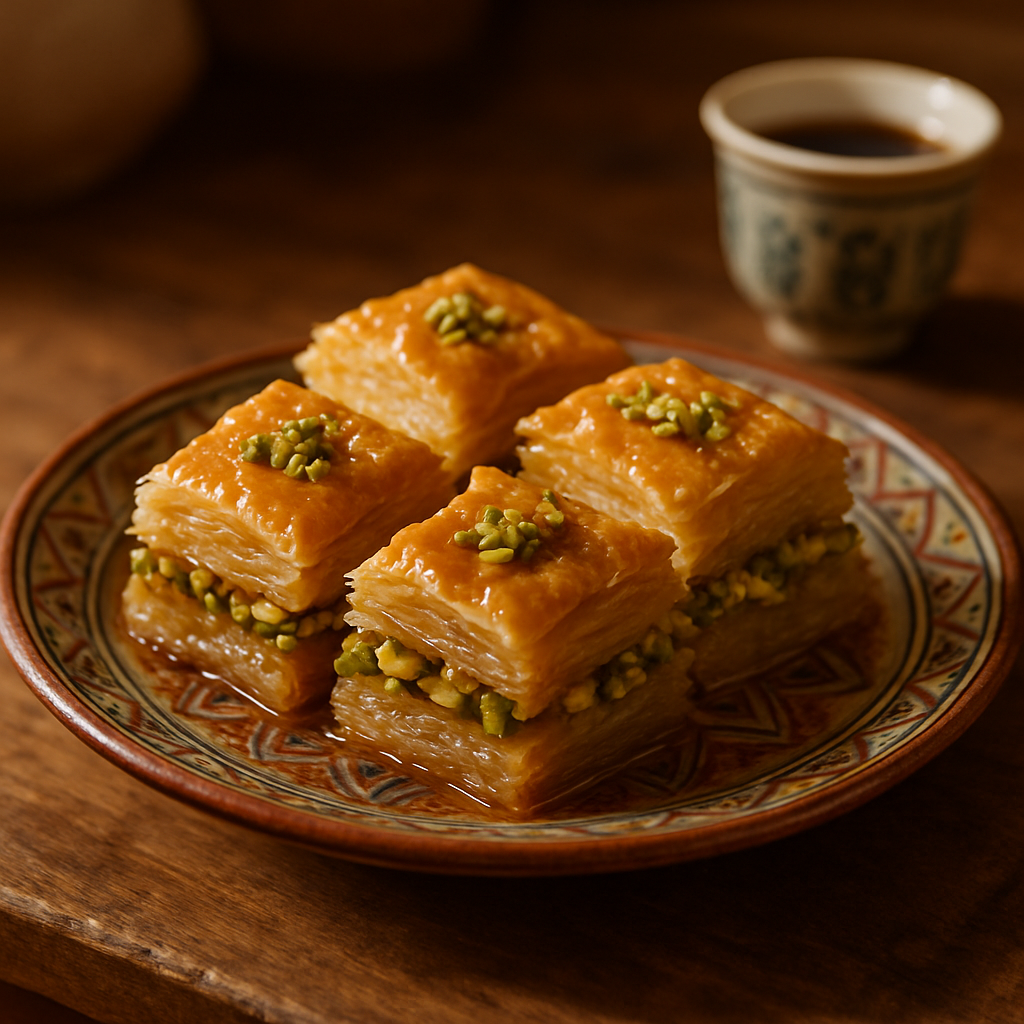
Baklava (بقلاوة)
A classic among Middle Eastern sweets, made of crispy pastry layers filled with pistachios and soaked in syrup.
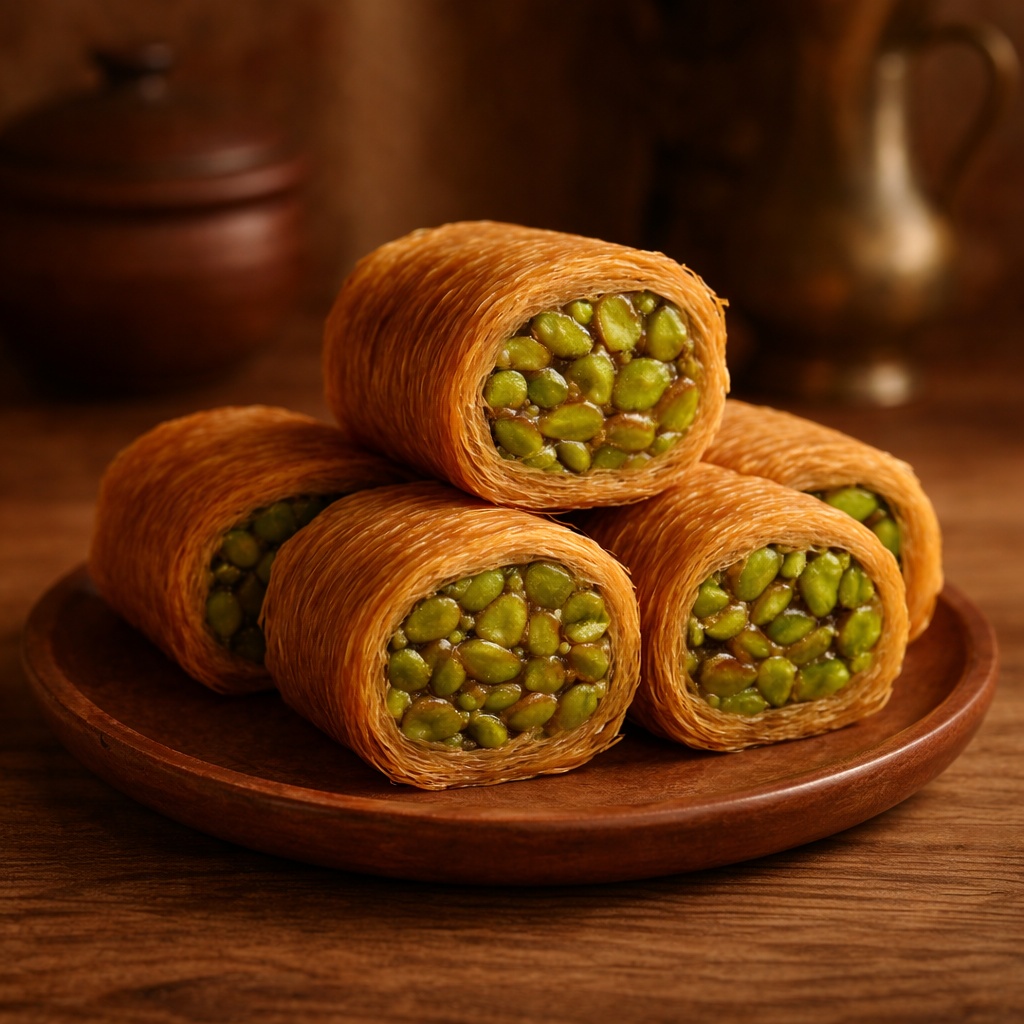
Mabroumeh (مبرومة)
A rich pistachio dessert wrapped in fine dough strands, known for its intense flavor.
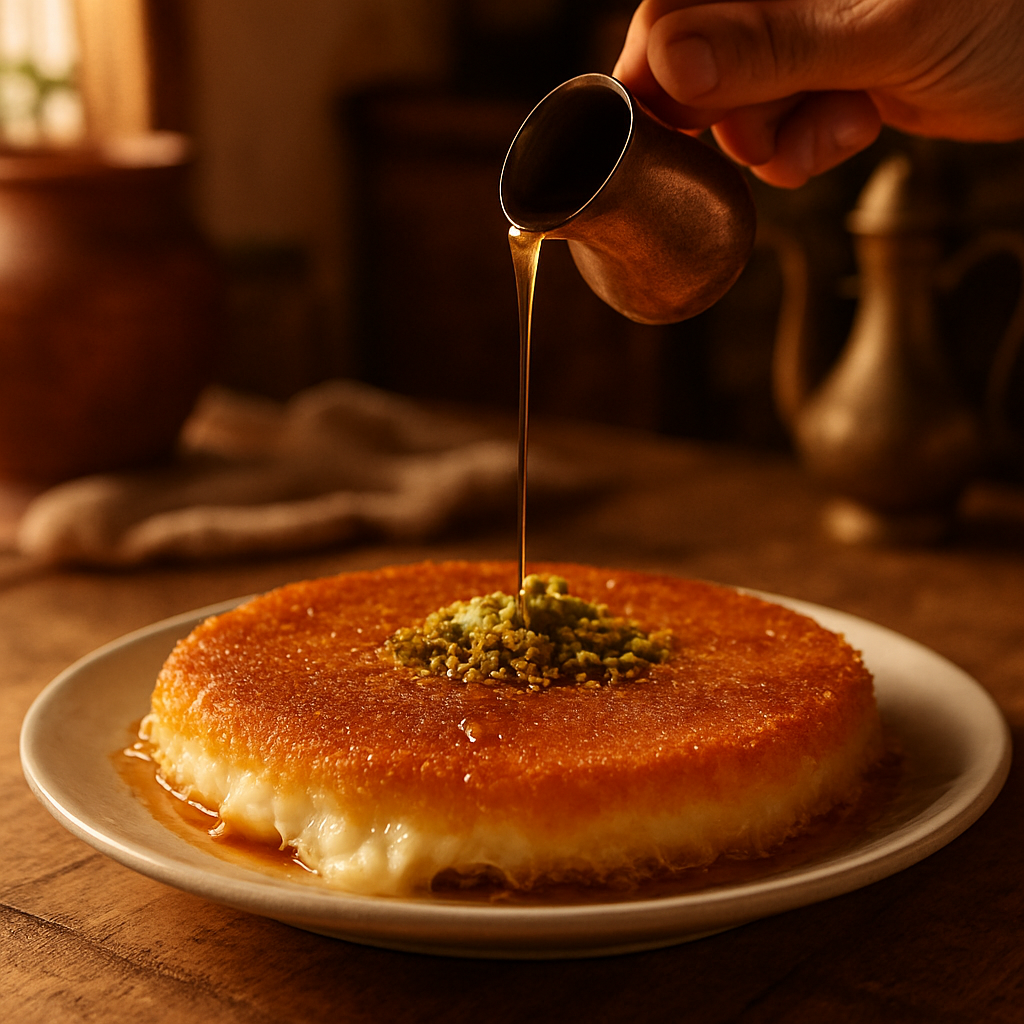
Knafeh (كنافة)
A warm dessert with shredded pastry and melted cheese, topped with syrup. A must-try in Syrian food culture.
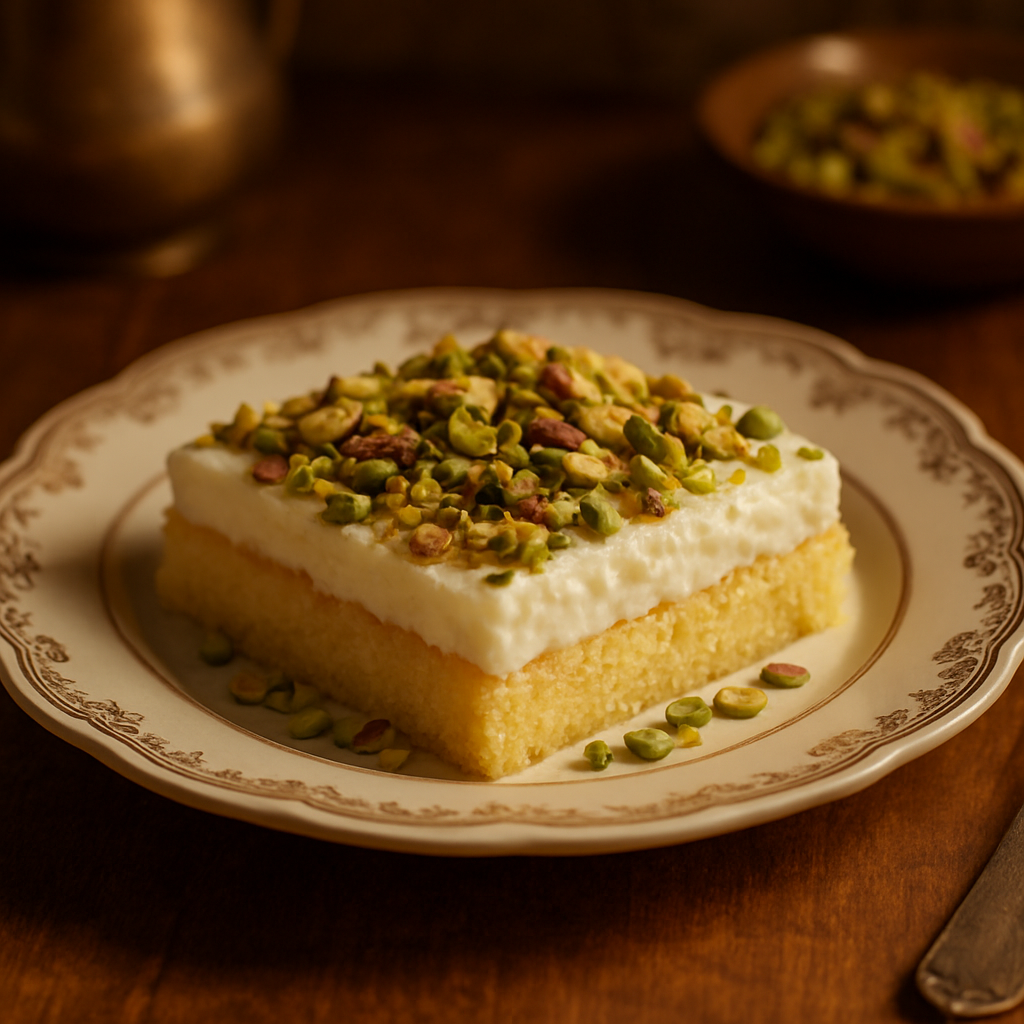
Madlouqa (مدلوقة)
A soft semolina dessert filled with cream and topped with pistachios.
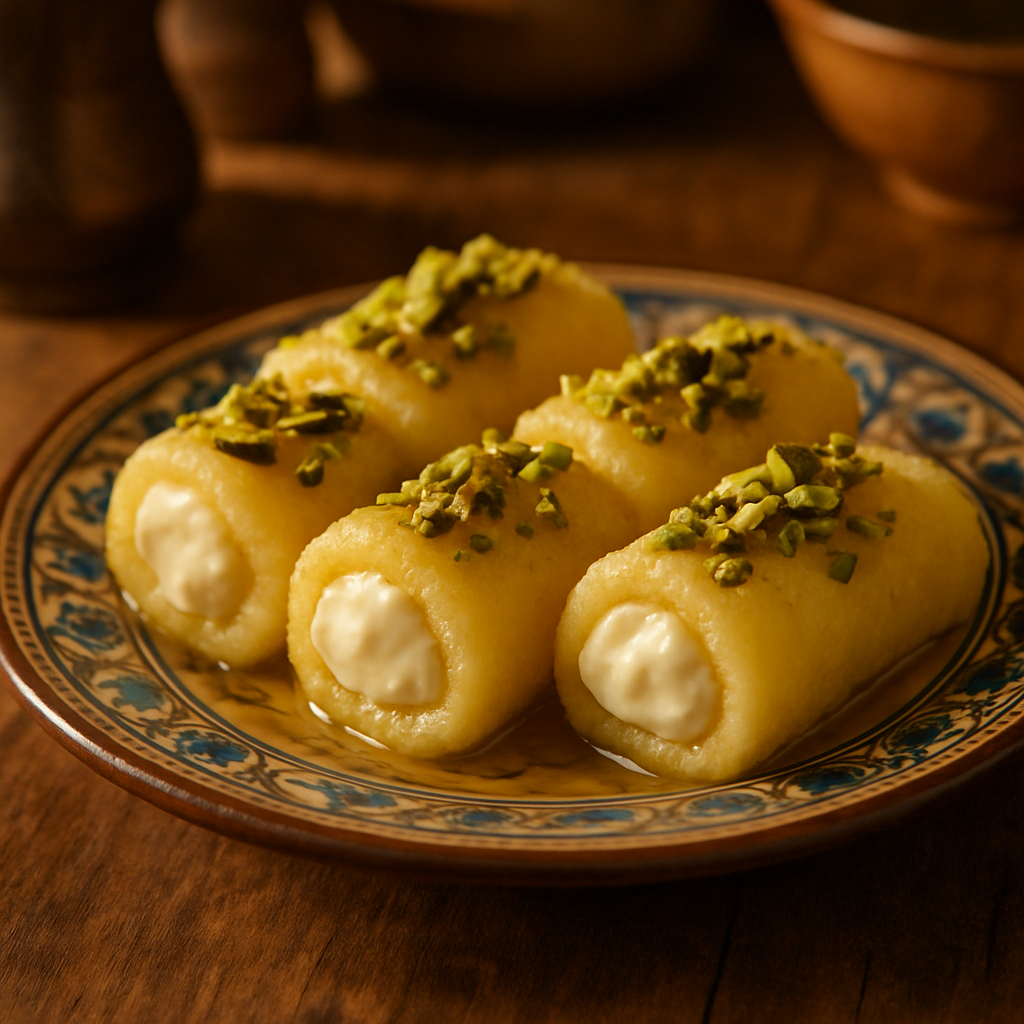
Halawet el Jibn (حلاوة الجبن)
A unique Syrian dessert made with cheese dough and cream filling.
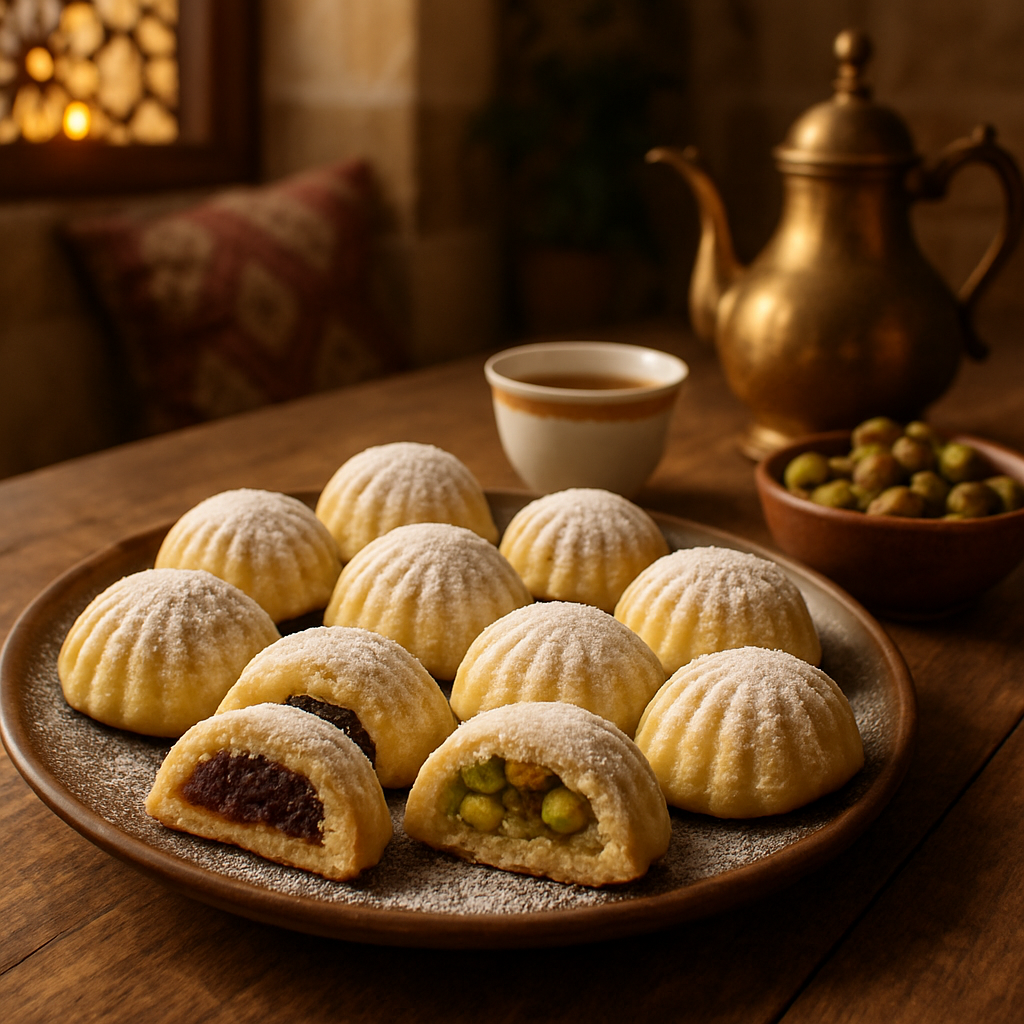
Maamoul (معمول)
Traditional cookies filled with dates or nuts, especially popular during Eid.
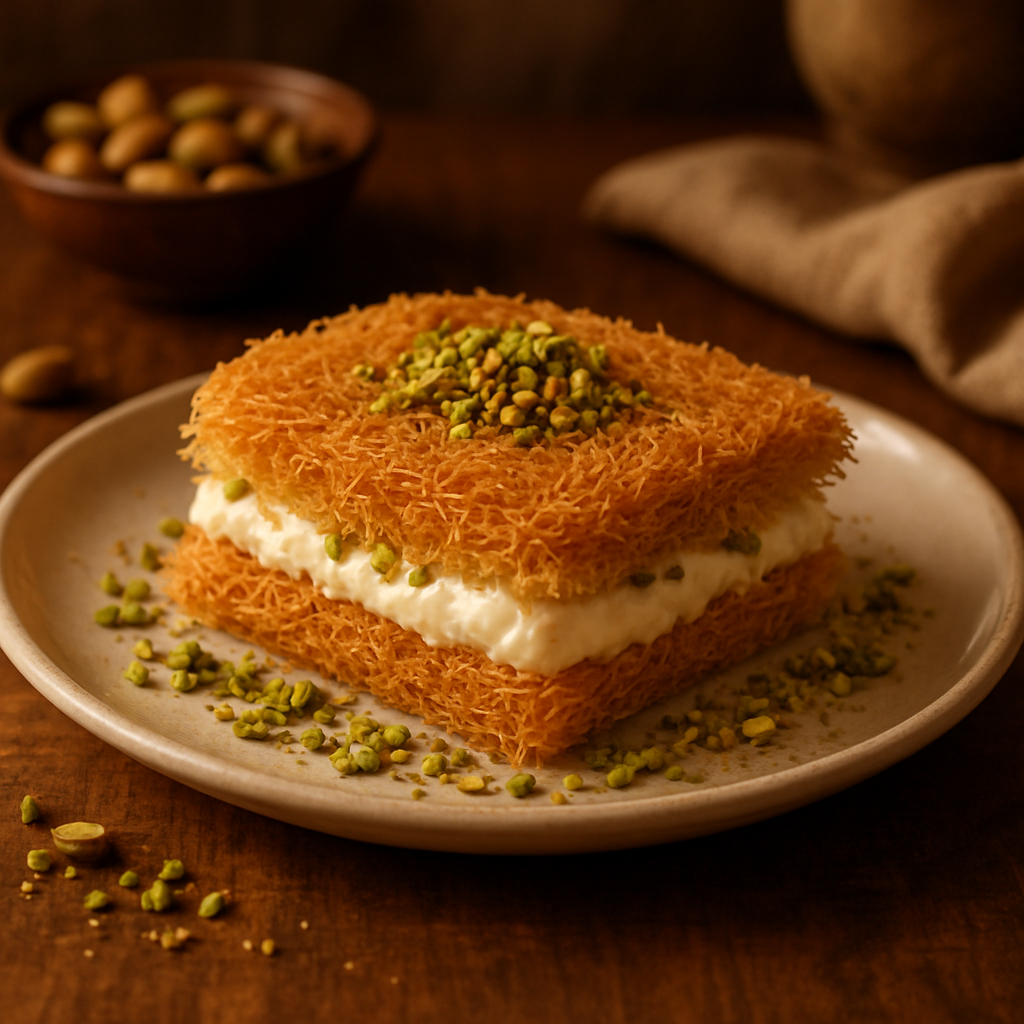
Othmaniyeh (عثملية)
A light dessert made with shredded dough, cream, and pistachios.
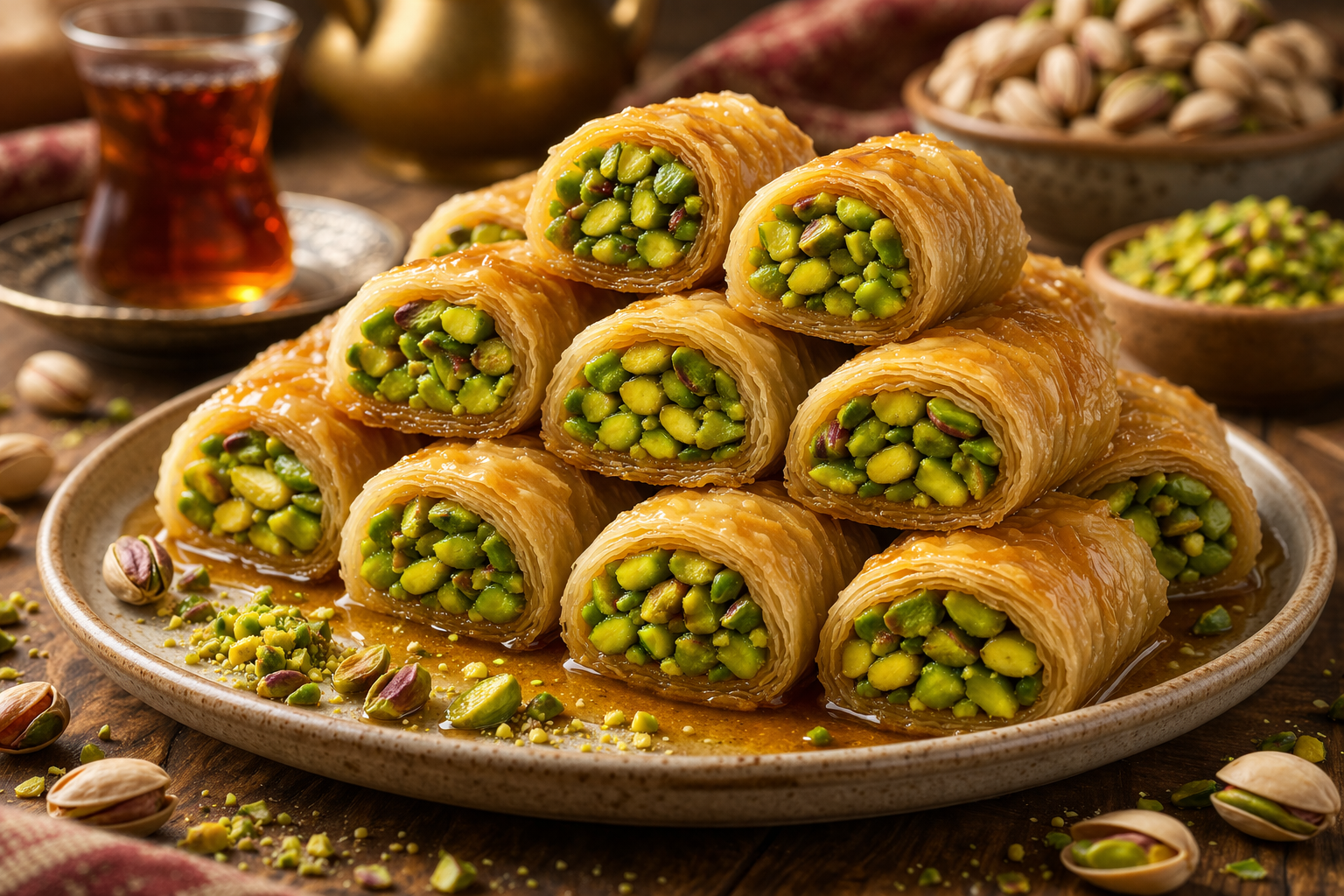
Kol w Shkor (كول واشكر)
A simple dessert made of fried dough soaked in syrup. Its name means “Eat and be thankful,” reflecting cultural values of gratitude.
The Art of Serving Syrian Desserts
Serving desserts in Syria is an art.
Sweets are carefully arranged and presented with attention to detail. Guests are encouraged to try different types, and sharing is always part of the experience.
Desserts are usually served with:
Arabic coffee
relaxed conversation
a welcoming atmosphere
How to Politely Accept or Refuse Sweets
In Syrian culture, accepting desserts is part of showing appreciation.
When someone offers you sweets, it reflects generosity and kindness. Because of this, it is common to accept—even if only a small piece.
You might hear:
✔ “Tfaddal” (تفضل) — go ahead
✔ “Medd īdak” (مد إيدك) — take some
If you want to accept politely, you can say:
✔ “Yislamo” (يسلموا) — thank you
✔ “Sahtein” (صحتين) — enjoy
If you prefer to refuse, it is usually done gently:
✔ “Shaba‘t, yislamo” — I’m full, thank you
✔ “Marra taniye inshallah” — maybe next time
These small expressions are an important part of spoken Arabic and reflect real cultural interaction.
At Speak Real Arabic, we teach these everyday phrases because they help learners communicate naturally.
The Social Meaning of Desserts in Syria
Desserts are more than food—they are a form of communication.
They express:
hospitality
kindness
connection
Offering sweets is a way of welcoming someone into your space and sharing a moment together.
Tips for Experiencing Syrian Desserts Like a Local
Take your time and enjoy the experience
Share desserts with others
Accept at least a small piece
Pair sweets with coffee
Conclusion
Syrian desserts are not just something you taste, they are something you experience.
They reflect a culture built on warmth, generosity, and connection.
As you explore these traditional Syrian sweets, you are not just learning new words, you are stepping into real-life Arabic moments.
At Speak Real Arabic, we help you experience Arabic the way it is truly lived.
Because real Arabic is not just something you study.
It is something you live.
Also Read :
👉 Explore how Syrians drink coffee in everyday life.
👉 Learn how Arabic is actually spoken around food, culture, and everyday life.
👉How Our Speak Real Arabic Courses Help You Speak From Day One


