Eid Greetings in Arabic: What to Say for Eid in Shami Arabic
Eid is more than a holiday. It is a feeling.
It is the sound of people visiting each other, the warmth of family gatherings, the smell of coffee and sweets, and the simple joy of hearing kind words from the people around you.
If you are learning Arabic, Eid is also a beautiful opportunity to connect with the language in a real and meaningful way.
Many learners ask: How do you say Eid greetings in Arabic?
Others are curious about the meaning of Eid Mubarak and how people actually greet each other during the holiday.
The answer is simple, and beautiful.
Arabic speakers use a mix of classic greetings, warm blessings, and friendly expressions to celebrate Eid. These greetings are short, meaningful, and full of kindness.
At Speak Real Arabic, we focus on the Arabic people actually speak in daily life. Holiday greetings like these are a perfect example of how language and culture come together.
In this guide, you will learn:
the most common Eid greetings in Arabic
how they sound in Shami Arabic (the dialect spoken in Syria, Lebanon, Palestine, and Jordan)
how learners can use them naturally in real conversations
The Most Common Eid Greeting in Arabic
The most widely used Eid greeting is:
🟣 عيد مبارك
Eid Mubarak
Meaning: Blessed Eid 🙏
This simple phrase is used across the entire Arabic-speaking world. Whether someone speaks Moroccan Arabic, Egyptian Arabic, or Levantine Arabic, Eid Mubarak is always understood.
You can say it to friends, family, neighbors, coworkers, or anyone celebrating Eid.
Because it is universal, Eid Mubarak is the easiest greeting for Arabic learners to remember and use confidently.
Many learners also search for the meaning of Eid Mubarak, and the phrase literally expresses a wish that the holiday be blessed and joyful.
Another Traditional Eid Greeting
Another common greeting you will hear during Eid is:
⭐ كل عام وأنتوا بخير
Kul ʿām w entu bikhayr
Meaning:
“Wishing you well every year.”
This phrase is used during many celebrations in Arabic culture, including Eid, Ramadan, and other holidays. It carries the idea of wishing someone continued happiness and well-being year after year.
In everyday conversation, people sometimes adjust the phrase depending on who they are speaking to.
For example:
⭐ كل عام وأنت بخير
Kul ʿām w inte bikhayr
Meaning:
“May you be well every year.”
Eid Greetings in Shami Arabic
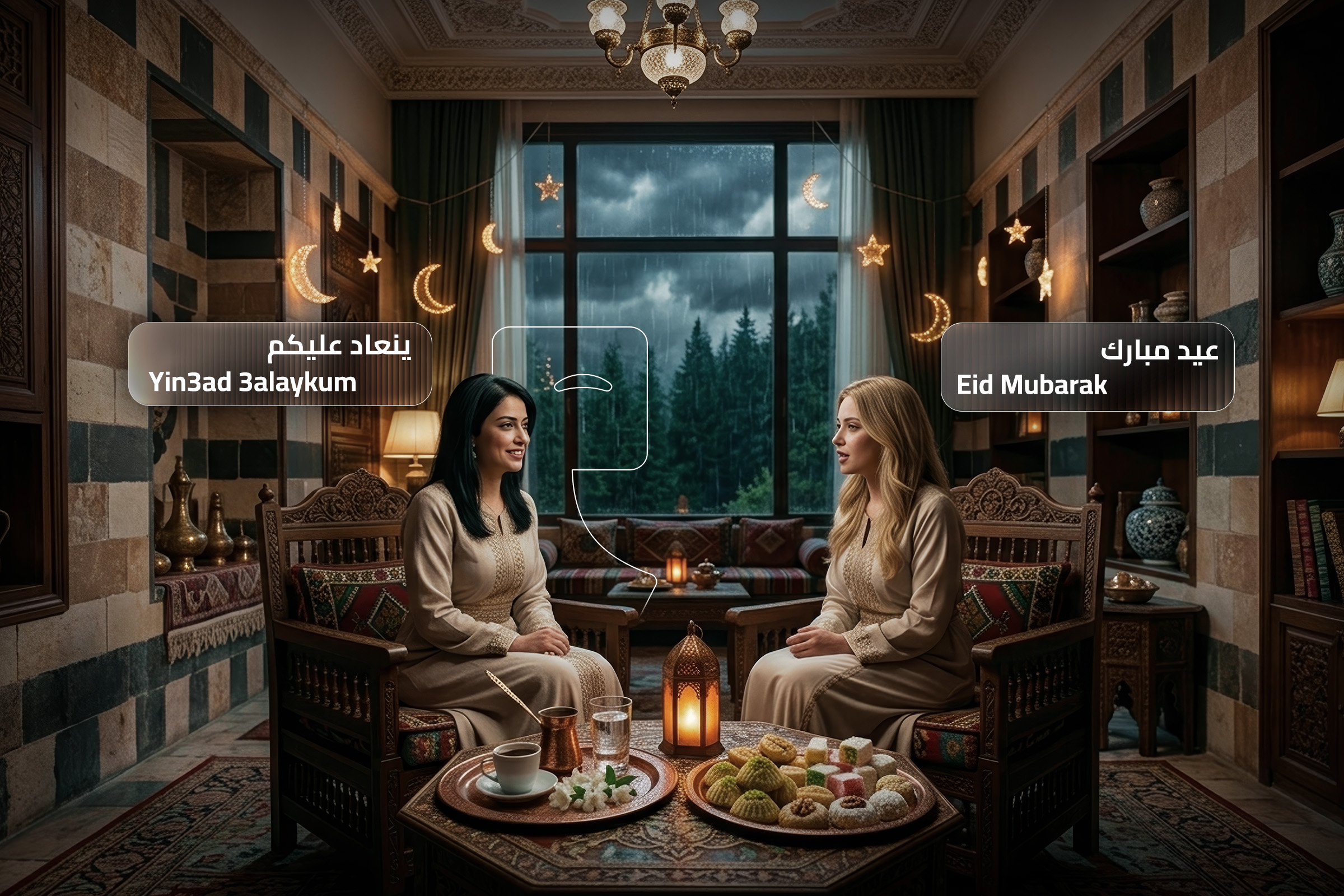
In Shami Arabic, greetings during Eid often sound warmer and more conversational.
One of the most common expressions is:
ينعاد عليكم
Yinʿad ʿalaykum
Meaning:
“May it return to you again.”
This phrase expresses the hope that you will celebrate many more happy Eids in the future.
People often extend the greeting with additional blessings, such as:
ينعاد عليكم بالصحة والسعادة
Yinʿad ʿalaykum biṣ-ṣiḥḥa w is-saʿadeh
Meaning:
“May it return to you with health and happiness.”
Expressions like this are very common in Syrian and Levantine culture, where greetings often include warm wishes for well-being and happiness.
How People Respond to Eid Greetings
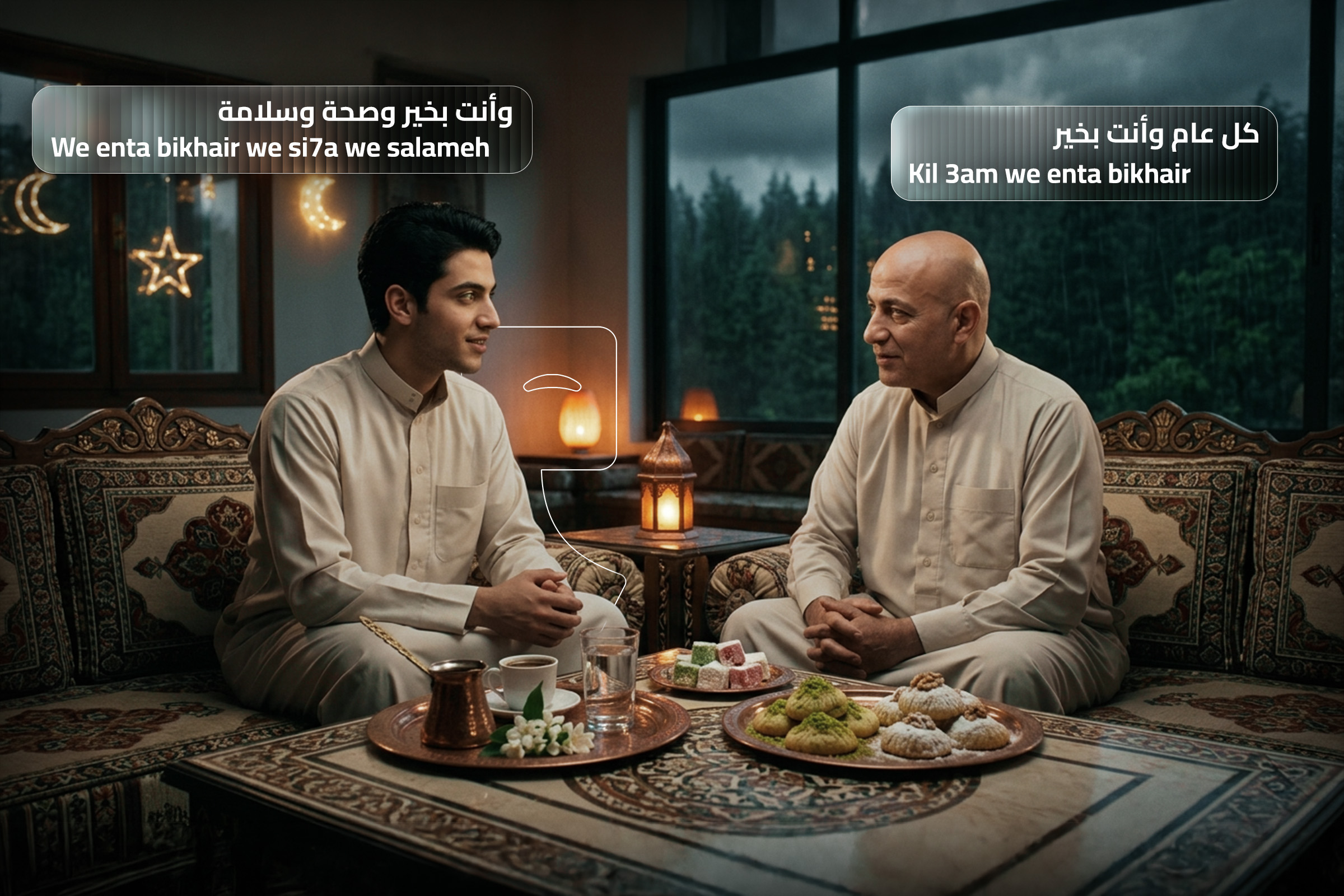
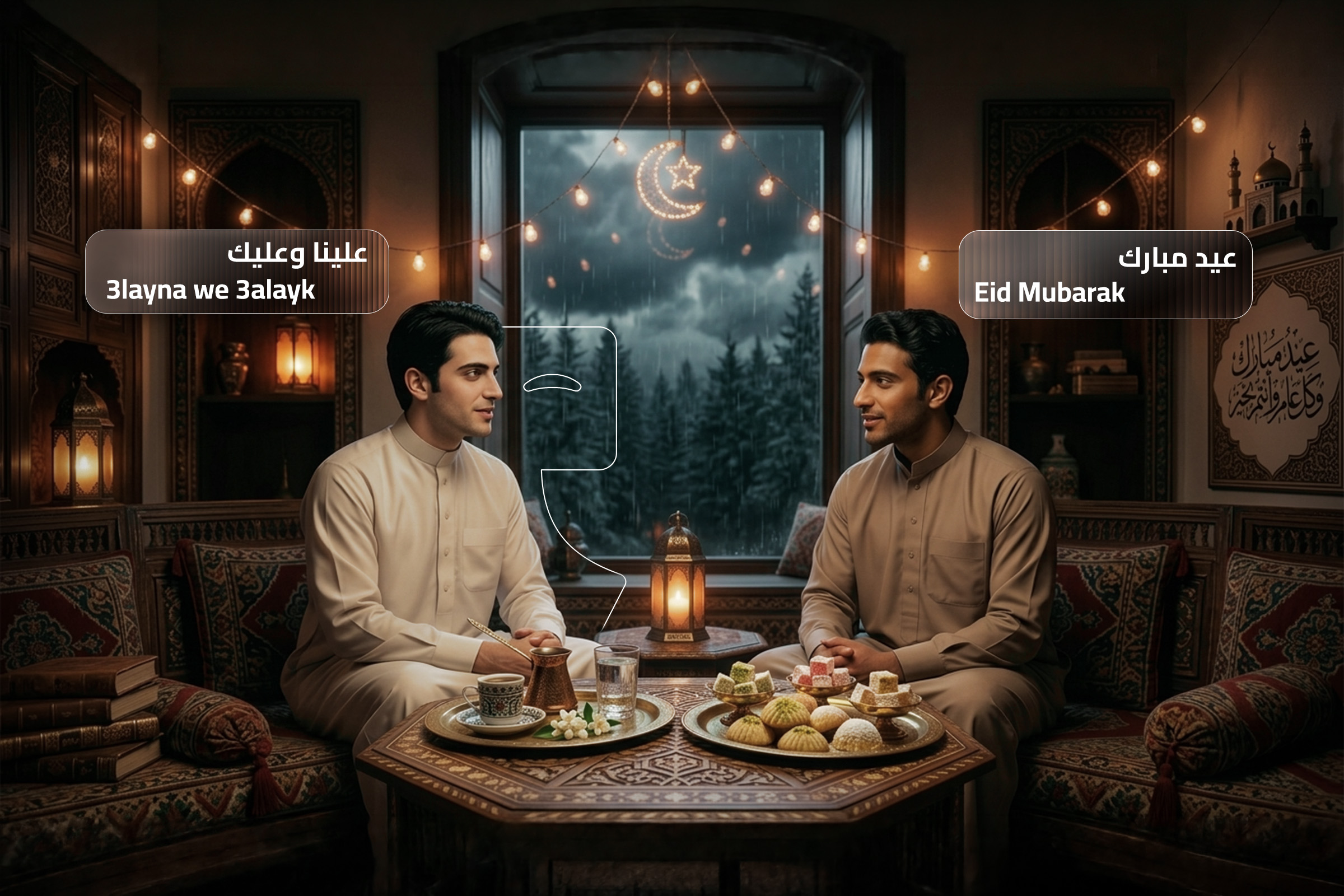
Arabic greetings often come in pairs. When someone offers a greeting, the other person usually responds with a similar expression.
For example:
Person A
عيد مبارك
Eid Mubarak
Person B
علينا وعليك
ʿAlayna w ʿalayk
Meaning:
“To us and to you too.”
Another common exchange looks like this:
✔ Person A
كل عام وأنت بخير
✔ Person B
وإنت بخير وصحة وسلامة
Meaning:
“And may you also be well, with health and safety.”
These short exchanges are an important part of Arabic culture. The goal is not only to greet someone, but also to share kindness and goodwill.
Why Eid Greetings Matter in Arabic Culture
In many Arabic-speaking communities, greetings carry emotional meaning.
During Eid, people often:
🟡 repeat greetings several times
🟡 add blessings and kind wishes
🟡 greet elders with extra warmth
🟡 extend conversations with friendly expressions
This is especially noticeable when people visit family members, neighbors, and friends during the holiday.
For Arabic learners, understanding these expressions helps reveal how language is used in real life.
You are not just learning vocabulary, you are learning how people connect.
Tips for Using Eid Greetings Naturally
If you are learning Arabic and want to use Eid greetings comfortably, a few simple tips can help.
Start with the basics.
The phrase Eid Mubarak works everywhere and is always appropriate.
Listen for the reply.
Arabic greetings usually come in pairs, and learning the response helps conversations feel more natural.
Learn full expressions.
Instead of memorizing individual words, try to remember the complete phrase the way people actually say it.
Pay attention to cultural context.
Expressions like yinʿad ʿalaykum are more than translations, they reflect how Arabic speakers express warmth and connection.
Useful Eid Greetings in Arabic
Here are some simple phrases learners can start using during Eid.
✔ عيد مبارك
Eid Mubarak
Blessed Eid
✔ كل عام وأنتم بخير
Kul ʿam wa antum bikhayr
Wishing you well every year
✔ ينعاد عليكم
Yinʿad ʿalaykum
May it return to you again
✔ ينعاد عليكم بالصحة والسعادة
Yinʿad ʿalaykum biṣ-ṣiḥḥa w is-saʿadeh
May it return to you with health and happiness
Conclusion
Learning Eid greetings in Arabic is one of the easiest ways to connect with the culture behind the language.
Even a simple phrase like Eid Mubarak can open the door to warm conversations and shared celebrations.
As you continue learning Arabic, expressions like these help you understand how people communicate kindness, respect, and joy in everyday life.
At Speak Real Arabic, we help learners experience spoken Arabic as it is truly used in real conversations.
Because real Arabic is not just something you study.
It is something you live.
Read more:
🌟Join the VIP Membership and experience Arabic the way it’s truly lived.
🌟 Start Zero to 15 Minutes, of real Arabic, without grammar stress,Explore the Course
🌟Real Arabic is lived through moments, a philosophy reflected inThe Syrian Encounters.


