
Arabic Coffee in Arabic: How Syrians Really Say and Serve Coffee
When people search for Arabic coffee in Arabic, they usually expect a simple translation.
The direct answer is:
قهوة عربية
But in Syria, coffee is never just a word. It’s not only something you drink. It’s something you share. Something you offer. Something that speaks before you do.
Understanding Arabic coffee in Arabic is not only about vocabulary. It’s about understanding Syrian culture, hospitality traditions, and the small social rituals that shape everyday life.
And if you’re learning spoken Arabic, coffee is one of the best places to begin.
How to Say Arabic Coffee in Arabic
In Modern Standard Arabic, coffee is:
قهوة (qahwa)
In Syrian spoken Arabic, however, pronunciation shifts slightly. Many Syrians soften or drop the letter ق, so instead of qahwa, you’ll hear:
’ahwe (قهوة)
This difference may seem small, but it tells you something important about spoken Arabic in Syria. The Arabic you hear in real homes, cafés, and gatherings often sounds different from what you see in textbooks.
So when someone in Syria says:
“تشرب قهوة؟”
(Tishrab ’ahwe?)
They’re saying, “Would you like coffee?”
But culturally, they’re saying much more than that.
Coffee as a Symbol of Hospitality in Syrian Culture
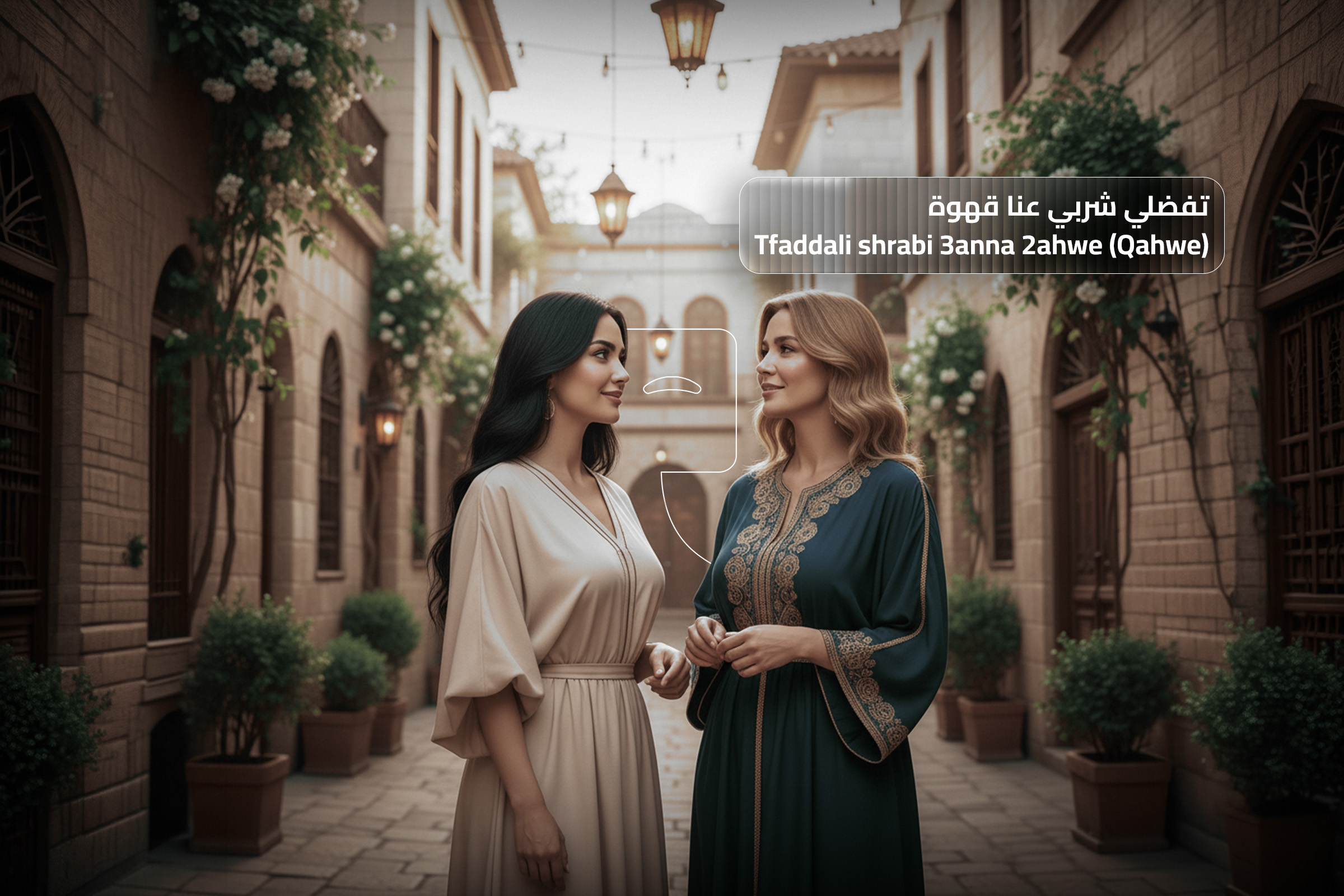
In Syria, offering coffee is a social reflex.
The moment a guest walks into a home in cities like Damascus or Aleppo, coffee is prepared almost automatically. It doesn’t matter if the visit is short. It doesn’t matter if it’s early or late.
Serving coffee means:
🟡 You are welcome here.
🟡 You are respected.
🟡 You belong at this table.
This is why Arabic coffee in Arabic carries emotional meaning. It’s not simply “قهوة عربية.” It represents connection.
Refusing coffee immediately can even feel slightly impolite in some traditional settings, because accepting the cup symbolizes accepting the relationship.
How Syrians Really Serve Coffee
Syrian coffee is typically prepared in a small metal pot called a rakweh (also known regionally as a cezve). The coffee is finely ground and brewed slowly over heat until a thick foam forms at the top.
It is:
☕ Strong
☕ Dark
☕ Served in small cups
☕ Usually without milk
Unlike many Western coffee traditions, Syrian coffee is not designed for walking around. It is meant to be consumed slowly, while sitting, talking, and sharing time.
In traditional homes, the host pours coffee for each guest personally. The cups are small, but the gesture is large.
This is an important part of understanding Middle Eastern coffee traditions and why Arabic coffee in Arabic represents much more than a beverage.
Coffee and Life’s Important Moments
One of the reasons Syrian coffee culture is so meaningful is that coffee appears in nearly every life event.
Morning Ritual
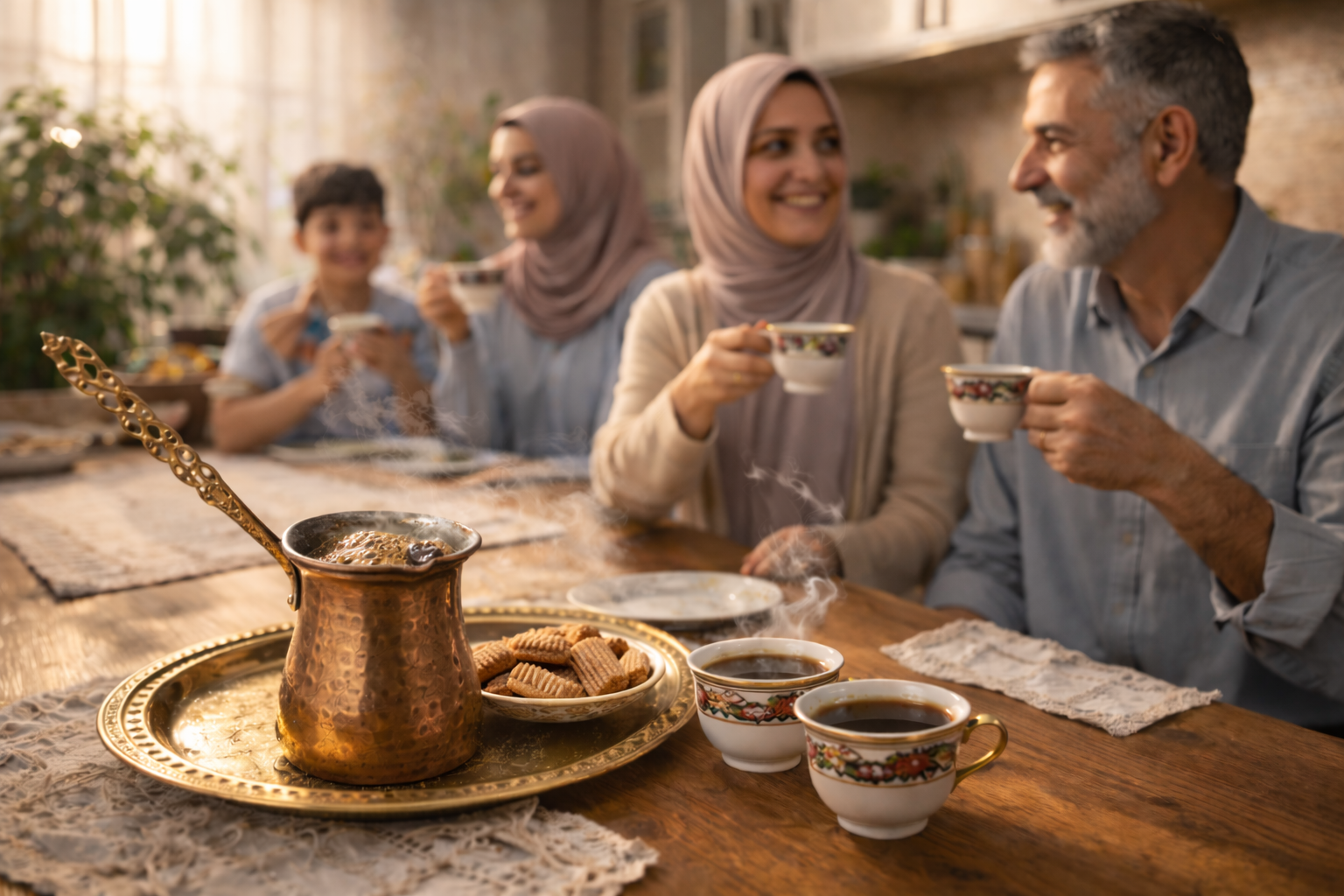
Many Syrian families begin the day with coffee. It is part of the rhythm of the house. The smell alone signals that the day has started.
Engagement Visits
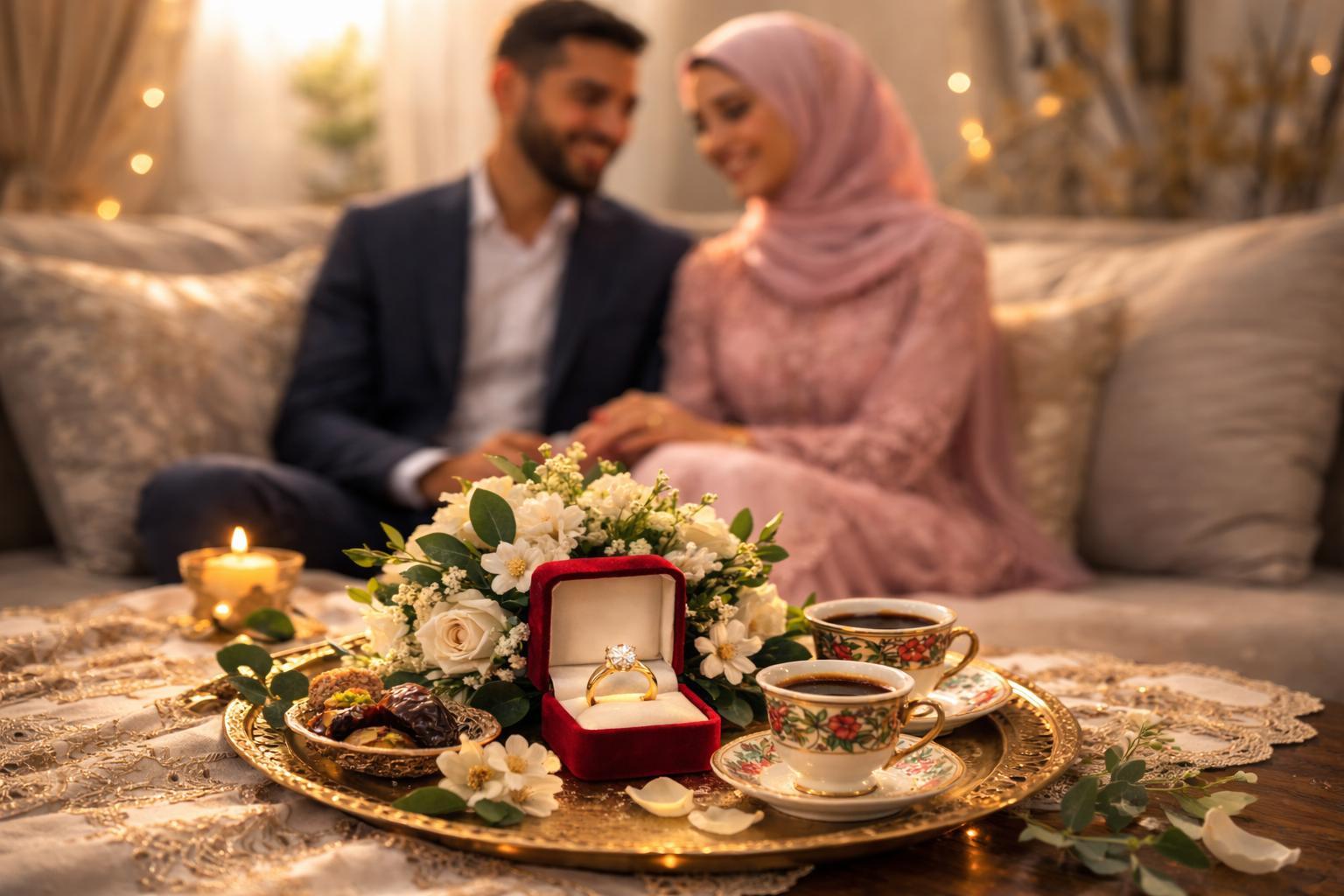
In traditional settings, coffee plays a symbolic role during marriage proposals. Serving coffee is part of welcoming the visiting family. In some customs, even the sweetness level of the coffee once carried subtle social meaning.
Condolence Gatherings
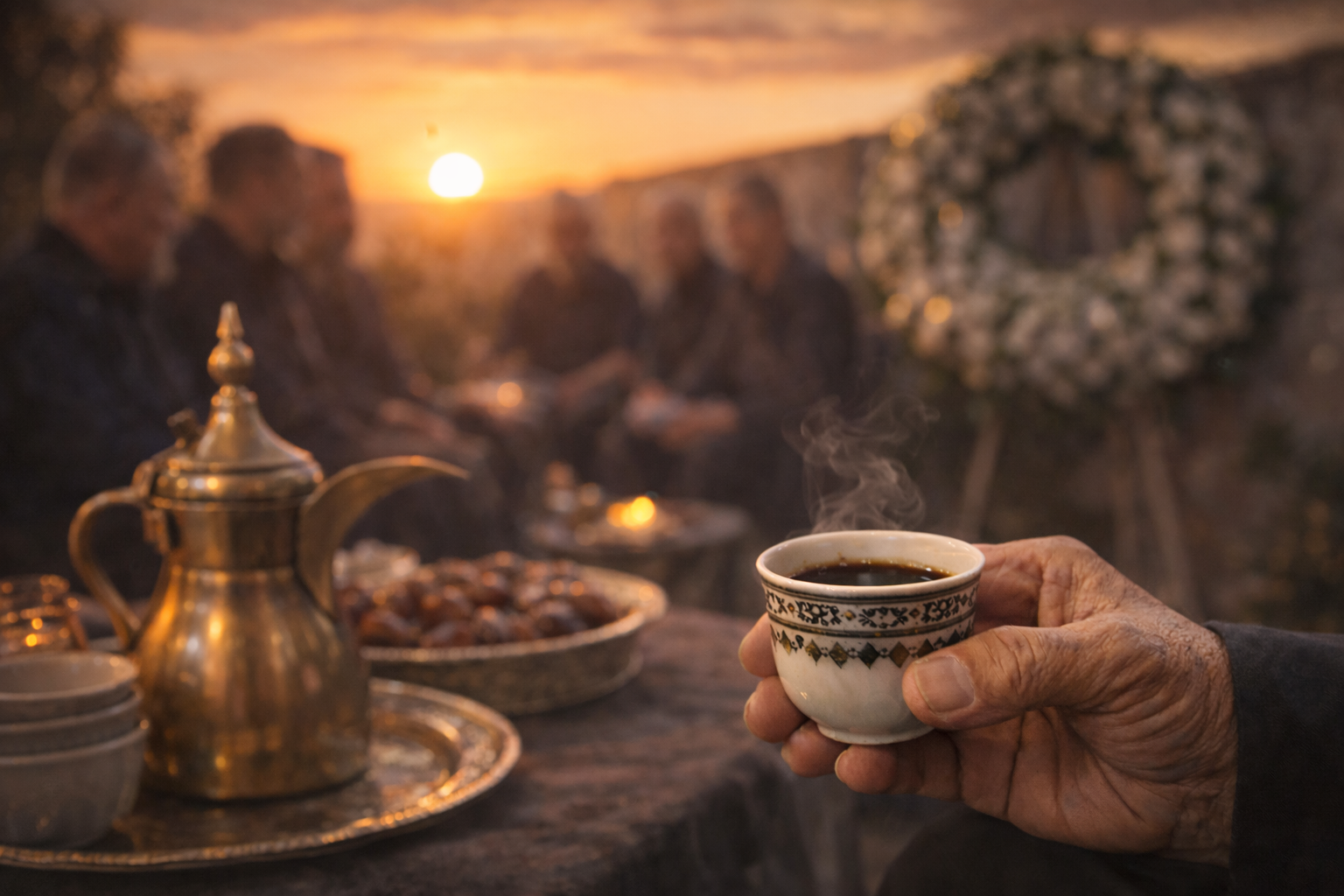
During times of grief, coffee is still served, but typically without sugar, known as:
قهوة سادة (plain coffee)
The bitterness reflects the solemn mood. Even in sadness, coffee remains a symbol of presence and solidarity.
This is why Syrian coffee culture is deeply emotional. It accompanies joy, celebration, and loss.
The Language Around Coffee
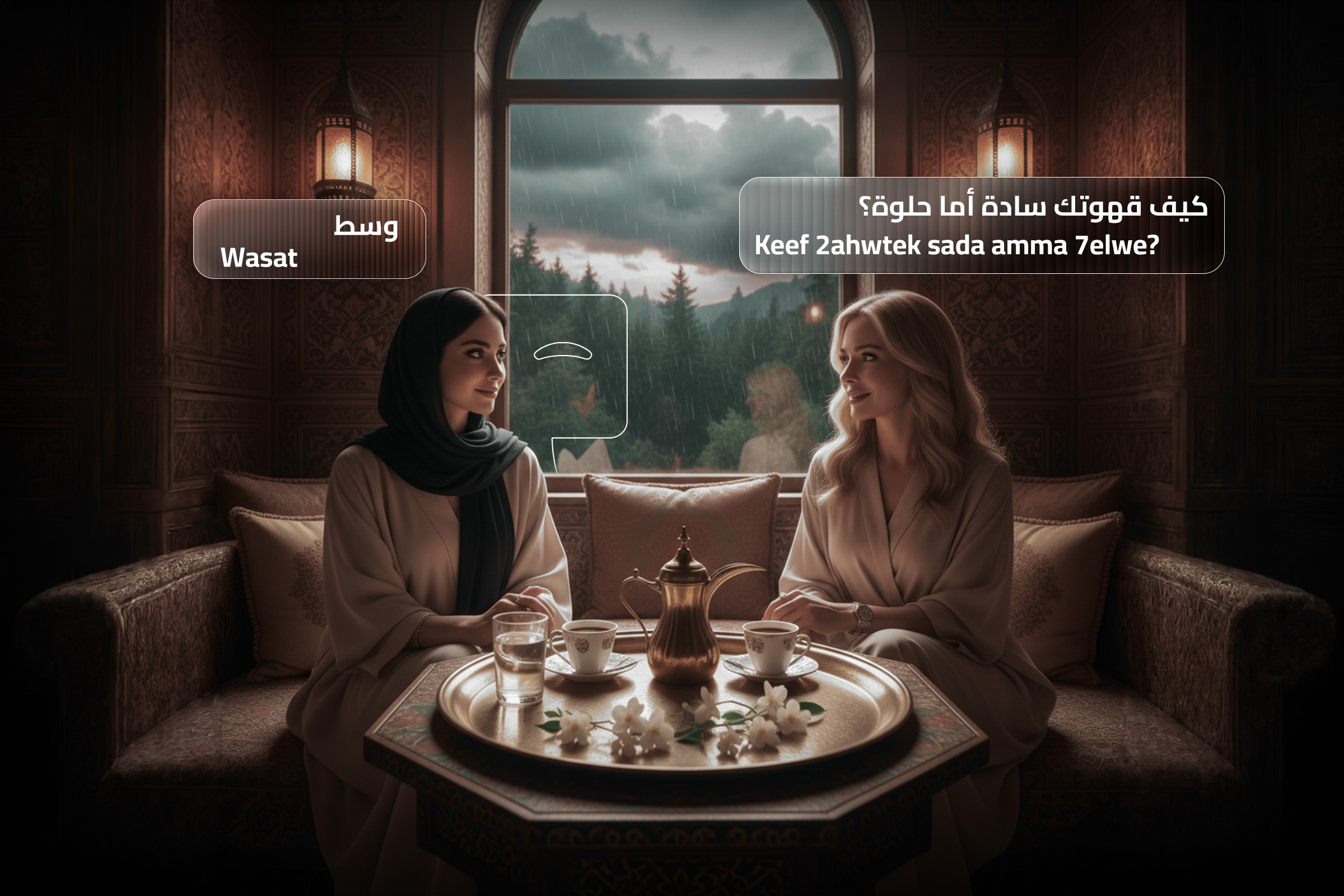
If you truly want to understand Arabic coffee in Arabic, you also need to understand the expressions that surround it.
When someone serves coffee, they will often ask:
“كيف بتشربها؟”
(How do you drink it?)
They are asking about sugar preference.
Common answers include:
🟡 سادة (sāde) – no sugar
🟡 وسط (wasat) – medium sugar
🟡 زيادة (ziyāde) – extra sugar
🟡 على الريحة (‘al rīha) – very light, mostly for aroma
These small phrases are part of everyday spoken Arabic in Syria. They are rarely emphasized in formal language classes, yet they appear constantly in real conversation.
Understanding them helps you move from textbook Arabic to natural interaction.
This is exactly the type of real-life language focus we emphasize inside Speak Real Arabic, where culture and conversation go hand in hand.
Coffeehouses and Conversation
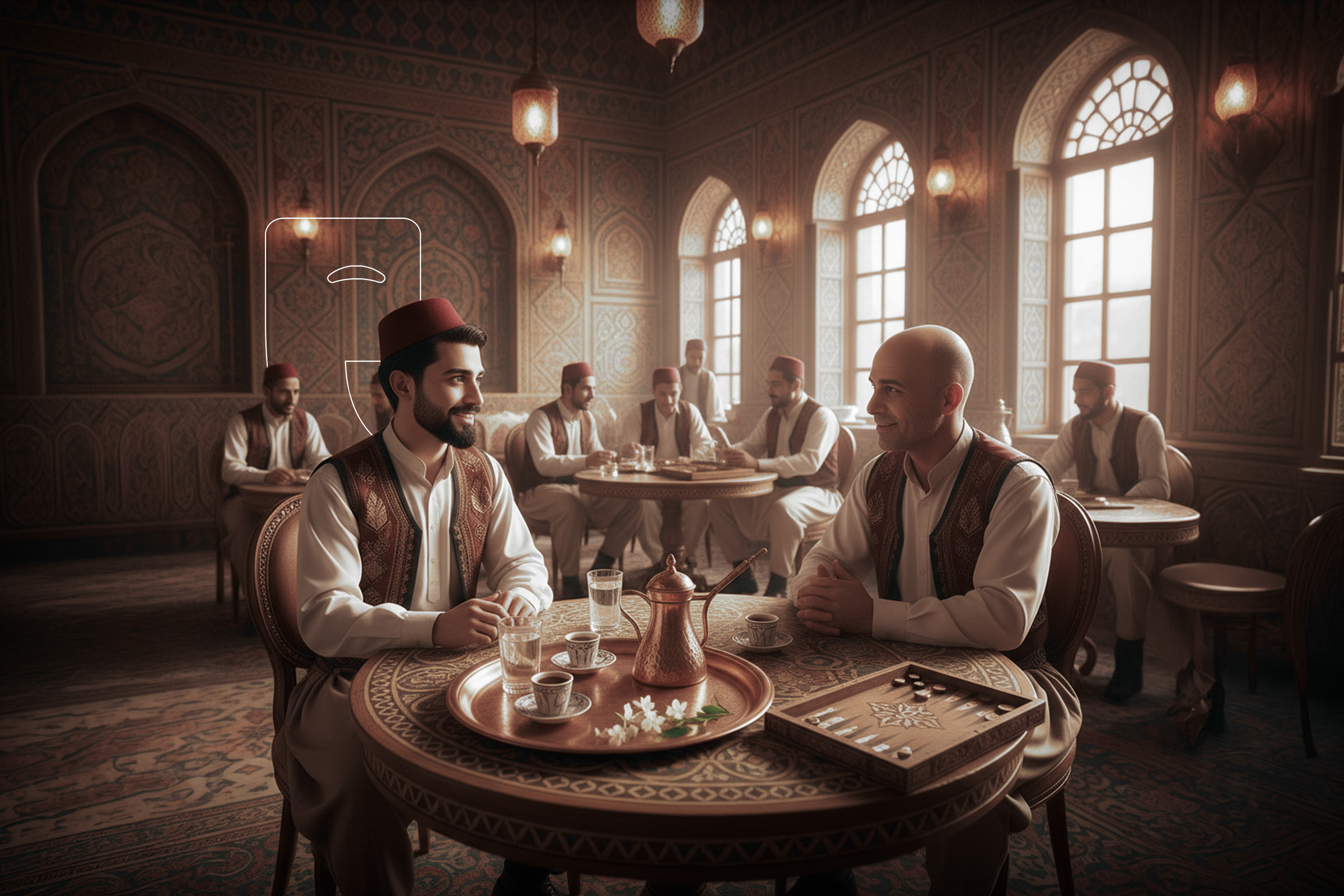
Traditional cafés in older neighborhoods of Damascus are known for long conversations, backgammon games, and endless refills of coffee.
Men gather to discuss politics, football, family stories, and community news. The atmosphere is slow, reflective, and social.
Coffee here is not fast fuel. It is social glue.
These spaces reflect something important about Syrian hospitality traditions: time matters. Presence matters. Conversation matters.
When learners understand this context, the phrase “Arabic coffee in Arabic” becomes layered with meaning.
Why Language Learners Should Care About Coffee Culture
You might wonder: what does coffee really have to do with learning Arabic?
The answer is simple.
Language is shaped by culture. And culture reveals itself in everyday rituals.
When you learn how Syrians really say and serve coffee, you learn:
🟣 Pronunciation patterns
🟣 Social expectations
🟣 Politeness strategies
🟣 Emotional nuance
You begin to understand why certain phrases are said automatically, and why tone matters.
At Speak Real Arabic, we focus on this lived experience of language, not just memorizing vocabulary lists, but understanding how Arabic functions inside real homes and real conversations.
Coffee is one of the clearest examples of this connection.
Arabic Coffee in Arabic: More Than a Translation
If we return to the original search ,Arabic coffee in Arabic, we now see that the answer is layered.
Yes, it is:
قهوة عربية
But in Syria, it is also:
🟡 A welcome
🟡 A pause
🟡 A conversation starter
🟡 A sign of respect
🟡 A gesture of care
This is why learning spoken Arabic through culture is powerful. When you connect language to daily life, you remember it differently. You feel it differently.
And that is the philosophy behind Speak Real Arabic, learning the Arabic people actually use, inside the moments that matter.
Bringing Culture Into Your Arabic Learning
If your goal is simply to translate words, you can stop at definitions.
But if your goal is to communicate naturally, understanding Syrian culture is essential.
Coffee teaches:
🟣 How hospitality works
🟣 How pronunciation shifts in daily speech
🟣 How emotion is expressed subtly
🟣 How small rituals shape communication
Arabic coffee in Arabic is not just vocabulary. It is social language.
When someone offers you coffee in Syria, they are offering connection.
And when you understand that moment linguistically and culturally, you move one step closer to speaking with confidence.
That deeper cultural immersion is at the heart of everything we do at Speak Real Arabic, helping learners move beyond grammar into real-life expression.
☕ Want to experience spoken Arabic the way it’s actually used in daily life?
Explore culture-based learning and start speaking naturally with Speak Real Arabic today.
Also Read:
🌟 Experience the coffee ritual – watch now!
🌟 Discover ideas, inspiration, and stories that spark curiosity, visit our blog!
🌟 Start Zero to 15 Minutes, of real Arabic, without grammar stress, Explore the Course


