
What Happens When You Visit a Syrian Home for the First Time?
A story about Syrian hospitality, culture, and the Arabic you can only learn around the dinner table.
Visiting a Syrian home is about much more than sharing a meal. It's an experience shaped by generosity, hospitality, and traditions that make every guest feel like family.
From the moment you knock on the door, you'll notice that simple gestures, offering coffee, insisting you eat, or welcoming you with warm expressions, carry meanings that go far beyond their literal translations.
In this guide, you'll discover what usually happens during a first visit to a Syrian home, the cultural values behind these traditions, and the authentic Syrian Arabic expressions you'll naturally hear around the dinner table.
💜 In This Guide, You'll Learn
By the end of this guide, you'll be able to:
✔ Understand what to expect when visiting a Syrian home for the first time.
✔ Learn why hospitality is one of the most important values in Syrian culture.
✔ Discover authentic Syrian Arabic expressions used in real family conversations.
✔ Understand the cultural meaning behind everyday phrases like تفضل, أكلت شي؟, and صحة وهنا.
✔ Feel more confident when visiting Syrian friends or speaking with native speakers.
What Happens When You Visit a Syrian Home for the First Time?
A story about Syrian hospitality, culture, and the Arabic you can only learn around the dinner table.1
💜 In This Guide, You'll Learn1
The Biggest Mistake Every Foreigner Makes6
Why Do Syrians Always Offer Food?7
Is It Rude to Refuse Food in a Syrian Home?8
What Arabic Learners Really Learn Here9
Essential Syrian Arabic Phrases You'll Hear10
🟡 أهلاً وسهلاً (Ahlan wa Sahlan)1
🟡 يعطيك العافية (Ya'teek El-'Afye)5
💜 Learn Syrian Arabic the Way It's Really Spoken12

Why Syrian Hospitality Is So Special
If there's one thing Syrians are known for, it's hospitality.
Guests are welcomed with genuine warmth, generous food, and a sincere desire to make them feel comfortable. Whether you're a close friend, a neighbor, or someone visiting for the very first time, it's common to be treated like part of the family within minutes of arriving.
In Syrian culture, hospitality isn't simply about offering food or drinks. It's a way of showing kindness, respect, and appreciation for the person who's visiting.
You'll notice this in the language people use as much as in their actions. A simple invitation to sit down, another offer of coffee, or someone asking if you've eaten are all expressions of care rather than formal politeness.
For Arabic learners, visiting a Syrian home offers something textbooks can't provide: the chance to hear authentic expressions in the situations where they're naturally used. It's one of the best ways to understand not only the language itself, but also the values behind it.
Now, let's step inside.
You Ring the Bell...
There's a short pause.
The door opens.
A smile appears before the words do.
"أهلاً وسهلاً."
Not simply:
"Hello."
Not even:
"Welcome."
The phrase carries something much warmer.
It's the kind of greeting that instantly makes you feel expected, even if it's your very first visit.
Before you have time to look around, someone is already reaching for your jacket.
Another person is inviting you to come in.
Someone else disappears into the kitchen.
You haven't even finished introducing yourself.
💜 Cultural Note
One of the first things visitors notice is how quickly Syrians make guests feel at home.
Rather than waiting for formal introductions, people naturally focus on making you comfortable first. That's why you'll often be offered a seat, something to drink, and plenty of conversation within the first few minutes.
Thirty Seconds Later...
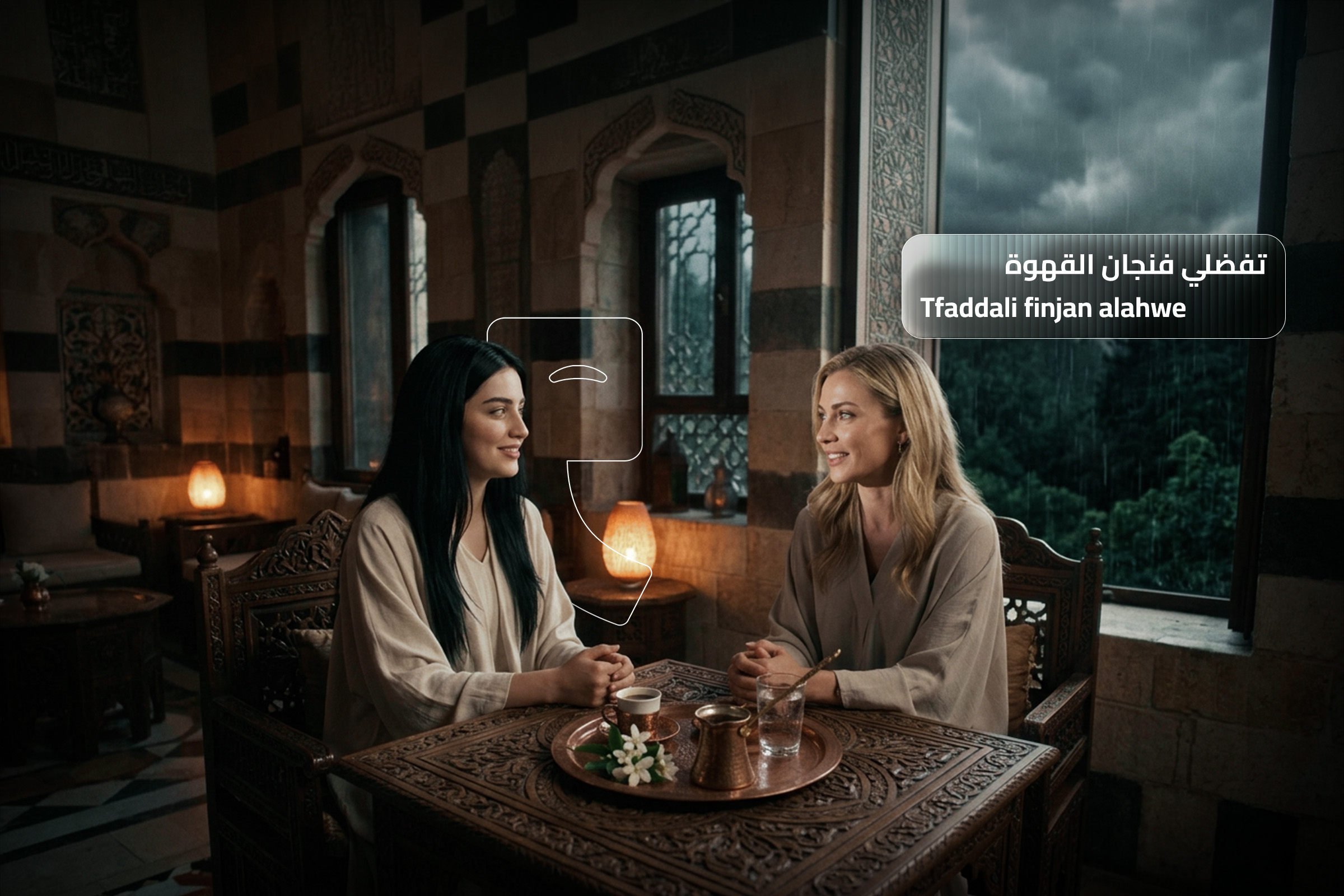
Thirty Seconds Later...
You're holding a small cup of coffee.
Nobody asks whether you'd like one.
It simply appears.
Freshly brewed.
Rich in aroma.
Strong enough to wake you up.
Warm enough to make you feel at home.
In many cultures, offering coffee is simply good manners.
In Syria, it's often the beginning of a relationship.
💜 Speak Like a Syrian
تفضل، فنجان قهوة.
TfaDDal, finjān ahwe.
Literal meaning: Please, have a cup of coffee.
What Syrians really mean: Relax. You're welcome here.
Coffee isn't just a drink, it's one of the first ways a Syrian host shows generosity and makes a guest feel comfortable.
Five Minutes Later...
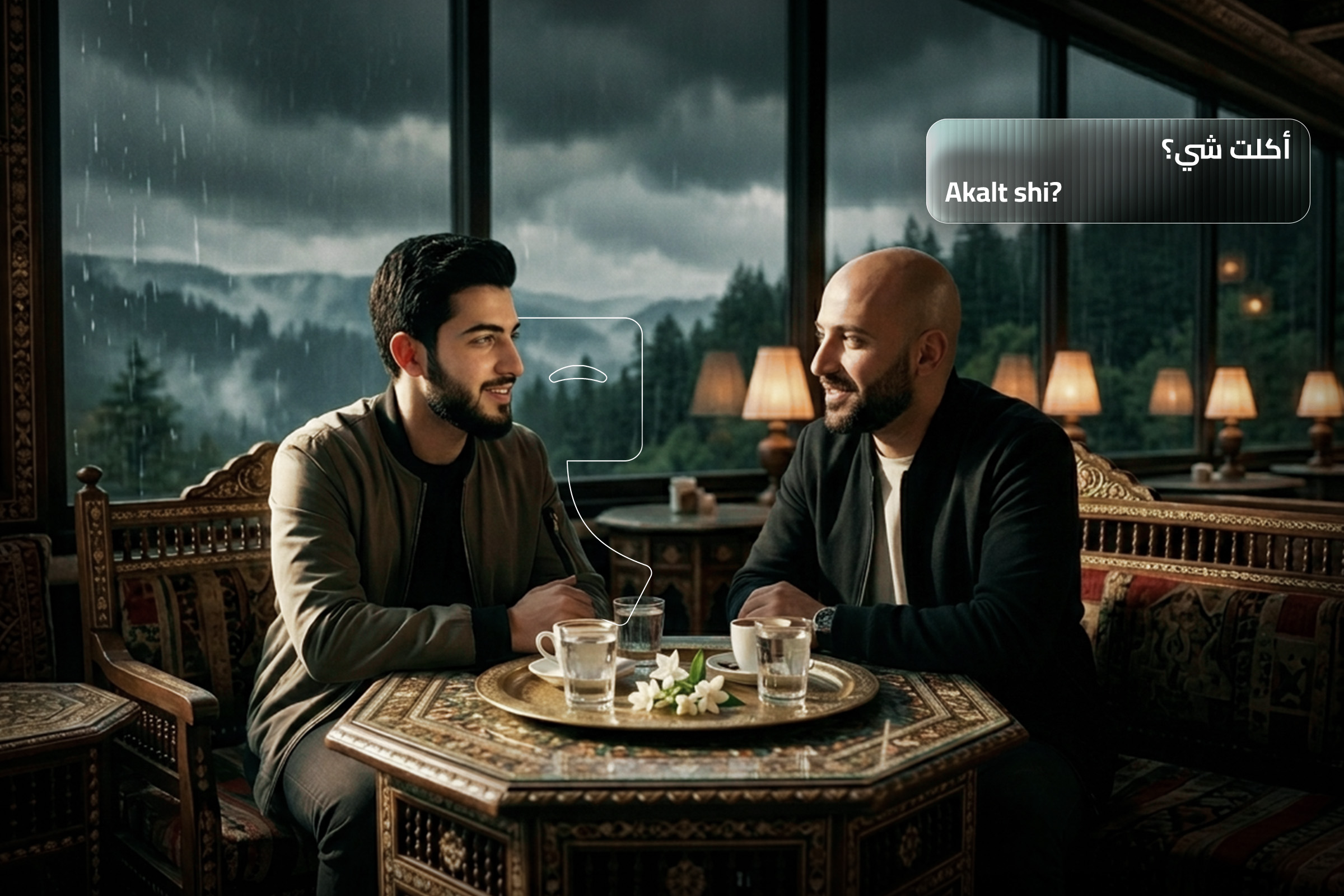
👉 Someone asks a simple question.
"أكلت شي؟"
"Have you eaten?"
At first, it sounds like casual conversation.
But in a Syrian home, it's much more than that.
It's a way of asking:
"Are you hungry?"
"Can I take care of you?"
"Have you been looking after yourself?"
If your answer is:
"No."
Everything changes.
Someone immediately stands up.
Kitchen cupboards open.
Plates begin appearing on the table.
You hear laughter from another room.
👉 Someone says:
"في أكل جاهز."
"There's food ready."
Within minutes, the visit has taken on a life of its own.
💜 Cultural Note
In many countries, asking "Have you eaten?" is simply a conversation starter.
In Syria, it's often a genuine invitation. If the answer is "no," many hosts instinctively begin preparing food, even if you only planned to stay for a few minutes.
It's one of the clearest examples of how care is expressed through hospitality.
Fifteen Minutes Later...
The Table Has Completely Changed
One plate becomes three.
Three become seven.
You stop counting.
Suddenly, the table is filled with dishes.
There's creamy hummus.
Fresh tabbouleh.
Smoky mutabbal.
Rice.
Stuffed vegetables.
Warm bread.
Pickles.
Fresh salads.
Something fried.
Something baked.
And, almost certainly, a homemade dish that everyone insists you have to try.
Just when you think your plate is full, someone smiles and says:
"تفضل... خد شوي كمان."
"Go on... have a little more."
You politely answer:
"No, thank you."
They smile.A few seconds later...
There's somehow even more food on your plate.
⭐ Pro Tip
Don't be surprised if your host offers you food more than once.
Repeated invitations aren't meant to pressure you, they're a way of showing generosity and making sure you feel genuinely welcome.
The Biggest Mistake First-Time Visitors Make
Many visitors assume that saying:
"No, thank you."
ends the conversation.
In a Syrian home, that's not always the case.
Your first refusal is often understood as politeness rather than a final answer.
So your host may ask again.
And sometimes...
One more time.
This isn't because they don't respect your decision.
It's because they want to be absolutely sure you're comfortable and not refusing out of courtesy.
Hospitality isn't measured by how much food is served.
It's measured by how cared for the guest feels.
💜 Cultural Note
Many Syrians grow up hearing that a guest should never leave hungry.
Offering food several times isn't considered unusual, it's a traditional way of expressing warmth, generosity, and respect.
Once you understand the cultural meaning behind it, the repeated invitations begin to feel less surprising and more heartfelt.
Why Do Syrians Always Offer Food?
This is one of the questions visitors ask most often after spending time with a Syrian family.
The answer is simple.
Food is one of the most important ways Syrians express hospitality.
There's even a phrase for it:
كرم الضيافة
Karam al-Diyafeh
It literally means "generosity toward guests."
But in everyday life, it represents something much bigger.
It means making sure a guest feels relaxed, appreciated, and completely at home.
Whether someone arrives unexpectedly or was invited weeks in advance, the response is often the same:
A warm welcome.
A cup of coffee.
Something to eat.
And the reassuring feeling that they're genuinely happy you came.
For many Syrians, a guest isn't an interruption to the day.
A guest is a blessing.
⭐ Pro Tip
If you're full or have dietary restrictions, simply thank your host warmly and explain why you can't eat more.
A sincere smile and a kind explanation are usually all that's needed.
Your host may still offer once again, but that's simply part of the experience.
Is It Rude to Refuse Food in a Syrian Home?
Not at all.
Syrians understand that guests may already have eaten, follow a special diet, or simply not feel hungry.
What's different is the way the conversation unfolds.
Instead of accepting your first refusal immediately, your host may encourage you one more time to make sure you're not declining out of politeness.
Once they know your answer is genuine, they'll usually respect it.
The important thing isn't whether you finish every dish.
It's showing appreciation for the kindness behind the invitation.
What Arabic Learners Really Learn Here
When people think about learning Arabic, they often imagine memorizing vocabulary or practicing grammar.
But a visit to a Syrian home teaches something much deeper.
You begin to understand that language and culture are inseparable.
👉 When someone says:
تفضل
they're not simply saying:
"Please."
They're inviting you to feel at home.
👉 When someone asks:
أكلت شي؟
they're not making small talk.
They're showing care and making sure you're comfortable.
👉 And when everyone around the table says:
صحة وهنا
they're wishing you much more than "Enjoy your meal."
They're wishing you health, comfort, and happiness.
These are the moments that help you understand how Syrians really communicate, not just through words, but through generosity, kindness, and shared experiences.
Essential Syrian Arabic Phrases You'll Hear
If you visit a Syrian home, these are some of the expressions you'll hear again and again.
🟡 أهلاً وسهلاً (Ahlan wa Sahlan)
This is usually the first thing you'll hear when the door opens.
Although it's commonly translated as "Welcome," it carries a much warmer feeling.
It's a way of saying:
"We're genuinely happy you're here."
🟡 تفضل (TfaDDal)
One of the most versatile words in Syrian Arabic.
Depending on the situation, it can mean:
"Come in."
"Help yourself."
"Please."
"Go ahead."
Inside a Syrian home, it's an invitation to relax and make yourself comfortable.
🟡 أكلت شي؟ (Akalt Shi?)
Literally:
"Have you eaten?"
What Syrians often mean is:
"Are you hungry?"
"Can I get you something to eat?"
"Are you okay?"
It's one of the clearest examples of how care is expressed through food.
🟡 صحة وهنا (SaHTa w Hana)
You'll hear this as everyone begins eating.
It literally means:
"Health and happiness."
It's the Syrian equivalent of "Enjoy your meal," but with a warmer emotional meaning.
🟡 يعطيك العافية (Ya'teek El-'Afye)
After someone cooks, serves food, or makes an effort to help, you'll often hear:
يعطيك العافية
Literally:
"May God give you strength and good health."
It's one of the most common ways Syrians express gratitude and appreciation.
Common Mistakes First-Time Visitors Make
If it's your first time visiting a Syrian home, these simple tips will help you feel more comfortable.
🟡 Expecting a Short Visit
Many people arrive expecting to stay for a quick coffee.
Don't be surprised if the visit turns into lunch, dessert, and several hours of conversation.
🟡 Thinking the Food Offers Are Just Politeness
When someone offers you food, they genuinely want you to enjoy it.
Accepting even a small portion is often appreciated.
🟡 Translating Every Expression Literally
Phrases like تفضل or أكلت شي؟ carry meanings that go far beyond their dictionary translations.
Understanding the cultural context makes conversations feel much more natural.
🟡 Feeling Awkward About the Hospitality
Many visitors worry they're causing extra work for their hosts.
In reality, making guests feel comfortable is something many Syrians genuinely enjoy.
Accepting their hospitality is often seen as part of sharing the experience together.
💜 Final Thoughts
A visit to a Syrian home isn't simply about sharing coffee or enjoying a delicious meal.
It's about experiencing a culture where generosity, kindness, and human connection are part of everyday life.
Long after you've forgotten what was served or how many dishes filled the table, you'll probably remember something much more important.
The feeling of being welcomed.
The conversations that made you laugh.
The repeated invitations to eat just a little more.
And the realization that, somehow, people who had only just met you were already treating you like family.
That's the heart of Syrian hospitality.
And it's one of the most beautiful ways to experience the language beyond the classroom.
💜 Learn Syrian Arabic Through Real Life
At Speak Real Arabic, we believe that learning a language means understanding the culture behind it. That's why our lessons focus on authentic Syrian Arabic, everyday expressions, and the real conversations you'll hear in daily life.
Whether you're learning your first phrases or building fluency, you'll discover the language as it's actually spoken through real stories, cultural insights, and practical conversations that help you connect with confidence.
Also Read:
🎓Syrian Wedding Vocabulary: What Everyone Is Saying at a Syrian Wedding. Read Now
🎓Zero to 15 Minutes in Arabicteaches your first conversation.
🎓60 Minutes in 60 Days expands your vocabulary in topics like food, shopping, and daily life.
🎓Weekly Arabic, Culture & Stories,Join Our Newsletter


