Syrian Wedding Vocabulary: What Everyone Is Saying at a Syrian Wedding
Discover authentic Syrian wedding vocabulary, understand Syrian wedding traditions, and learn the expressions native speakers actually use during one of the happiest celebrations in Syrian culture.
Learning a language becomes much more meaningful when you understand the moments that matter most to the people who speak it.
One of those moments is a Syrian wedding.
If you've ever watched videos of Syrian weddings, been invited to an Arabic wedding, or spoken with Syrian friends about marriage celebrations, you've probably noticed that everyone seems to speak a little differently. Between the music, the dancing, the laughter, and the endless congratulations, you'll hear words and expressions that rarely appear in traditional Arabic textbooks.
That's because weddings have their own vocabulary.
They bring together family traditions, local customs, religious practices, and everyday expressions that Syrians have used for generations. Learning these words doesn't just expand your vocabulary—it helps you understand the culture, connect with native speakers, and feel more confident in real conversations.
At Speak Real Arabic, we believe the best way to learn Syrian Arabic is through authentic situations. Weddings are a perfect example of how language comes alive through culture, emotions, and shared experiences.
💜 In This Guide, You'll Learn
By the end of this article, you'll know:
The most common Syrian wedding vocabulary
Traditional Syrian wedding customs
Popular wedding congratulations and blessings
Real Syrian Arabic expressions used during celebrations
Cultural insights that explain why Syrians celebrate the way they do
Practical phrases you can use when talking with Syrian friends
Syrian Wedding Vocabulary: What Everyone Is Saying at a Syrian Wedding
Discover authentic Syrian wedding vocabulary, understand Syrian wedding traditions, and learn the expressions native speakers actually use during one of the happiest celebrations in Syrian culture. 1
💜 In This Guide, You'll Learn 1
Why Learn Syrian Wedding Vocabulary? 1
Essential Syrian Wedding Vocabulary 2
10. عقبال عندك (ʿUqbal ʿAndak) 10
12. كتب الكتاب (Katb Al-Kitab) 12
13. شهر العسل (Shahr Al-ʿAsal) 13
Expressions You'll Hear at Syrian Weddings 3
Cultural Tip: Syrian Weddings Are Community Celebrations 4
Why Syrian Weddings Sound Different
Imagine walking into a Syrian wedding hall.
Music is playing loudly.
Guests are greeting each other with hugs.
Someone is leading the dabke.
Children are running between the tables.
Relatives you've never met are congratulating you as if they've known you for years.
Suddenly you hear:
"مبروك!"
Then another person says:
"الله يهنيكن!"
Someone else laughs and tells an unmarried cousin:
"عقبال عندك!"
To a language learner, these might sound like completely different phrases.
To Syrians, they're part of the atmosphere.
Wedding vocabulary isn't just about marriage—it's about celebration, community, generosity, and family. Many of these expressions are also used during engagements, graduations, new jobs, and other happy occasions.
Understanding them helps you understand Syrian culture itself.
Before the Wedding
Every Syrian wedding begins long before the wedding day itself. Families spend weeks—or even months, preparing for the celebration.
Here are some words you'll hear before the big day.
🌟 خطبة (Khitbe)
Meaning: Engagement
This is the formal engagement between the couple.
Example
عملوا خطبة الأسبوع الماضي.
"They got engaged last week."
🌟 جاهة (Jāha)
Meaning: The groom's family officially asking for the bride's hand.
In many Syrian families, the groom's relatives visit the bride's family to formally request permission for the marriage.
This tradition symbolizes respect between the two families.
🌟 التلبيسة (Talbīse)
Meaning: The engagement jewelry traditionally presented to the bride.
Depending on the family and region, this often includes a ring, gold jewelry, or other gifts given during the engagement period.
Today, the custom varies from family to family, but the word is still widely recognized.
🌟 كتب الكتاب (Katb Al-Kitab)
Meaning: Signing the marriage contract.
Many learners assume this is the wedding itself.
Actually, it's the official religious or legal marriage ceremony, which may take place days or even months before the celebration.
Example
كتبوا الكتاب يوم الجمعة.
"They signed the marriage contract on Friday."
During the Wedding
Now the celebration begins.
These are the words you'll hear throughout the wedding.
✔ عرس (ʿErs)
Meaning: Wedding
Example:
اليوم عنا عرس.
"Today we have a wedding."
✔ العريس (Al-'Arīs)
Meaning: Groom
وصل العريس.
"The groom has arrived."
✔ العروس (Al-'Arūs)
Meaning: Bride
العروس طالعة هلّق.
"The bride is coming out now."
✔ الزفة (Zaffe)
The grand entrance of the bride and groom.
The zaffe usually includes music, cheering, clapping, dancing, and sometimes traditional drums.
For many guests, it's the most exciting moment of the entire celebration.
✔ دبكة (Dabke)
No Syrian wedding feels complete without dabke.
Guests form a line, hold hands, and dance together to traditional Levantine music.
Even people who claim they "don't dance" often end up joining.
You'll frequently hear:
يلا عالدبكة!
"Come join the dabke!"
✔ المعازيم (Al-Ma'āzīm)
The invited guests.
✔ العزيمة (Al-'Azīme)
The wedding invitation or banquet.
Depending on the context, it can refer to the invitation itself or the meal served during the celebration.
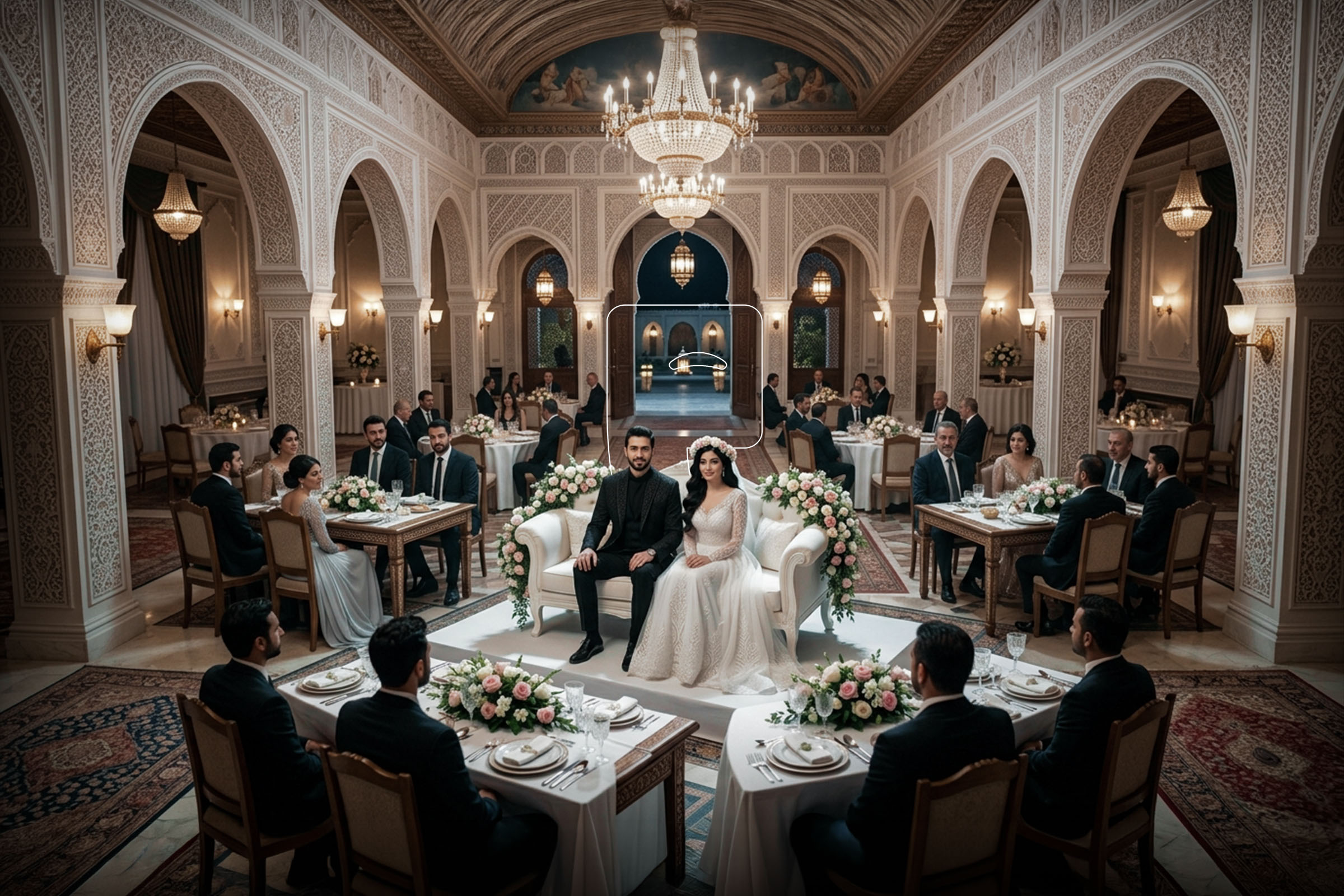
✔ الكوشة (Kūshe)
The decorated stage where the bride and groom sit during the reception.
Most wedding photos are taken here.
✔ شهر العسل (Shahr Al-'Asal)
Literally:
"Month of honey."
Meaning:
Honeymoon.
Example:
سافروا على شهر العسل.
"They left for their honeymoon."
Wedding Congratulations and Blessings
One of the easiest ways to sound more natural in Syrian Arabic is by learning the expressions people actually say to newlyweds.
These phrases aren't limited to weddings. Many of them are also used during engagements, graduations, new jobs, and other happy milestones.
🟪 مبروك (Mabrouk)
Meaning: Congratulations
This is by far the most common word you'll hear throughout the celebration.
Example
مبروك للعروسين!
"Congratulations to the bride and groom!"
🟪 ألف مبروك (Alf Mabrouk)
Meaning: A thousand congratulations
This is a warmer, more enthusiastic version of مبروك and is often used by close friends and family.
Example
ألف مبروك!
"Many congratulations!"
🟪 الله يهنيكن (Allah Yhannīkon)
Meaning: May God bless your marriage with happiness.
This is one of the most heartfelt blessings you'll hear at Syrian weddings.
Unlike a simple "Congratulations," it expresses a sincere wish for a happy life together.
🟪 الله يتمم على خير (Allah Ytammem ʿAla Khair)
Meaning: May everything be completed successfully.
Syrians often say this during the engagement period while the wedding is still being planned.
It's a way of wishing that all preparations go smoothly and that the marriage begins with goodness.
🟪 عقبال عندك (ʿUqbal ʿAndak)
Literal Meaning: "May it be your turn next."
After congratulating the newlyweds, many Syrians jokingly say this to an unmarried friend or relative.
It's usually said with a smile and is meant as a warm wish rather than pressure.
Because it's so common, you'll hear it at almost every Syrian wedding.
🟪 بالرفاه والبنين (Bil-Rafah Wal-Banīn)
This traditional blessing wishes the couple happiness, prosperity, and a joyful future together.
While younger generations may not use it as often as before, it's still heard in many families and remains an important part of Syrian wedding traditions.
💬 Real Syrian Arabic in Context
Imagine you're attending a Syrian wedding with friends.
Here's how a natural conversation might sound.
ليلى: منوّرين! أهلًا وسهلًا فيكن.
سارة: يسلموا! وين العروس؟
ليلى: لساتها عم تجهز، والزفّة رح تبلش بعد شوي.
محمد: شفتوا العريس؟
أحمد: إي، وصل من شوي.
الجميع: ألف مبروك! الله يهنيكن!
خال العريس: يلا... كلكن عالدبكة!
Even if you don't understand every word yet, notice how greetings, congratulations, and invitations flow naturally throughout the conversation. This is the kind of real Syrian Arabic you'll hear far more often than textbook dialogues.
💜 Cultural Notes
Weddings Are Family Celebrations
In many Western countries, weddings often focus primarily on the couple.
Syrian weddings celebrate something much bigger—the joining of two families.
Parents, grandparents, cousins, neighbors, childhood friends, and even distant relatives often play active roles throughout the celebration.
That's why you'll hear so many greetings, congratulations, and conversations between people meeting for the first time.
Everyone Is Welcome to Dance
You don't need to be an experienced dancer to join the dabke.
The point isn't perfection.
It's participation.
If someone invites you by saying:
يلا عالدبكة!
they're inviting you to be part of the celebration, not judging your dancing skills.
Hospitality Never Stops
Even during a large wedding reception, guests are constantly encouraged to eat more, drink more, and enjoy themselves.
You may hear expressions like:
تفضل
اتفضلوا
خدوا راحتكن
These aren't just polite phrases—they reflect the importance of generosity and making every guest feel at home.
⭐ Pro Tips
Learn phrases, not just individual words.
Instead of memorizing مبروك, learn the full expression:
ألف مبروك، الله يهنيكن.
That's much closer to how native speakers actually talk.
Watch real Syrian wedding videos.
You'll hear pronunciation, intonation, and natural conversations that textbooks rarely teach.
Pay attention to how often people repeat greetings and congratulations.
Notice cultural vocabulary.
Words like جاهة, كتب الكتاب, and زفّة teach you more than language—they introduce you to Syrian traditions and social customs.
⚠️ Common Mistakes Learners Make
Mistake 1
❌ Thinking كتب الكتاب means the wedding reception.
✅ It refers to the official marriage contract, which may happen before the celebration.
Mistake 2
❌ Translating عرس as "marriage."
✅ In everyday Syrian Arabic, it usually means wedding or wedding celebration.
Mistake 3
❌ Using عقبال عندك with everyone.
Although it's common, it's best used with unmarried friends or relatives you know well.
In some situations, especially with people you don't know personally, it may feel too personal.
Mistake 4
❌ Memorizing vocabulary without learning the expressions around it.
Native speakers don't simply say words—they use complete phrases.
Learning chunks of language helps you sound much more natural.
Expressions You'll Hear at Syrian Weddings
منوّرين
"You've brightened the place."
A warm welcome given to guests.
الله يتمم على خير
"May everything be completed successfully."
Often said to the couple during engagement and wedding preparations.
الله يهنيكن
"May God bless your marriage."
A very common wedding blessing.
بالرفاه والبنين
A traditional expression wishing happiness and a prosperous future for the newly married couple.
Cultural Tip: Syrian Weddings Are Community Celebrations
One thing that surprises many visitors is how social Syrian weddings are.
In many Western cultures, weddings often focus primarily on the couple.
In Syrian culture, weddings are community events. Families, relatives, neighbors, and friends all play important roles in the celebration.
That's why you'll hear so many greetings, blessings, congratulations, and affectionate expressions throughout the event.
Learning these words helps you understand not only the language but also the values of family, hospitality, and togetherness that are central to Syrian culture.
How to Learn Real Syrian Arabic Through Cultural Events
Traditional Arabic textbooks rarely teach wedding vocabulary.
Yet these are exactly the kinds of words native speakers use in everyday life.
At Speak Real Arabic, we focus on authentic Syrian Arabic as it's actually spoken. Through real conversations, cultural lessons, stories, and audio content, you'll learn the expressions people use in weddings, family gatherings, celebrations, and everyday interactions.
Because learning a language isn't just about understanding words.
It's about understanding people.
Final Thoughts
Syrian weddings are filled with joy, tradition, music, and meaningful language.
Whether you're attending a wedding, watching Syrian videos online, speaking with Syrian friends, or simply exploring Arabic culture, these expressions will help you understand what's happening and participate more naturally in conversations.
The next time you hear:
"مبروك"
or
"عقبال عندك"
you'll know exactly what everyone is celebrating.
And you'll be one step closer to understanding real Syrian Arabic.
Final Thoughts
A Syrian wedding is much more than a celebration.
It's a gathering of families, traditions, music, food, laughter, and heartfelt conversations.
By learning the vocabulary and expressions used during these special moments, you're not only expanding your Syrian Arabic—you’re gaining a deeper understanding of the culture behind the language.
The next time you hear someone say:
"ألف مبروك!"
or
"الله يهنيكن."
you'll recognize more than just the words.
You'll understand the warmth, generosity, and community spirit they represent.
That's what learning a language is really about.
💜 Learn Syrian Arabic Through Real Conversations
Traditional textbooks often teach formal vocabulary you'll rarely hear in everyday life.
At Speak Real Arabic, we take a different approach.
Our lessons are built around real conversations, authentic Syrian expressions, cultural insights, and the language people actually use with family and friends.
Whether you're just starting your Arabic journey or looking to sound more natural, you'll learn the Syrian Arabic that comes to life in homes, cafés, celebrations, and everyday conversations.
Continue Learning Syrian Arabic:
🌟 Start Zero to 15 Minutes, of real Arabic, without grammar stress,Explore the Course
🌟Weekly Arabic, Culture & Stories,Join Our Newsletter.
🌟 Ready to learn Syrian Arabic through real conversations, stories, and cultural experiences? Explore the Speak Real Arabic Membership.


