
Syrian Poetry and Famous Syrian Poets: A Guide to Arabic Poetry and Syrian Culture
When many people in the United States search for Syria online, they often encounter news headlines, politics, or history. But there is another side of Syria that is just as important: its culture, creativity, and language. One of the most beautiful ways to explore this cultural world is through Syrian poetry and poets.
For centuries, poetry has played a central role in Syrian culture and in the wider Arabic-speaking world. Poetry is not only literature, it is emotion, storytelling, memory, and identity expressed through language.
For students learning Arabic, especially those exploring Syrian Arabic, poetry can open a door to understanding how people express love, longing, humor, pride, and everyday life in Arabic.
Why Poetry Matters in Syrian Culture
In many Western cultures, poetry can sometimes feel distant or academic. In Syria and across the Arab world, poetry has traditionally been much closer to everyday life.
Historically, poetry has been used to:
⭐ express love and admiration
⭐ reflect social and political ideas
⭐ preserve history and cultural identity
⭐ describe nature, cities, and personal emotions
⭐ celebrate beauty and human experience
Because of this, poetry became one of the most respected forms of expression in Arabic culture. Many famous Syrian poets have helped shape modern Arabic literature and influenced generations of readers across the Middle East and beyond.
What Makes Syrian Poetry Unique?
Syrian poetry is admired for its emotional warmth, rich imagery, and ability to balance classical tradition with modern expression.
Several qualities make Syrian poetry stand out.
Emotional honesty
Many Syrian poets write with a direct emotional voice. Their poems often explore themes such as love, nostalgia, belonging, and identity in ways that feel personal and sincere.
Cultural imagery
Syrian poetry frequently draws inspiration from everyday life. Cities like Damascus and Aleppo, historical landscapes, and cultural traditions often appear in poetic imagery.
Balance between tradition and modernity
Some Syrian poets write in classical Arabic poetic forms, while others experiment with modern styles such as free verse. This mixture creates a diverse and evolving poetic tradition.
Famous Syrian Poets You Should Know
Throughout modern Arabic literary history, Syria has produced some of the most influential poets in the Arab world. These writers helped shape both classical and modern Arabic poetry.
Nizar Qabbani: The Most Famous Syrian Poet
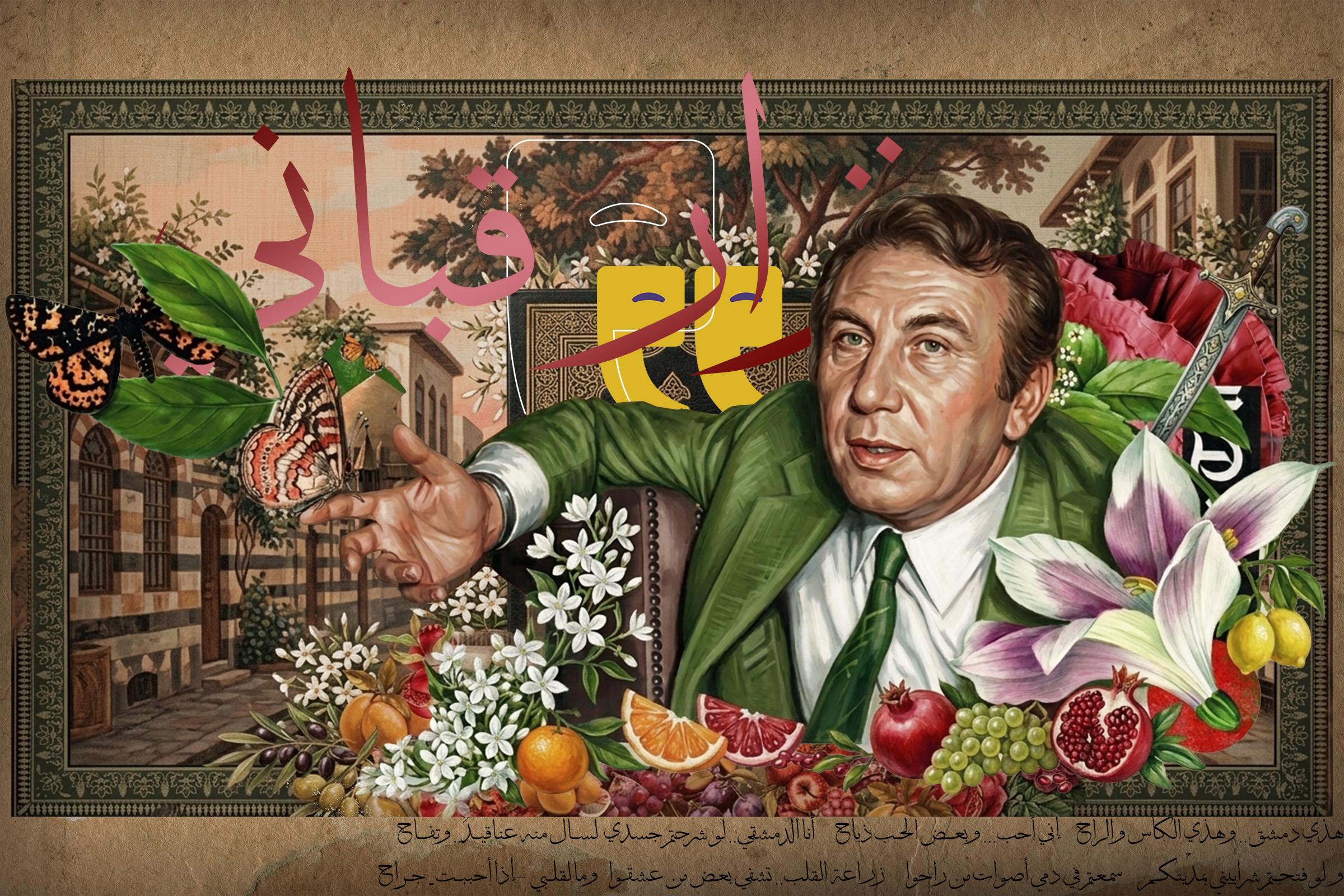
One of the most famous Syrian poets is Nizar Qabbani (1923–1998). He became widely known across the Arab world for his poetry about love, emotion, and human relationships.
Qabbani’s writing style is often admired because it is elegant yet accessible. Many of his poems feel personal and intimate, as if the poet is speaking directly to the reader.
His poetry has been translated into many languages, and numerous poems were turned into songs performed by famous Arab singers. Because of this, Qabbani remains one of the most recognized voices in modern Arabic poetry.
For Arabic learners, his poetry often serves as an approachable introduction to the beauty of Arabic literary expression.
Omar Abu Risha: Poetry of Dignity and Strength
Omar Abu Risha (1910–1990) is another major figure among Syrian poets. His work is known for its powerful language and strong themes related to dignity, identity, and cultural pride.
Abu Risha’s poetry combines classical Arabic style with modern historical awareness. His poems often address social issues and the cultural challenges of the Arab world.
Because of his eloquent style and intellectual depth, he is widely respected in Arabic literary circles.
Badawi al-Jabal: Classical Elegance in Arabic Poetry
Badawi al-Jabal (1905–1981) is often associated with the classical tradition of Arabic poetry. His work reflects a strong command of traditional poetic forms and refined Arabic language.
His poetry is admired for its musical rhythm, rich vocabulary, and deep emotional tone. Through his writing, readers can appreciate the beauty of classical Arabic poetic craftsmanship.
Muhammad al-Maghout: A Pioneer of Modern Arabic Free Verse
In contrast to classical poetic forms, Muhammad al-Maghout (1934–2006) helped pioneer modern Arabic free verse poetry.
His writing style is often direct, bold, and sometimes ironic. Instead of focusing only on traditional poetic structures, al-Maghout explored everyday life, social tensions, and personal struggles.
His voice brought a new modern perspective to Syrian poetry and influenced many contemporary Arab writers.
Famous Arabic Poems by Syrian Poets
Syrian poets have written some of the most influential works in modern Arabic poetry. Many of their poems explore universal themes such as love, longing, identity, and the beauty of everyday life.
Some well-known examples include:
🟣 romantic poetry written by Nizar Qabbani
🟣 powerful cultural poetry by Omar Abu Risha
🟣 classical Arabic poetic works by Badawi al-Jabal
These poems are studied in Arabic literature programs and continue to inspire readers across the Arab world.
Example of Arabic Poetry from Syria
Arabic poetry often uses vivid imagery and emotional expression.
A translated line inspired by the style of Syrian love poetry might read:
هذي دمشقُ… وهذي الكأسُ والراحُ
إنّي أحبُّ… وبعضُ الحبِّ ذبّاحُ
This is Damascus… and here is the wine and the cup.
I am in love… and some love can be painful.
This type of imagery shows how Syrian poetry often connects love with ideas of home, belonging, and emotional connection.
For Arabic learners, even simple poetic lines can reveal the emotional richness of the language.
Why Arabic Poetry Is Important in Arab Culture
Poetry has historically played a central role in Arab culture for more than a thousand years.
In traditional Arab societies, poets were not only writers but also storytellers and cultural voices. Their words could influence public opinion, preserve history, and celebrate cultural identity.
Arabic poetry has long been used to:
🟡 share cultural values
🟡 express deep emotional experiences
🟡 describe nature and beauty
🟡 communicate ideas about society and identity
Because of this long tradition, poetry remains one of the most respected literary forms in the Arabic language.
How Poetry Helps You Learn Arabic
For students learning Arabic, poetry can be a powerful cultural tool.
Reading poetry helps learners:
✔ understand emotional expression in Arabic
✔ discover new vocabulary and imagery
✔ experience the rhythm and musical quality of the language
✔ connect language learning with cultural understanding
Even reading translated poetry can help learners appreciate how Arabic communicates feelings and ideas.
Syrian Poetry as a Cultural Bridge
Exploring Syrian poetry and poets allows learners to see a more human side of Syrian culture.
Through poetry, readers can experience:
✔ the beauty of the Arabic language
✔ the emotional depth of Syrian storytelling
✔ the creativity of Arab literary traditions
✔ the cultural values that shape Syrian identity
For language learners, poetry creates a bridge between vocabulary and culture.
Instead of simply memorizing words, readers begin to understand how language carries emotion, memory, and meaning.
Final Thoughts
Syrian poetry is an important part of Arabic literature and cultural history. From the romantic voice of Nizar Qabbani to the powerful writing of Omar Abu Risha and the modern perspective of Muhammad al-Maghout, Syrian poets have shaped the literary landscape of the Arab world.
For learners exploring Arabic language and culture, discovering Syrian poetry offers a deeper understanding of how language expresses emotion, creativity, and human experience.
Sometimes a single poem can reveal more about a culture than many pages of explanation.
Also Read:
🎓 Curious how people speak Levantine Arabic in everyday life. Explore our story from a real book fair.
🎓 Zero to 15 Minutes in Arabic teaches your first conversation.
🎓 60 Minutes in 60 Days expands your vocabulary in topics like food, shopping, and daily life.
🎓 Weekly Arabic, Culture & Stories, Join Our Newsletter


