
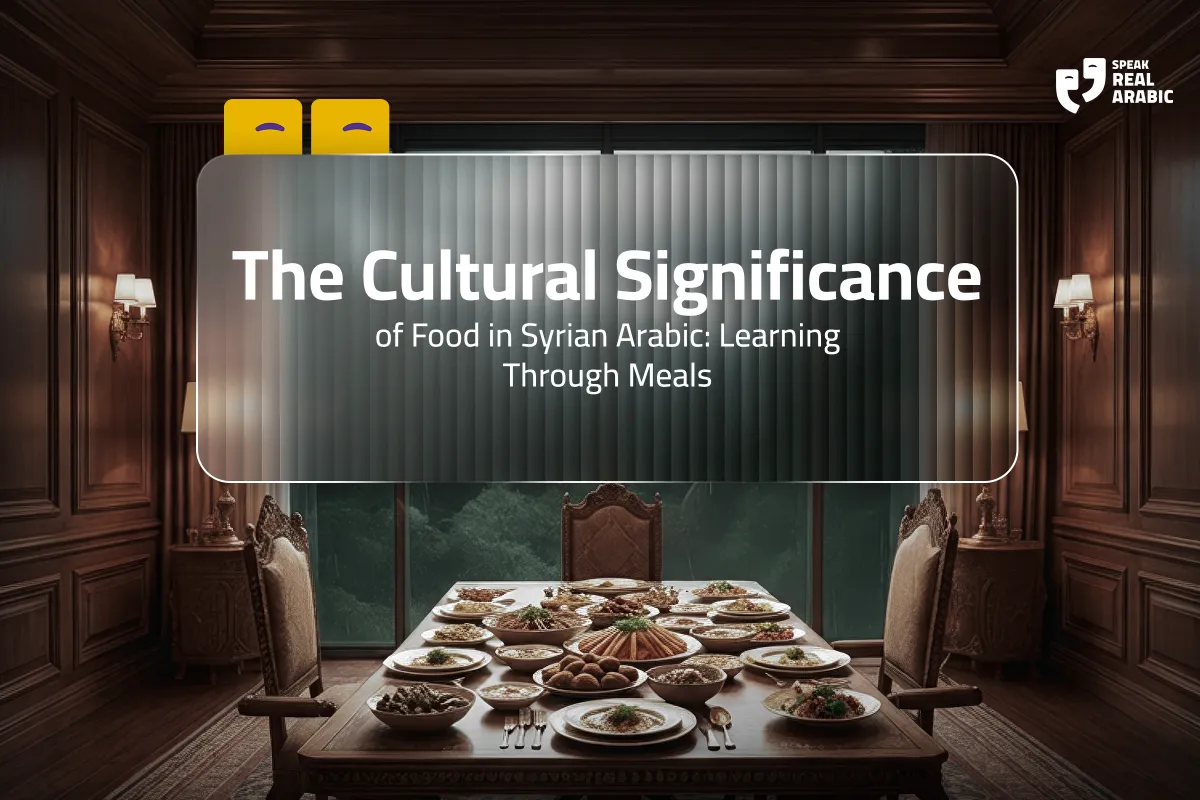
The Cultural Significance of Food in Syrian Arabic: Learning Through Meals
Food is an essential part of Syrian culture and everyday life. Syrian cuisine reflects the country’s history, geography, and social traditions. Through food, Syrians express hospitality, strengthen relationships, and keep cultural customs alive. Learning about Syrian food offers a natural and engaging way to understand the language and culture, and to Speak Real Arabic as it is used in daily life.
This article explores the role of food in Syrian Arabic, its connection to cultural experiences, and how food-related vocabulary helps learners communicate more naturally and confidently.
Syrian Food Culture: A Culinary Tradition
Syrian food is known for its variety and balance, combining fresh vegetables, grains, meat, and aromatic spices. Meals are often shared, with family and friends gathering around the table. This communal style of eating reflects Syrian values of generosity and togetherness contexts where language is used naturally.
Traditional dishes such as kebabs, hummus, tabbouleh, falafel, fattoush, and baklava are deeply rooted in Syrian identity. Each dish tells a story passed down through generations. Understanding these foods helps learners connect words with real experiences, making it easier to Speak Real Arabic beyond textbooks.
Learning Syrian Arabic Through Food

Food provides one of the most practical ways to Speak Real Arabic. Many everyday expressions in Syrian Arabic are closely tied to Syrian food, shared meals, and hospitality, helping learners understand how the language is spoken in real situations.
Common expressions include:
🟡 Yalla, bismillah (يلا، بسم الله) – Inviting others to start eating.
🟡 (شي بشهي) – Complimenting the food.
🟡 Daaymeh (دايمة) – Thanking the host after a meal.
🟡 Sahtein w hena (صحتين وهنا) – Wishing health and enjoyment
🟡 Eskiblik kamān (اسكبلك كمان) – Shall I serve you more?
🟡 Shi biftaḥ el-nafas (شي بيفتح النفس) – It really whets the appetite.
🟡 Dū’ hayy men īde (دوق هي من إيدي) –Used when offering food directly by hand to a guest.
🟡 Yislamo hal-ideen (يسلم هالإيدين) – Thank you for cooking.
It expresses warmth and generosity, a very Syrian way to say “try this.”
These phrases reflect respect, warmth, and social connection, key elements of Syrian communication and an essential part of learning to Speak Real Arabic.
Food, Family, and Community in Syrian Culture
In Syrian culture, food plays a central role in family life and celebrations. From Ramadan Iftar to weddings and gatherings, Syrian food brings people together and creates natural moments to hear and practice Syrian Arabic as it’s spoken in everyday life.
Using Food to Practice Syrian Arabic
For language learners, food creates meaningful learning moments:
Cooking Syrian recipes helps build vocabulary related to ingredients and actions.
Eating at Syrian restaurants offers real-life speaking practice.
Sharing meals with Syrians encourages natural conversation and listening.
All of these experiences support learners who want to Speak Real Arabic with confidence and cultural awareness.
Conclusion
Food is more than nourishment in Syrian culture; Syrian food is a bridge to language, identity, and connection. By learning about Syrian dishes and food-related expressions, learners gain a deeper understanding of both the language and the culture behind it.
If your goal is to move beyond formal Arabic and communicate naturally, Syrian food is the perfect starting point. It’s one of the simplest and most effective ways to truly Speak Real Arabic.
If you enjoyed learning about Syrian food and culture, here are a few ways to continue your journey and Speak Real Arabic naturally:
→ Download our free Arabic Family Tree
→ Start speaking Syrian Arabic from Day One
→ Join our free newsletter for real Syrian phrases and cultural stories.


