What Does Salamtak Mean? A Warm Syrian Arabic Expression You’ll Hear Everywhere
Discover the meaning of Salamtak, when Syrians use it, how to respond naturally, and why this simple expression says so much about Arabic warmth and culture.
If you've ever watched a Syrian series or spoken with a native Arabic speaker, you've probably heard someone say Salamtak!
It's a short expression, but it carries a lot of warmth.
Someone tells you they're sick.
Someone gets hurt.
Someone falls down.
And almost immediately, you might hear:
Salamtak!
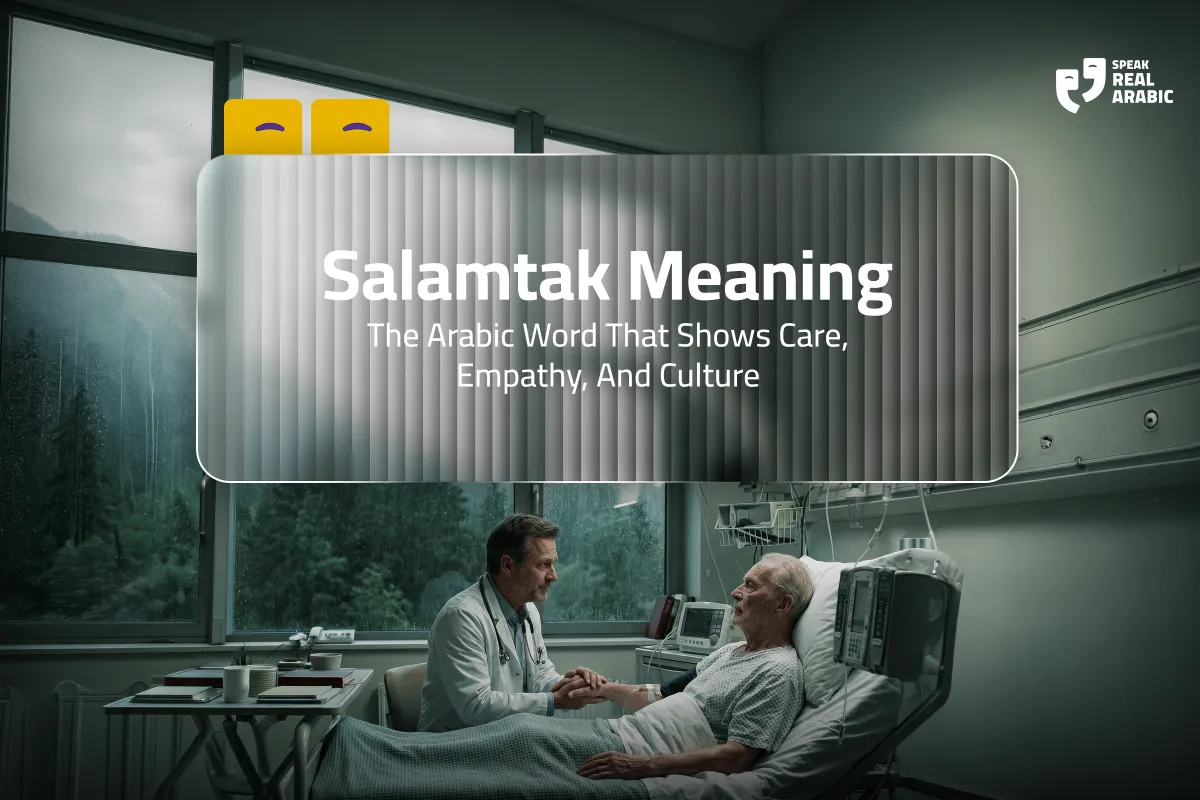
But what does Salamtak really mean? When should you use it? And how can you respond when someone says it to you?
What Does Salamtak Mean? A Warm Syrian Arabic Expression You’ll Hear Everywhere
When Do Syrians Say Salamtak? 2
3. When Someone Falls or Trips 3
The Difference Between Salamtak and Salamtek 3
How Do You Respond to Salamtak? 4
The Cultural Meaning Behind Salamtak 6
Salamtak Is More Than "Get Well Soon" 7
Common Mistakes Learners Make 8
Using Salamtak Only When Someone Is Sick 1
Forgetting the Gender Difference 9
Translating It Word for Word 10
In This Guide
What does Salamtak mean?
The difference between Salamtak and Salamtek
When do Syrians say Salamtak?
How to respond naturally
Common Syrian Arabic expressions with a similar meaning
Cultural notes
Common mistakes learners make
Frequently asked questions
What Does Salamtak Mean?
The expression Salamtak means something like:
"I hope you're okay."
"May you be safe and well."
"Get well soon."
The exact translation can change depending on the situation.
The word comes from salaameh, which is connected to the idea of safety, health, and wellbeing.
In Syrian Arabic, the expression changes slightly depending on who you're speaking to:
Salamtak — when speaking to a man.
Salamtek — when speaking to a woman.
It's a small difference, but it's important to learn because Syrian Arabic often changes the ending of a word depending on the gender of the person you're talking to.
When Do Syrians Say Salamtak?
One of the reasons this expression is so useful is that you can hear it in many everyday situations.
1. When Someone Is Sick
This is probably one of the most common situations.
Your friend tells you:
"I haven't been feeling well today."
You can simply say:
Salamtak!
In this situation, it means:
"I hope you feel better."
or:
"Get well soon."
You can also use it when you hear that someone has been sick, even if you're not speaking directly to them at the moment.
2. When Someone Gets Hurt
Imagine someone accidentally hits their hand against the table.
You might immediately say:
Salamtak!
Here, you're not necessarily saying "Get well soon."
You're simply showing concern and asking, in a way:
"Are you okay?"
It's a very natural reaction in everyday conversation.
3. When Someone Falls or Trips
Someone is walking, suddenly trips, and quickly stands up again.
A Syrian speaker might say:
Salamtak!
Even if the person isn't seriously hurt.
It's simply an automatic expression of care.
This is one of those moments where learning Arabic through real-life situations is much more useful than memorizing a single dictionary translation.
The Difference Between Salamtak and Salamtek
The meaning stays the same.
The difference is who you're talking to.
Salamtak
Used when speaking to a man.
Salamtek
Used when speaking to a woman.
For example, if your male friend tells you he's sick, you can say:
Salamtak!
If your female friend tells you she's sick, you would say:
Salamtek!
Learning these small changes will help your Syrian Arabic sound much more natural.
How Do You Respond to Salamtak?
If someone says Salamtak or Salamtek to you, there are several natural ways to respond.
Allah ysalmak
This means:
"May God keep you safe."
It's probably one of the most common responses.
Allah yeʿafik
This means:
"May God give you health and strength."
Teslam
A warm and simple response that can mean something like:
"Thank you."
or:
"Bless you."
The exact response you choose can depend on the situation and the relationship between the speakers.
A Quick Real-Life Example
Let's imagine this conversation:
Your friend says:
"I have a terrible headache today."
You reply:
Salamtak!
Your friend says:
Allah ysalmak.
That's it.
A short, natural exchange.
And this is exactly why expressions like Salamtak are so important when learning spoken Arabic. They appear constantly in real conversations.
The Cultural Meaning Behind Salamtak
In Syrian culture, expressions like this are much more than simple words.
They're small moments of connection.
When someone says Salamtak, they're showing that they noticed what happened to you.
They care.
They're wishing you well.
Arabic conversations are often full of expressions connected to health, safety, kindness, and wellbeing.
For example, you might also hear:
Allah yeʿafik
May God give you health and strength.
Ma tshoof shar
May you never see anything bad.
Hamdillah ʿal salameh
Thank God you're safe.
These expressions might sound long or very emotional when translated literally into English.
But in everyday Arabic, they are completely natural.
They are simply part of how people connect with each other.
Salamtak Is More Than "Get Well Soon"
One common mistake learners make is trying to find one English translation for every Arabic word.
But Salamtak doesn't always mean exactly the same thing.
Depending on the situation, it could mean:
Get well soon.
I hope you're okay.
Take care.
I'm sorry you got hurt.
I hope you're safe.
That's why context is so important.
Instead of memorizing:
Salamtak = Get well soon
Try remembering the feeling behind it:
Salamtak = I care about your wellbeing.
This will help you understand when to use it naturally.
Common Mistakes Learners Make
Using Salamtak Only When Someone Is Sick
Salamtak can also be used when someone gets hurt, falls, bumps into something, or experiences a small accident.
So don't limit it to illness.
Forgetting the Gender Difference
Remember:
Salamtak — speaking to a man.
Salamtek — speaking to a woman.
The pronunciation changes depending on who you're talking to.
Translating It Word for Word
You don't need to translate Salamtak into English every time you hear it.
Focus on the situation instead.
If someone falls, the natural meaning is closer to:
"Are you okay?"
If someone is sick, it might mean:
"I hope you feel better."
Context gives the expression its meaning.
Learn Syrian Arabic Through Real Conversations
Expressions like Salamtak are everywhere in everyday Syrian life.
You might hear them at home, between friends, in shops, on the street, or while watching a Syrian series.
And this is one of the best ways to learn a language: through real situations.
At Speak Real Arabic, we focus on the Arabic people actually use in their daily lives.
Not just vocabulary lists.
Not just textbook sentences.
But real conversations, natural expressions, and the cultural context that helps you understand when and why people say certain things.
Because learning the words is only one part of learning a language.
Learning how people actually use them is what helps you start sounding natural.
Final Thoughts
Sometimes, the smallest words tell us the most about a culture.
Salamtak is only one short expression, but it carries warmth, care, and human connection.
The next time someone tells you they're sick, gets hurt, or suddenly trips in front of you, you'll know exactly what to say.
Salamtak!
And just like that, you'll sound a little more natural in Syrian Arabic.
Learn Syrian Arabic the Way People Really Speak
Want to understand more everyday expressions like Salamtak?
At Speak Real Arabic, you'll learn through real conversations, native pronunciation, everyday vocabulary, and Syrian culture.
Start learning the Arabic people actually speak and discover how much more natural Arabic becomes when you understand the culture behind the words.


