Ramadan Greetings in Arabic: Meaning, Usage & Cultural Guide
Why Ramadan Greetings Matter in Arab Culture
Most Common Ramadan Greetings in Arabic
🌙 Ramadan Mubarak (رمضان مبارك)
🌙 Kul ‘am wa enta bikhair (كل عام وأنت بخير)
What Is the Difference Between Ramadan Kareem & Ramadan Mubarak?
How to Respond to Ramadan Kareem
How to Pronounce Ramadan Kareem Correctly
How Ramadan Greetings Sound in Spoken Levantine Arabic
Using Ramadan Greetings in Professional Settings
Do Ramadan Greetings Change by Country?
Why Learning Ramadan Greetings Improves Your Arabic
Ramadan greetings in Arabic are more than simple seasonal phrases. They carry cultural weight, emotional warmth, and social meaning across the Arab world.
If you’ve ever wondered:
🟣 What does Ramadan Kareem mean?
🟣 What is the difference between Ramadan Kareem and Ramadan Mubarak?
🟣 When should you say Ramadan greetings?
🟣 How do you respond naturally?
🟣 How do these greetings sound in spoken Levantine Arabic?
This complete guide explains everything clearly including cultural context, pronunciation, and real-life usage.
Because in Arab culture, language is how we show care.
At Speak Real Arabic, we believe understanding expressions like these helps you move beyond vocabulary and into real spoken fluency.
Why Ramadan Greetings Matter in Arab Culture
Ramadan is not only a religious month it is a social and cultural transformation across the Arab world.
Daily life changes in visible ways:
🟡 Families gather every evening for iftar.
🟡 Work schedules shift.
🟡 Streets become quiet before sunset, then vibrant at night.
🟡 Charity and generosity increase.
🟡 Social visits become more frequent.
The month creates a shared atmosphere.
Ramadan greetings are part of that atmosphere. They signal respect, awareness, and belonging.
Even if you are not Muslim, offering Ramadan greetings shows cultural intelligence and social warmth.
Most Common Ramadan Greetings in Arabic
Here are the most widely used Ramadan wishes across the Arab world:
🌙 Ramadan Kareem (رمضان كريم)
One of the most popular Arabic Ramadan greetings.
Ramadan Kareem meaning: “Generous Ramadan.”
It reflects the spirit of giving and abundance during the holy month.
You can use it:
🟡 At the beginning of Ramadan
🟡 In text messages
🟡 In daily conversations
🟡 On social media
If you’re ever unsure what to say, this phrase is always appreciated.
🌙 Ramadan Mubarak (رمضان مبارك)
A slightly more formal expression.
Ramadan Mubarak meaning: “Blessed Ramadan.”
This phrase emphasizes spirituality and blessings. It works especially well in:
⭐ Professional emails
⭐ Workplace communication
⭐ Formal greetings
🌙 Kul ‘am wa enta bikhair (كل عام وأنت بخير)
While not exclusive to Ramadan, this expression is often included in seasonal greetings.
It means:
“May you be well every year.”
It feels warm, personal, and familiar
What Is the Difference Between Ramadan Kareem & Ramadan Mubarak?
This is one of the most searched questions online.
The difference is subtle but meaningful:
🟣 Ramadan Kareem highlights generosity and abundance.
🟣 Ramadan Mubarak highlights blessings and sacredness.
In everyday life, most people use them interchangeably.
However:
🟣 Ramadan Kareem often feels warmer and conversational.
🟣 Ramadan Mubarak can sound slightly more neutral and formal.
Understanding the nuance helps you choose naturally depending on context.

How to Respond to Ramadan Kareem
Many learners ask:
How do you reply to Ramadan Kareem?
Common responses include:
✔ Ramadan Kareem (رمضان كريم)
✔ Ramadan Mubarak (رمضان مبارك)
✔ Ramadan Mubarak Alena Wa ‘alaykum (رمضان مبارك علينا و عليكم)
In daily life, the simplest response is repeating the greeting back.
No complex reply is required.
How to Pronounce Ramadan Kareem Correctly
Pronunciation builds confidence.
Break it into syllables:
Ra-ma-daan Ka-reem
Tips:
The “R” is lightly rolled.
🟣 The “aa” in “Ramadan” is slightly elongated.
🟣The stress gently falls on “Kareem.”
🟣 “Kareem” ends with a soft “eem” sound.
In spoken Levantine Arabic, pronunciation may sound slightly smoother and faster than in formal Arabic.
How Ramadan Greetings Sound in Spoken Levantine Arabic
In Syria and across the Levant, greetings feel personal and emotionally expressive.
You might hear:
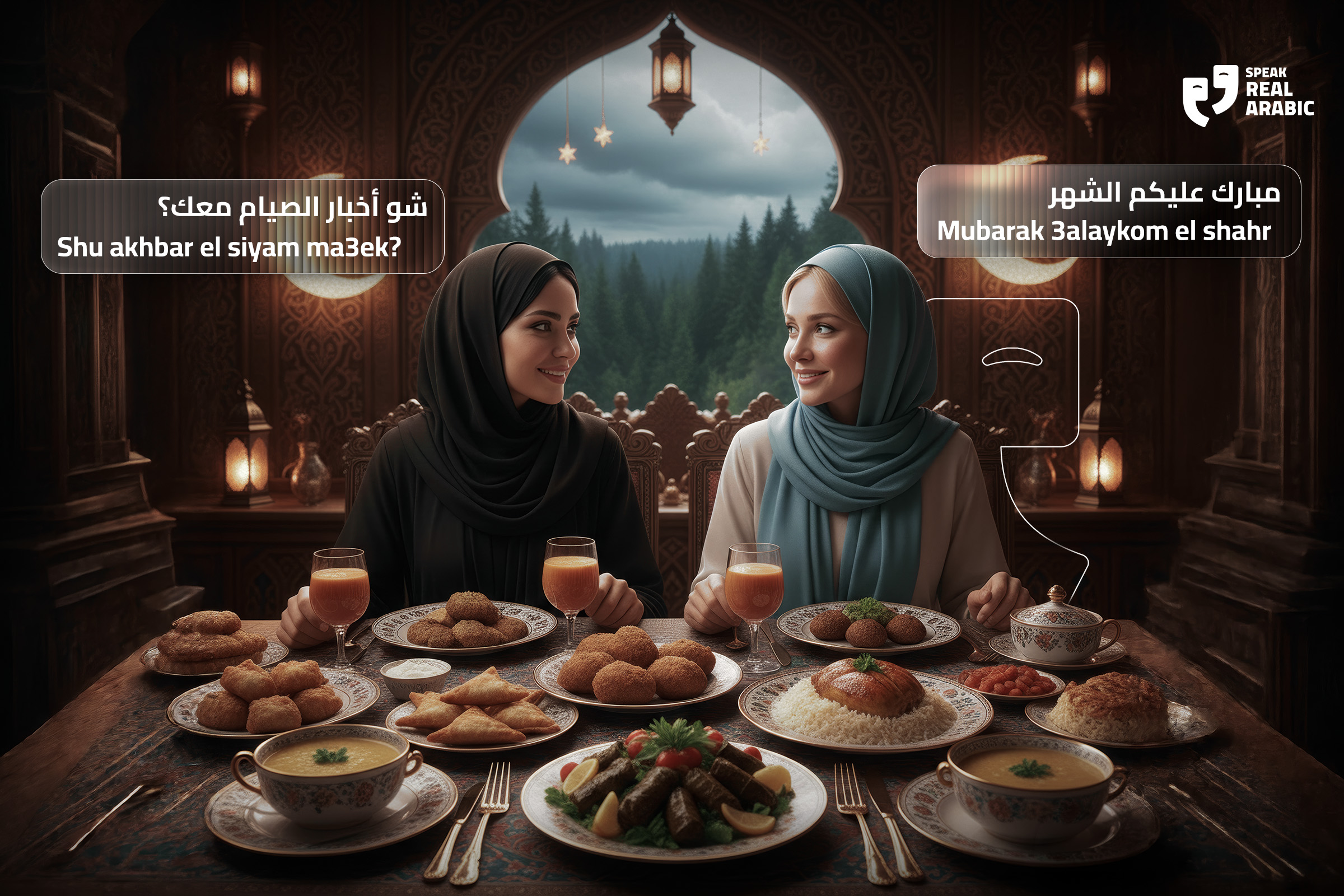
⭐ Ramadan Kareem ya ‘azizi
⭐ Mubarak ‘alaykom el shahr
⭐ Shu akhbar el siyam? (How is the fasting going?)
Tone carries warmth.
Levantine Arabic often softens formal phrases and adds friendly additions that make greetings feel alive.
At Speak Real Arabic, we teach not only vocabulary, but rhythm, tone, and delivery.
Because sounding natural builds real connection.
Using Ramadan Greetings in Professional Settings
If you work with Arabic-speaking colleagues, greeting properly matters.
In professional communication:
✔ Keep it simple.
✔ Avoid slang.
✔ Use Ramadan Mubarak in formal emails.
✔ Add a respectful closing line.
Example:
Wishing you a peaceful and blessed Ramadan. Ramadan Mubarak.
Short. Clear. Professional.
Do Ramadan Greetings Change by Country?
Ramadan Kareem and Ramadan Mubarak are understood across the Arab world.
However, tone varies:
🟡 In Syria and Lebanon: greetings feel more conversational.
🟡 In the Gulf: Ramadan Mubarak may appear more often in formal contexts.
🟡 In Egypt: greetings may include playful warmth and additional phrases.
The core expressions remain universal.
Why Learning Ramadan Greetings Improves Your Arabic
Seasonal expressions build real fluency.
They teach you:
✔ Cultural timing
✔ Emotional tone
✔ Social context
✔ Pronunciation patterns
✔ Conversational flow
When you understand how Arabic lives during Ramadan, you understand how Arabic lives in real life.
That is where fluency begins.
Common Mistakes Learners Make
Many learners:
⭐ Overthink which phrase to use
⭐ Avoid greetings out of fear of saying it wrong
⭐ Mispronounce Kareem
⭐ Use overly formal Arabic in casual settings
Remember:
Warmth matters more than perfection.
Confidence grows through usage.
What Ramadan Symbolizes Emotionally
Ramadan Kareem represents:
🟣 Open doors
🟣 Shared meals
🟣 Generosity
🟣 Hospitality
Ramadan Mubarak represents:
🟡 Spiritual renewal
🟡 Inner peace
🟡 Blessings
🟡 Reflection
Understanding these emotional layers helps you use the words sincerely.
Final Thoughts
Ramadan greetings are not just polite expressions.
They reflect generosity, patience, spirituality, and togetherness.
Learning their meaning allows you to participate respectfully in meaningful cultural moments especially in spoken Arabic.
And that’s where real learning begins.
Want to Learn Real Spoken Arabic?
If you want to speak Arabic naturally, including authentic Ramadan greetings and everyday cultural expressions,Speak Real Arabic teaches Syrian (Levantine) Arabic the way people actually use it:
🟡 Real conversations.
🟡 Cultural insights.
🟡 Native audio.
🟡 Zero grammar pressure.
Start learning spoken Levantine Arabic today and experience the language as it’s truly
Also Read:
🌟 Learn Ramadan greetings the natural way. Watch the video & keep learning with real speakers
🌟Go beyond Ramadan greetings and experience real spoken Syrian Arabic with The Syrian Encounters.
🌟 Start speaking Arabic the way it’s really spoken, Join the Speak Real Arabic VIP Membership.


