Essential Syrian Arabic Phrases for Travelers: A Practical Guide for Your Middle East Trip
Traveling to the Middle East is a unique and deeply enriching experience. From lively street markets to quiet neighborhood cafés, the region is full of warmth, history, and human connection. While English is commonly spoken in tourist areas, there’s something truly special about connecting with people in their own language.
Syrian Arabic, in particular, is one of the most friendly, widely understood, and approachable dialects in the Levant. It’s spoken in Syria and easily understood in Lebanon, Jordan, and Palestine. Learning a few key phrases can turn everyday moments, ordering coffee, asking for directions, or greeting a stranger, into meaningful cultural exchanges.
This practical guide to essential Syrian Arabic for travelers focuses on how people actually speak in daily life. At Speak Real Arabic, this is exactly what we teach: real words, real situations, and real culture.
1. Basic Greetings
In Syrian culture, greetings are never rushed. A simple hello often comes with eye contact, a smile, and sometimes even a short conversation. Knowing these phrases makes a strong first impression:
🟣 As-salaamu ‘alaykum (السلام عليكم) – Peace be upon you
A very common and respectful greeting.The response is Wa ‘alaykum as-salaam (وعليكم السلام).
🟣 Marhaba (مرحبا) – Hi / Hello
The most natural and widely used greeting in Syria and the Levant. You’ll hear it everywhere—shops, taxis, cafés.
🟣 Sabah el-khēr (صباح الخير) – Good morning
The reply is Sabah en-noor (صباح النور).
🟣 Masa el-khēr (مسا الخير) – Good evening
Answered with Masa en-noor (مسا النور).
2. Polite Phrases for Daily Interactions
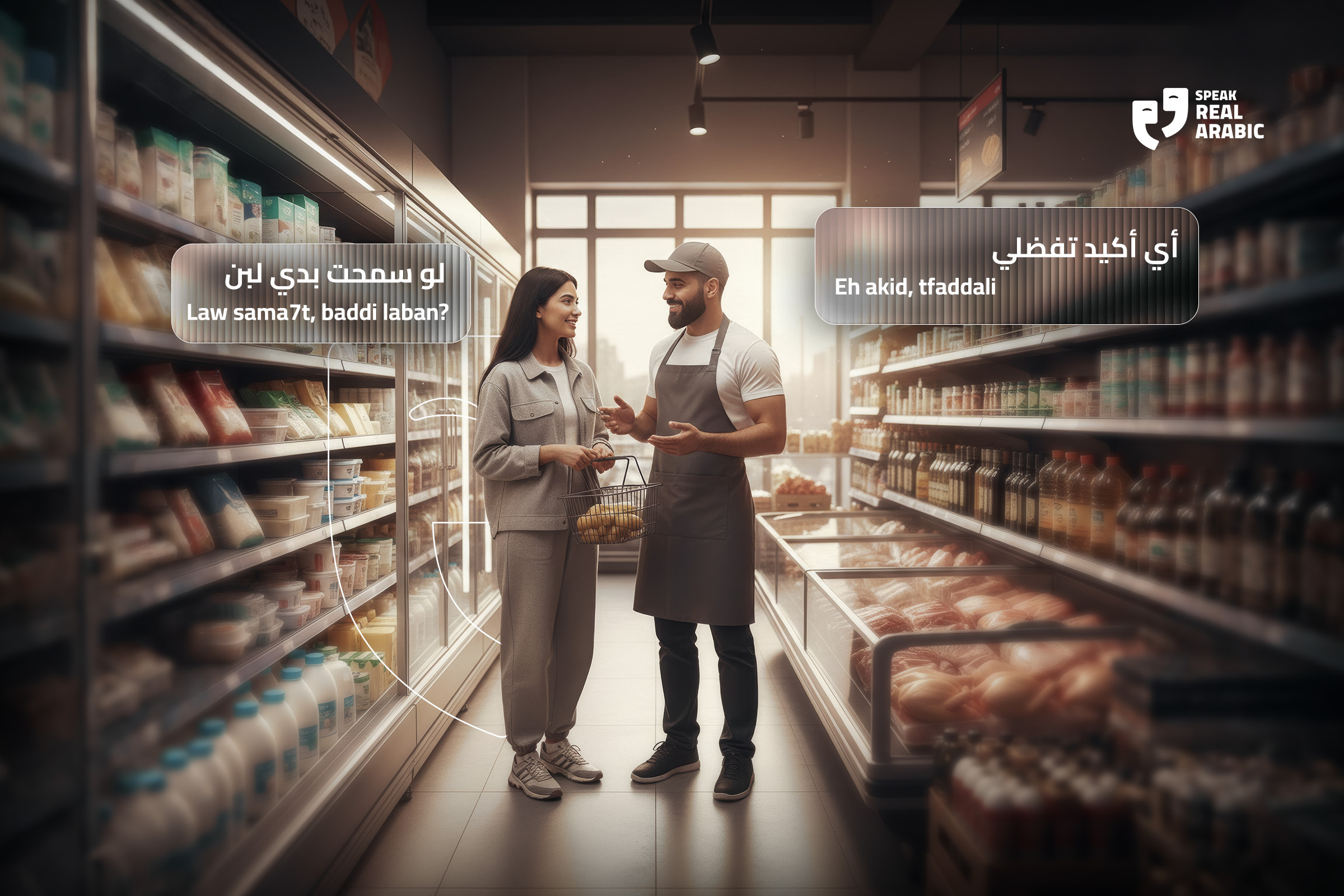
These expressions will help you sound polite, friendly, and respectful in everyday situations:
🟡 Shukran (شكراً) – Thank you
A must-use word that Syrians genuinely appreciate.
🟡 Afwan (عفواً) – You’re welcome / Excuse me
Used both as a reply to thanks and to politely get someone’s attention.
🟡 Law samaḥti / law samaḥtak (لو سمحتي / لو سمحتك) – Please
Used when making a request (female / male).
🟡 Tfaddal / Tfaddali (تفضل / تفضلي) – Please / Here you go
Often used when offering something or inviting someone to go first.
3. Ordering Food and Drinks

Food is at the heart of Syrian culture. These phrases will help you navigate meals with confidence:
🟣 Ana joo‘ān / joo‘āne (أنا جوعان / جوعانة) – I’m hungry
Used by men / women.
🟣 Ana ‘atshān / ‘atshāne (أنا عطشان / عطشانة) – I’m thirsty
🟣 Fī mayy? (في مي؟) – Is there water?
🟣 Biddi… (بدي) – I want…
One of the most useful verbs in Syrian Arabic.
🟣 Addēsh? (قدّيش؟) – How much?
4. Getting Around
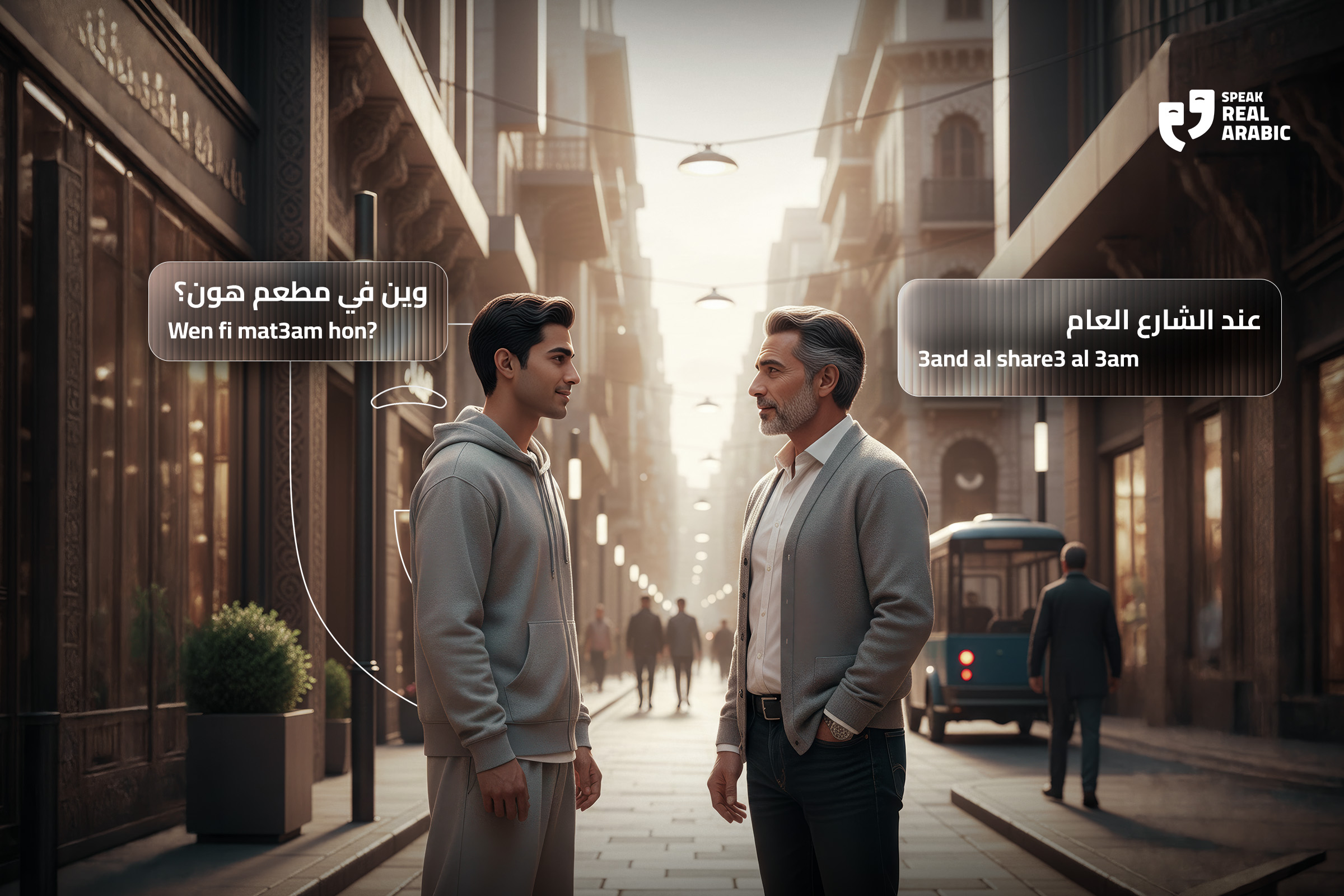
Asking for directions doesn’t have to be stressful. These phrases are simple and very common:
🟡 Wēn…? (وين…؟) – Where is…?
Wēn el-mat‘am? (وين المطعم؟) – Where is the restaurant?
🟡 Addēsh el-masāfe? (قدّيش المسافة؟) – How far is it?
🟡 Fī… hōn? (في… هون؟) – Is there… here?
Example: Fī taxi hōn? – Is there a taxi here?
5. Emergency Phrases

Even if you never need them, it’s important to know these just in case:
⭐ Musā‘ade! (مساعدة!) – Help!
⭐ Wēn el-mashfa? (وين المشفى؟) – Where is the hospital?
⭐ Ana ta‘bān / ta‘bāne (أنا تعبان / تعبانة) – I’m not feeling well
6. Cultural & Social Expressions
These phrases help you connect on a human level and show cultural awareness:
🟣 Tsharrafet fīk / fīki (تشرفت فيك / فيكي) – Nice to meet you
Used when meeting someone for the first time.
🟣 Ma‘ as-salāme (مع السلامة) – Goodbye
Literally means “go in peace.”
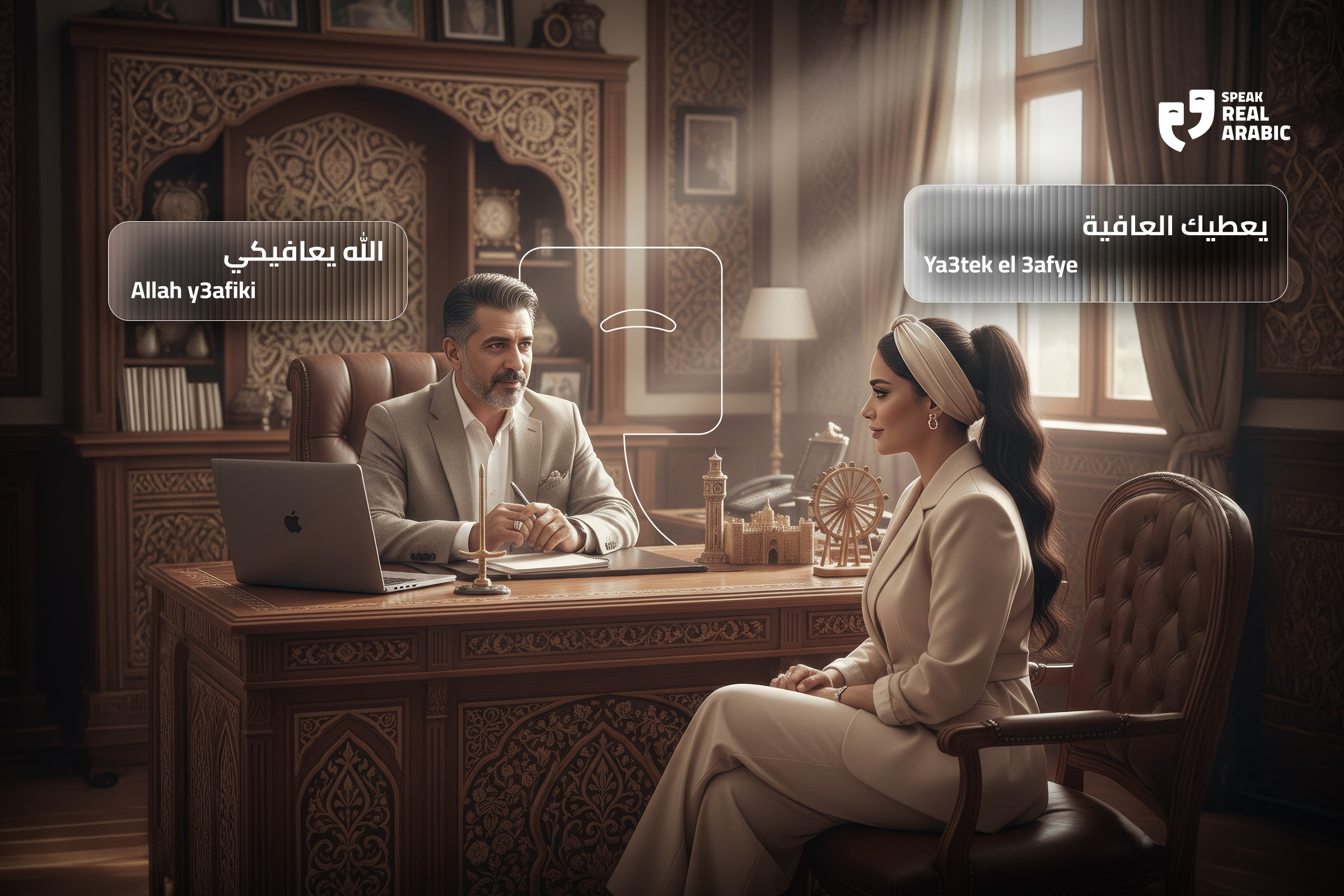
🟣 Ya‘teek el-‘āfye (يعطيك العافية) – Thank you / Well done
Used to show appreciation, especially to someone working.
7. Very Syrian Expressions
Syrian Arabic is known for its warmth, humor, and expressive style:
🟡 Ya‘ni (يعني) – I mean / like
You’ll hear this all the time in conversation.
🟡 Inshallah (إن شاء الله) – Hopefully / God willing
Used to talk about the future, plans, and hopes.
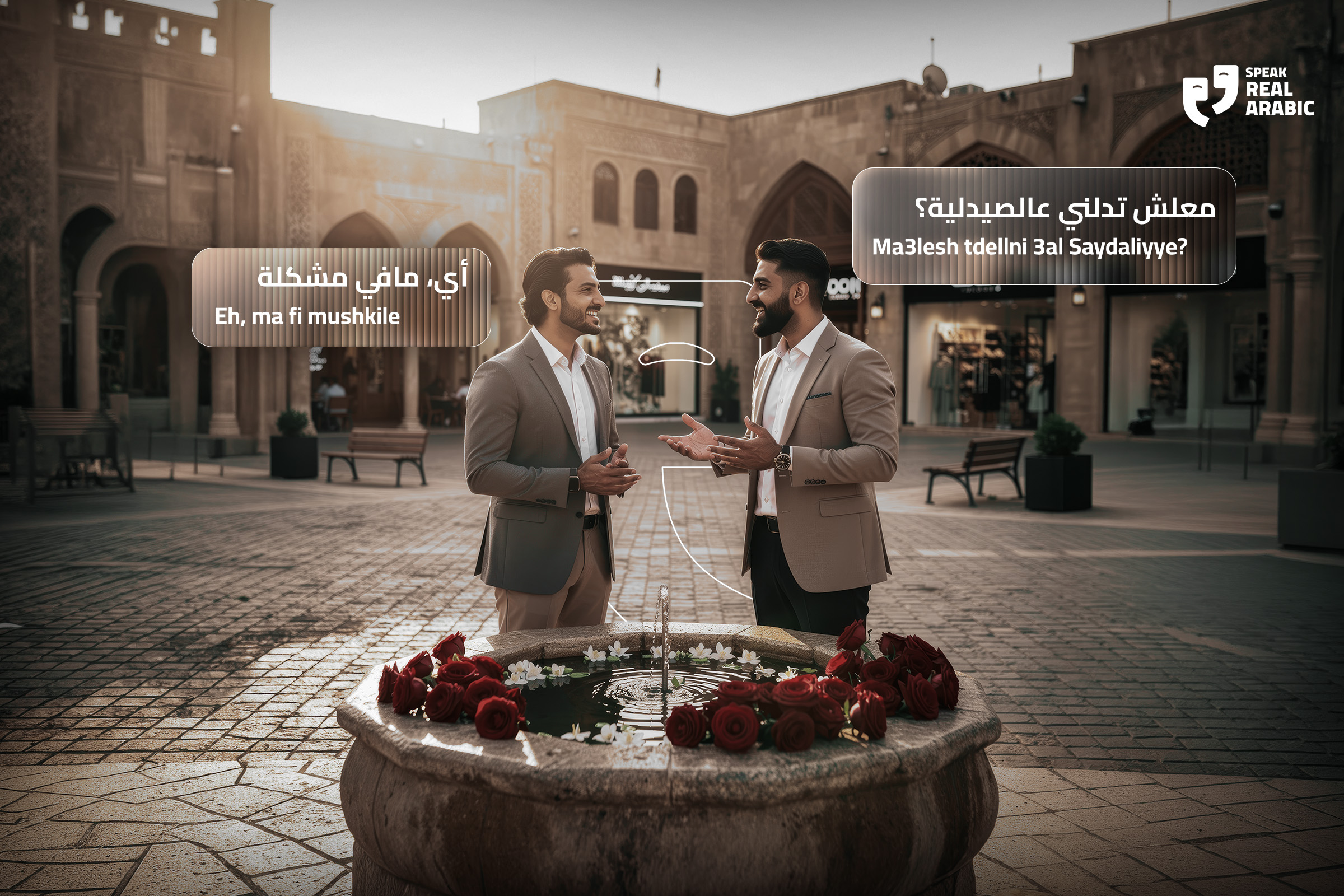
🟡 Mā fi mushkile (ما في مشكلة) – No problem
Used to reassure someone or respond politely.
🟡 Shway shway (شوي شوي) – Slowly / Take it easy
Often said in traffic, lines, or when someone is rushing.
🟡 Ma‘leesh (معلش) – It’s okay / Sorry / No worries
A very warm and forgiving phrase used in many situations.

Traveler Tip 🌍
Even if your Arabic isn’t perfect, Syrians deeply appreciate the effort. A simple “Marhaba” can open doors, spark conversations, and lead to genuine moments of connection.
Why Learn Syrian Arabic for Travel?
While Modern Standard Arabic is taught in books, daily life in the Levant happens in dialect. Syrian Arabic is especially valuable for travelers because it is widely understood, gentle in sound, and easy to adapt.
At Speak Real Arabic, we focus on how people actually speak، through real-life conversations, cultural insights, and everyday situations. You’re not just memorizing phrases; you’re learning how to listen, respond, and connect.
If you want to travel feeling confident, understood, and welcomed, Syrian Arabic is the perfect place to start.
Start learning real Arabic today, and let the language become part of your journey.
🌟 How Arabs Say “Yes, Please” in Daily Conversation, click here.
🌟 Stay close to the language with our weekly emails, Be part of it.
🌟 Start Zero to 15 Minutes, of real Arabic, without grammar stress, Explore the Course


