
Ahlan wa Sahlan Meaning: More Than Just “Welcome” in Levantine Arabic
If you’ve ever heard someone say “Ahlan wa Sahlan,” you were probably told it simply means “welcome.”
But the true meaning of Ahlan wa Sahlan goes much deeper, especially in Levantine Arabic.
In Syria and across the Levant, this phrase is more than a greeting. It reflects hospitality, belonging, and emotional warmth. If you’re learning Levantine Arabic, understanding this expression helps you move beyond memorizing vocabulary and into real cultural understanding.
Because in the Levant, language and hospitality are inseparable.
At Speak Real Arabic, this is exactly where learning begins, with phrases people actually live by.
The Literal Meaning of Ahlan wa Sahlan
The phrase comes from two Arabic roots:
Ahlan (أهلاً) – family
Sahlan (سهلاً) – ease, comfort, smoothness
Together, they imply:
You are among family.
Your presence brings ease and comfort.
That layered meaning explains why the phrase feels warmer than a simple “welcome” in English.
In Syrian culture, language often expresses relationship, not just information.
How Ahlan wa Sahlan Is Used in Spoken Levantine Arabic
In spoken Levantine Arabic, greetings are rarely short or neutral. They’re expressive and often repeated with warmth.
When someone enters a Syrian home, they might hear:
✔ Ahlan wa Sahlan! (أهلاً و سهلاً)
✔ Ahlan wa Sahlan fik / fiki (أهلاً و سهلاً فيك \ فيكي)
✔ Ahlen ya habibi / habibti (أهلين يا حبيبي \ حبيبتي)
✔ Nawwart el beit (نورتي البيت), “You’ve brightened the house.”
Notice how the greeting expands depending on closeness and context.
This emotional expansion is a hallmark of spoken Syrian Arabic. Phrases grow warmer rather than staying fixed.
At Speak Real Arabic, we teach these real-life variations — not just textbook phrases — so learners understand how greetings actually sound inside Syrian homes.
Syrian Hospitality: Why the Phrase Matters
In Syria, hospitality isn’t optional politeness.
It’s identity.
Guests are treated as:
🟡 A blessing
🟡 A responsibility
🟡 A reflection of honor
When someone says “Ahlan wa Sahlan,” it’s often followed immediately by action:
🟡 Offering coffee
🟡 Bringing food
🟡 Insisting you sit
🟡 Encouraging you to relax
The phrase sets the emotional tone for generosity.
Understanding this cultural layer makes Levantine Arabic much easier to absorb — because the language reflects social values.
Ahlan wa Sahlan vs Other Arabic Greetings
Many learners wonder how this phrase differs from others:
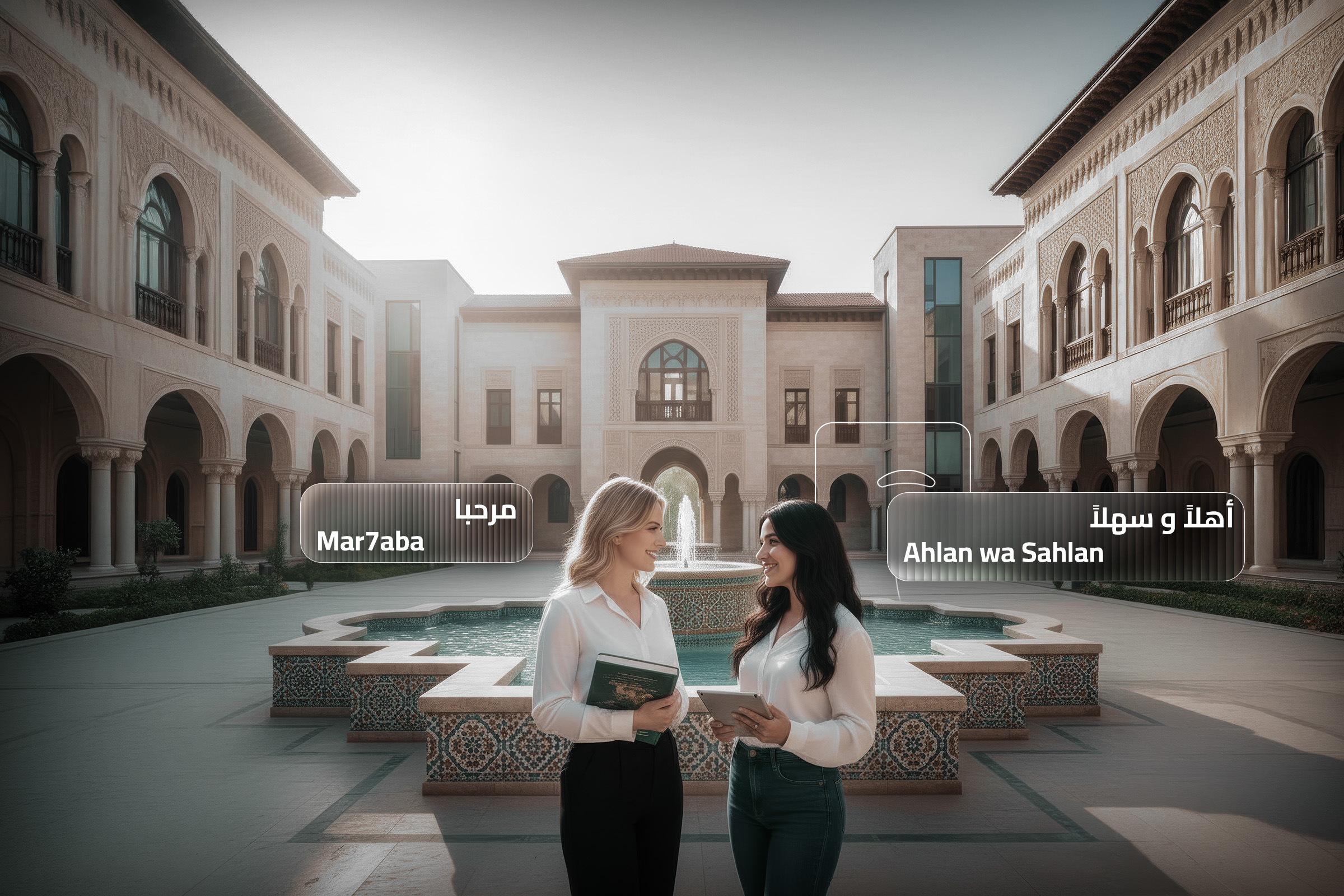
🟣 Marhaba – (مرحبا) Casual, friendly, common between friends.
🟣 Salaam Alaikum – (السلام عليكم) More formal, often used in religious contexts.
🟣 Ahlan – (أهلا) A shortened everyday version.
But Ahlan wa Sahlan carries a warmer tone, especially inside homes.
It signals emotional welcome, not just polite acknowledgment.
That nuance is essential when learning spoken Levantine Arabic naturally.
When Should You Use Ahlan wa Sahlan?
You can confidently use it when:
✔ Welcoming someone to your home
✔ Greeting visitors respectfully
✔ Receiving guests
✔ Meeting someone in a formal setting
In Levantine Arabic, delivery matters as much as pronunciation.
A warm tone and relaxed body language complete the meaning.
At Speak Real Arabic, we emphasize tone, rhythm, and emotional delivery, because dialect isn’t just vocabulary. It’s presence.
Variations You’ll Hear in Syrian Arabic
In everyday Syrian speech, you might hear:
⭐ Ahlan w Sahlan bil ghali ➝ أهلا و سهلا يا غالي
⭐ Ahlan fiki ya ukhti ➝ أهلا فيكي أختي
⭐ Ya hala ➝ يا هلا
These variations reflect:
🟡 Gender
🟡 Relationship closeness
🟡 Emotional tone
This flexibility is what makes Levantine Arabic feel natural and deeply human.
Why This Phrase Matters for Learning Levantine Arabic
If your goal is to speak Levantine Arabic confidently, starting with real expressions is essential.
Learning through phrases like “Ahlan wa Sahlan” helps you:
✔ Understand conversational rhythm
✔ Recognize emotional tone
✔ Avoid overly formal speech
✔ Build confidence quickly
Spoken Levantine Arabic relies heavily on context and repetition.
That’s why at Speak Real Arabic, lessons are built around real Syrian conversations, not grammar-heavy structures that rarely appear in daily life.
Does the Meaning Change Across the Arab World?
The phrase exists across many Arabic-speaking countries.
However, tone varies.
In some regions, it sounds more formal.
In Syria and the Levant, it often feels intimate and familial.
Dialect shapes emotional nuance, and that nuance is what transforms your Arabic from correct… to natural.
The Cultural Psychology Behind Ahlan wa Sahlan
Why does this greeting feel so expressive?
Because Levantine culture values:
🟣 Family-centered identity.
🟣 Social closeness.
🟣 Verbal generosity.
🟣 Emotional warmth.
In English, “welcome” is brief and functional.
In Levantine Arabic, “Ahlan wa Sahlan” communicates belonging.
And belonging is powerful.
How to Respond to Ahlan wa Sahlan
Common responses include:
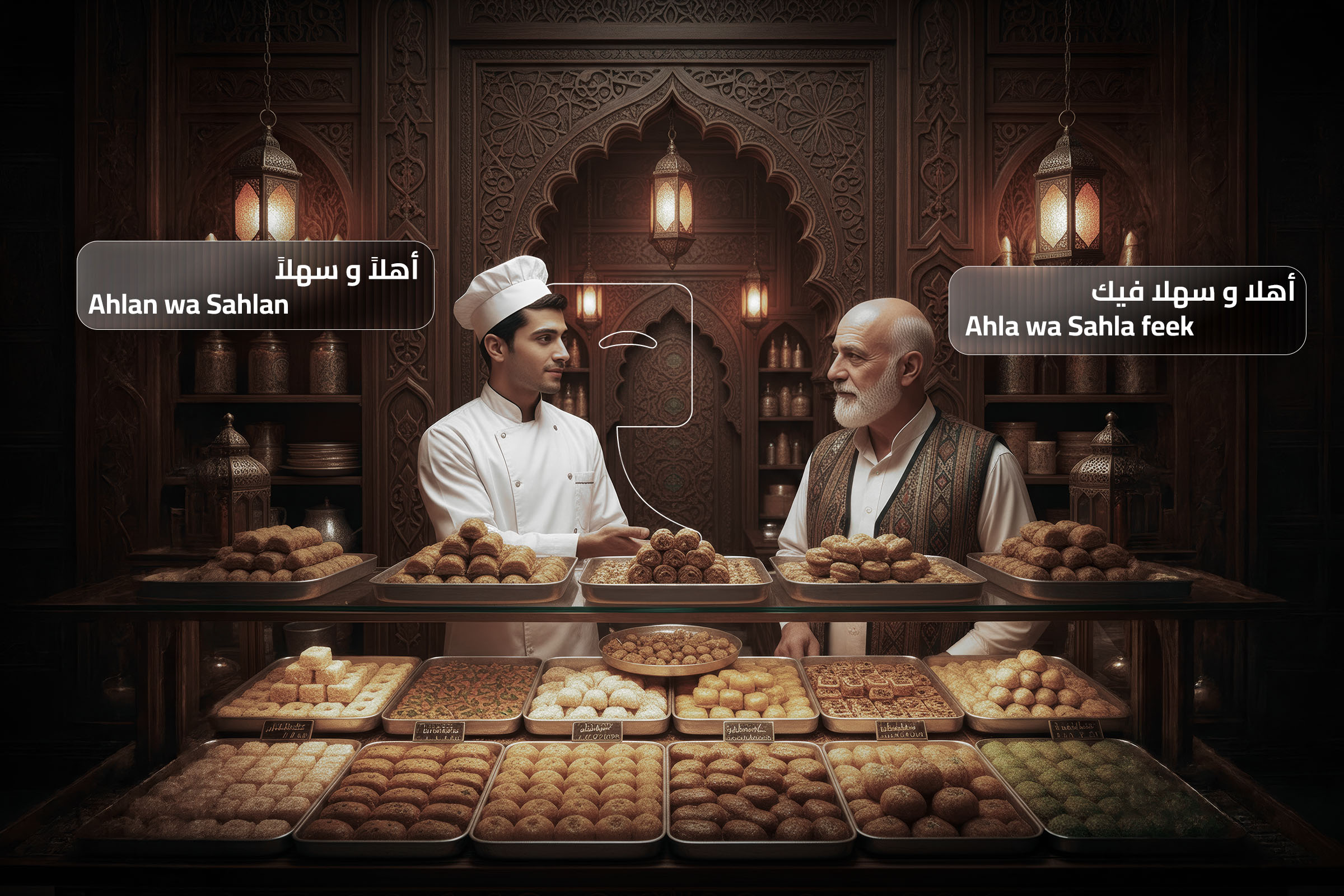
✔ Ahlan fik / fiki ➝ أهلا فيك \ فيكي
✔ Repeating the phrase warmly
In Levantine Arabic, facial expression and tone matter as much as vocabulary.
Confidence comes from repetition and real exposure, something we prioritize at Speak Real Arabic.
Final Thoughts
“Ahlan wa Sahlan” is not just a greeting.
It’s a cultural doorway into Syrian hospitality and spoken Levantine Arabic.
Understanding it brings you closer to how Arabic is actually spoken, inside homes, gatherings, and everyday conversations.
If you want to truly understand Levantine Arabic, start with the phrases people live by.
Because in the Levant, language is relational, expressive, and deeply human.
And that’s exactly what we teach at Speak Real Arabic, Arabic as it’s truly lived.
Frequently Asked Questions
What does Ahlan wa Sahlan mean?
It combines the words for “family” and “ease,” expressing warmth and welcome in Levantine culture.
Is Ahlan wa Sahlan formal?
It can be used formally, but in Syria it often feels warm and personal rather than strictly formal.
Is Ahlan wa Sahlan used only in Syria?
No, it’s used across the Arab world, but tone and emotional warmth vary by region.
Is this phrase used in Modern Standard Arabic?
Yes, but it is more commonly heard in spoken dialects like Levantine Arabic.
Read more:
🌟 Let Arabic be spoken and lived, join the VIP Membership.
🌟 Weekly Arabic, Culture & Stories, Join Our Newsletter
🌟 Join the Speak Real Arabic Community, learn Arabic the way it’s spoken, together, with warmth and support


